The home of architecture and design in the Asia-Pacific
Get the latest design news direct to your inbox!

Get the latest design news direct to your inbox!
Renowned workplace strategist James Calder is the Global Director of recently-launched consultancy ERA-co and part of the team putting people at the centre of our future workplaces and cities.

January 7th, 2020
To say that the world is changing is stating the obvious. The way we move through it, what we expect as consumers, where we live, work and study, it’s in constant flux and the future constantly feels closer. Technology is central to how – and the speed at which – things are changing and its impact on our experience of space is massive.
ERA-co was born from within this context and the lack of coherence around it. “A lot of the issues around buildings now is a lack of development around the technology side. We’ve got sensors but what data can we actually collect? How can that improve the user experience? How do we integrate data from AI into buildings? We’re on the cusp of all this stuff but it’s all very fragmented and no one is really pulling it together,” says Calder.
So, together, Calder – an early pioneer in activity-based workplace design and a leader in workplace strategy for the digital age, Steven Cornwell – a former chief marketer and brand studio founder, and Dr. Christian Derix – a pioneer of user-centric spatial planning with AI, came up with a plan: architecture and planning would be complemented by new skillsets.
Described as an experience consultancy dedicated to transformative placemaking, ERA-co uses evidence based thinking and spans the disciplines of Urban Systems and Planning, User Strategy, and Brand Experience, drawing on their globally-based specialists (including data scientists, strategists, anthropologists and experience designers) for each project. By harnessing the power of data and digital transformation, they help communities, companies and governments “solve complex problems for buildings, through to neighbourhoods and cities”.
Their clients and projects are various – helping corporates through to governments create next generation buildings, evolve their business model and embrace the user experience on a holistic level. In other words, they help bring buildings and companies into step with community needs. Essentially, says Calder, they create communities. “It’s not just buildings now, it’s places.”
Technology is central (with almost all companies having a digital overlay) but so is brand and identity. “…A workplace brand, a digital brand, a physical brand, it’s all becoming a key part of how they create the user experience”, says Calder. Cornwell, leading in this area, also talks about the importance of brand in future placemaking. “When branding is authentically tied to the character of Place it is aligns the various complex stakeholders to one vision.”

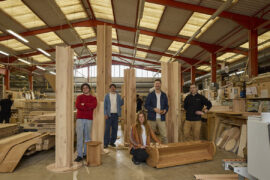
Pictured: Steven Cornwell
ERA-co’s triumvirate offering – User Strategy, Urban Systems and Brand Experience – is what allows them to lead in the changing landscape of architecture. And aligning with Woods Bagot (working on projects together as it fits) is an important part. While independence is key, having a leader in experience design on board made sense. “It was really a coming of minds with Nik Karalis, the CEO of Woods Bagot,” says Calder. “They’ve been doing a lot of thinking around the future of architecture and design.”
Recently, they’ve been working together on the academic workplace – a highly specialised area that needs to evolve. With ERA-co developing the strategy and concepts and Woods Bagot designing the buildings and fitouts, they’ve been looking at what the future academic will be, what the university will be and how that impacts the campuses and surrounding cities. One project is the University of Otago’s new Health and Science Building, which involves helping grow the brand and attract more students.
When asked about the challenges facing the industry, they noted the mass disruption real estate, development and architecture are going through. But also, our cities. “[They’re] growing and we’re reaching some sort of tipping point where the way we used to set them up doesn’t work anymore,” says Calder. This leads to issues like social inequity and choking infrastructure, where so much talk of “placemaking” has actually just been gentrification, they say. But they also see opportunity for positive change.
With data points coming together and a rise around creative knowledge work, there is an opportunity for architects and specialists “to be at the table contributing and helping solve future problems”. And while this is ERA-co’s objective, helping clients make sense of all the change so that our buildings and cities have longevity must prioritise humanity. “Positive change can only occur by placing the needs of our citizens/users at the centre of ALL decisions.” says Cornwell. “We want to advance humanity and all of humanity,” adds Calder.
It’s a humbling ethos and makes having Calder on the jury of the INDE Awards even more exciting. When asked about it, he said it was worth it for the diversity of cultures that come together alone and noted the quality of the projects – suggesting an industry on the rise. “It’s harder and harder to choose the winners.”
If you loved this, we think you’d might like this feature piece Sebastian Herkner: Reading the zeitgeist.
Join our digital community and get weekly inspiration straight to your inbox.
INDESIGN is on instagram
Follow @indesignlive
A searchable and comprehensive guide for specifying leading products and their suppliers
Keep up to date with the latest and greatest from our industry BFF's!
Watchmaker RADO has just launched their new Radostar website. The website is a networking resources for creatives of all descriptions to share their work. It’s a great looking website, with some inspiration stories and resources. Check it out – radostar.com
The internet never sleeps! Here's the stuff you might have missed