The home of architecture and design in the Asia-Pacific
Get the latest design news direct to your inbox!

Get the latest design news direct to your inbox!
A unique blend of old world artistry and cutting-edge technology… Carpets Inter is more than a great design product – this is a message of sustainability in the face of a changing world.

The Colour Tone EcoSoft carpet can add a splash of colour to any space - Project Credit – Contour Commercial Interiors

Tavola acoustic plank carpet tiles at McKinnon Secondary College Melbourne

Architexture acoustic carpet tiles

EcoSoft carpet tile backing contains 50 x 550ml PET bottles per m2
Employing the ground breaking first-of-its-kind EcoSoft technology, Carpets Inter is turning old plastic into new design inspirations. We sat down to speak with Above Left, the Australian distributor for Carpets Inter, to ask them about how they see the design landscape and what inspires them to take the next step forward in sustainable design.
What prompted this recycling plan?
It was the Hong Kong market that originally inspired us – a more sustainable carpet product was needed, and thus EcoSoft was born! Whilst EcoSoft was invented by Carpets Inter, it was here in Australia that the real benefits were recognized.
EcoSoft has a minimum of 85% recycled content derived primarily from discarded PET water bottles. So, not only is the product readily recyclable, it starts life by taking waste from the world, and none of it is PVC! Evidence of this is to be found in our Environmental Certification Scheme level 4 ratings, meaning that you are able to achieve maximum points on the Green Star calculator.
At Carpets Inter, we create modular carpet that does more than just make the world more beautiful; it makes it more liveable. We do this with products that meet stringent indoor air-quality needs, are safe to manufacture and utilize and incorporate recycled materials wherever feasible including our unique EcoSoft backing fabricated from millions of recycled plastic bottles.
How long has this sustainability campaign been running?
Carpets Inter have been producing EcoSoft recycled carpet tile backing for 14 years and are privileged that schools, offices and public spaces all across Australia have joined us to be part of the solution.
What kinds of projects are Carpets Inter EcoSoft suitable for?
While open plan offices are beneficial for a number of reasons, productivity and employee wellbeing can suffer due to acoustic privacy issues. Test results show that EcoSoft outperforms hardback tile by more than 150%-175% for sound absorption effectiveness. EcoSoft has acoustic performance tested in accordance with ENISO354:2003 making it ideal for absorbing ambient and impact noise. The installation of absorbent materials minimizes reflection and reduces noise levels. In combination with good sound insulation design, the reduction in reverberation time can help the room qualify for the Green Star IEQ-10 Internal Noise Levels requirement. Whether corporate, an education, hospitality, healthcare or general office project, EcoSoft is a solution that’s functional and stylish, as well as sustainable .

Impulse is a bold office carpet design
What’s unique about Carpets Inter’s sustainability push?
What really sets us apart from the crowd is our enormous achievement to date – over 700 million PET bottles have recycled thanks to EcoSoft. We never advertised targets, we simply delivered a beautiful and practical product that is essentially made from 80% post-consumer PET (50 recycled standard 550ml PET bottles per square metre).
How does Carpets Inter design for ecology?
Our commitment to ecological sustainability extends beyond our product design. We practice it in everything we do – from manufacturing facilities that maintain the highest environmental standards, to reducing our carbon footprint in every facet of our global business.
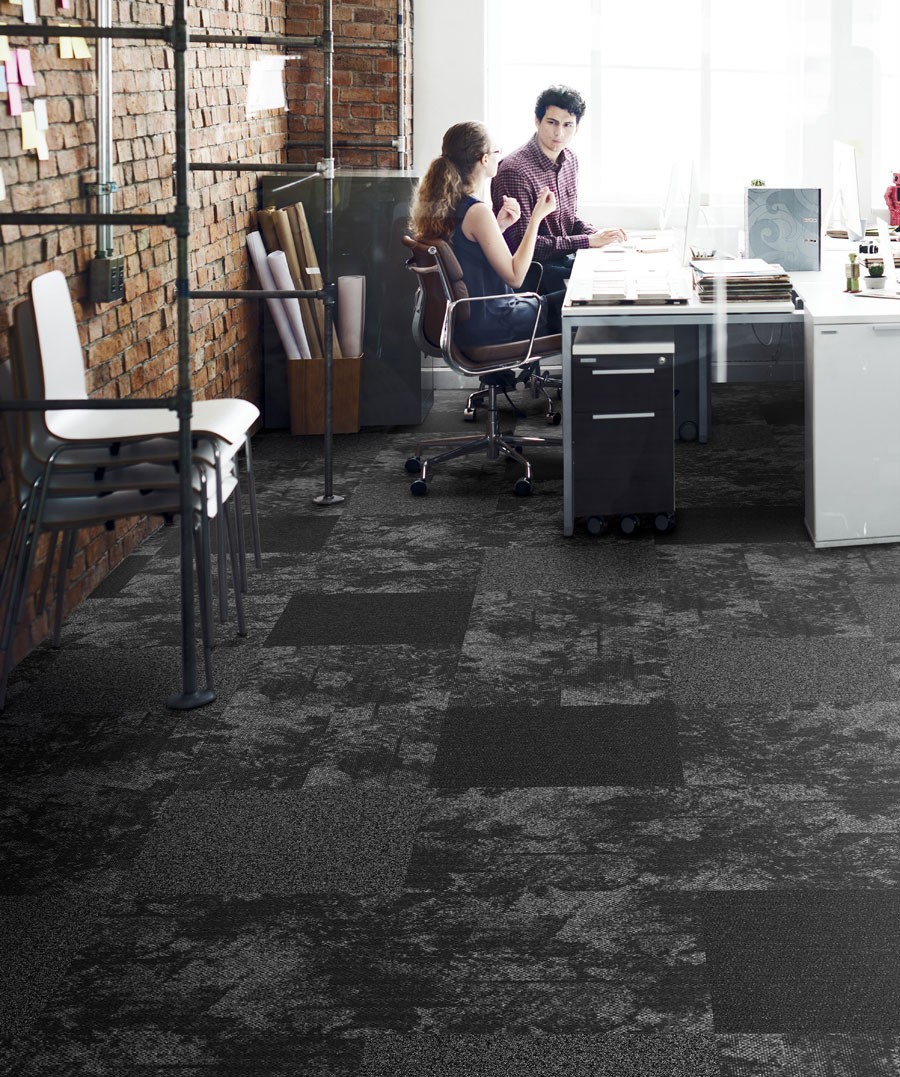
Breaking Ground – Flatlands is a carpet design inspired by the natural world

Breaking Waves is a unique carpet finish inspired by rushing water
INDESIGN is on instagram
Follow @indesignlive
A searchable and comprehensive guide for specifying leading products and their suppliers
Keep up to date with the latest and greatest from our industry BFF's!
The internet never sleeps! Here's the stuff you might have missed