
AB: You’re an artist, an architect and a furniture designer. How does your art practice inform your design practice?
EN: The influence is mostly in sensibility – rather than practical; it’s only in the perception of external stimulus. The art is what I do by myself, when I’m alone. It’s a research, and an [inward focused practice].
And what of your architectural and furniture design practices – what is the relationship between the two?
I work in a lot of situations where I’m restructuring historical buildings or parts. My work in this case is to preserve the historical part.
In designing furniture, I work a lot in maintaining the historical memory of the object, and then working on the future and the modern renovations – it’s very important on this point.
I have the same mind in architecture – maintaining the old part but innovating a lot. The most important thing for me is creating an equilibrium or balance between the two.
Tell me about the products you released with Billiani at the Milan Furniture Fair this year.
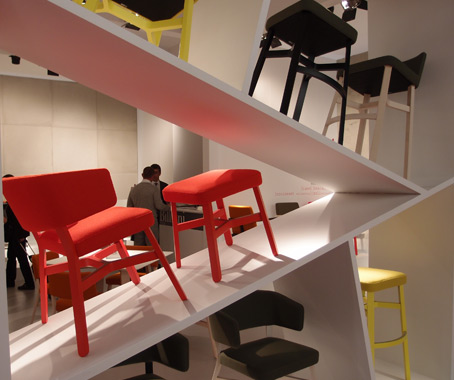
There’s the Braid chair, the Take chair, and the Croissant table [which has been designed to complement the Croissant range of chairs launched last year]. There are 3 different types/sizes in the chairs…
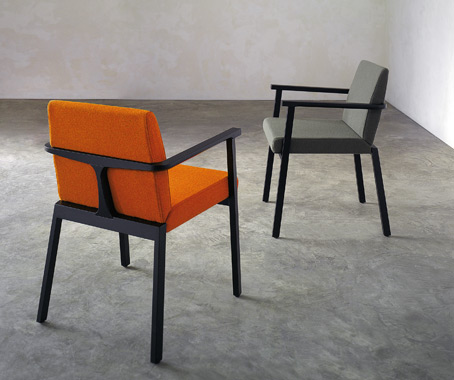
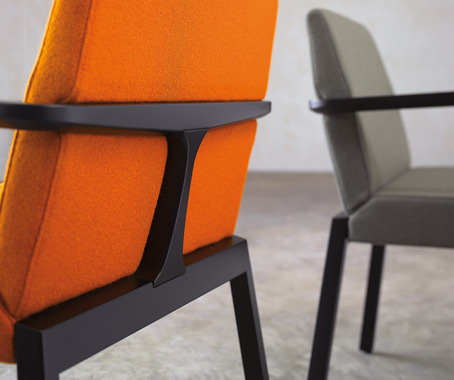
Braid
I understand that you design the majority of ranges for Billiani. Tell me about the unique design vision you bring to the brand.
With Billiani there is a lot of affinity. The Doll was the first project I designed for Billiani. It came just at the right moment, just as I was designing the Doll collection, Billiani was looking for something new and very stylish. Billiani was trying to find a new project and I came at the right moment – and it started like this [in a serendipitous way].
In a way I bring currency through his projects. It’s a constant evolution also. There are some other designers – for example the Nordica collection by Marco Ferreri – they’re also very current.
For the future, I like to think there are some collections, for example Doll and Tracy, that work on the historic mind and memory – which is naturally revisited. They’re new… in colour, dimension – a new kind of dimension… but still reminding you of the old style.
[This is also achieved through] a new approach to proportions, for example in the Criossant the chairs are white and blue – this is new and different. The Croissant tables will be tables for eating… and some side tables to complete the collection.
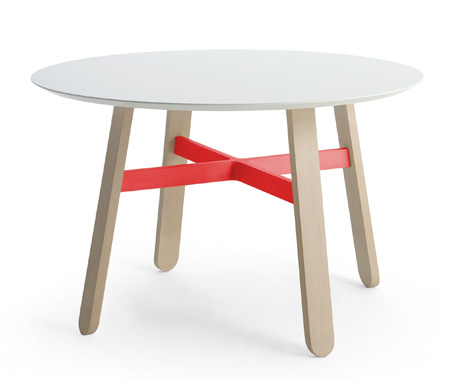
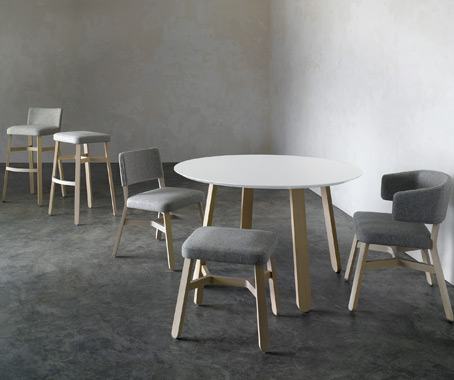
Croissant
To what degree do your designs respond to consumer and market demands?
I don’t follow trends in a methodological way. Rather I feel it, I do it like a sensation and follow a sensation.
People want ’real’ things, and ’real’ means there’s a truth in the project and truth in the production. By truth, I mean you don’t use the people and makers as you want; you collaborate and respect their craft [and trust in their knowledge and skill]. Things have to be very familiar to people when they buy the product.
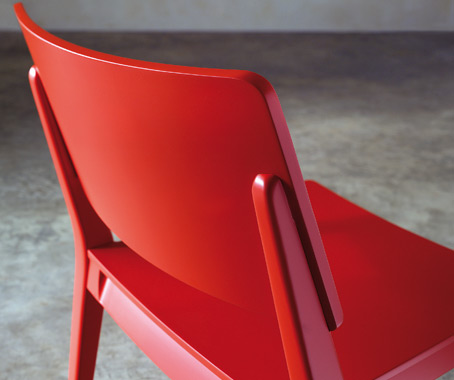
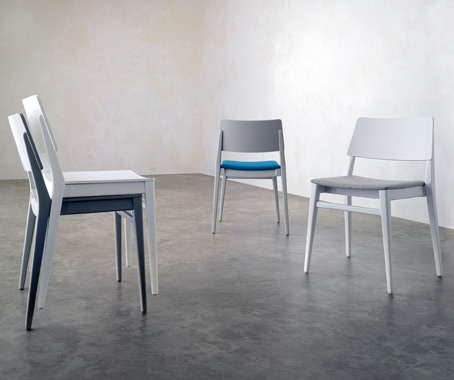
Take
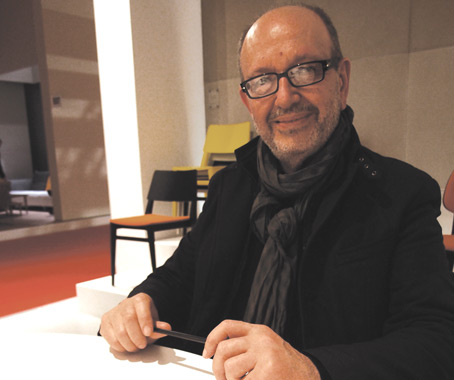
How do your ideas and concepts start? I notice you’ve been sketching on your notepad throughout our interview.
I always have this [a pencil and pad] with me.
[The initial sketch or drawing] is only the base, and then I make the development for the production, material… but this is very important in the beginning for me.
If you design by hand you can better develop your ideas in your mind – more than if you were developing your ideas on a computer. I’m always using a pencil…
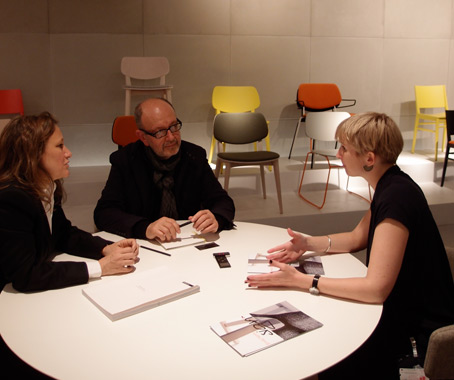
You can find the Billiani range at Café Culture and Estilo Commercial in Australia.
Billiani
billiani.it