The home of architecture and design in the Asia-Pacific
Get the latest design news direct to your inbox!

Get the latest design news direct to your inbox!
We talk with Ray Brown about how to stay ahead in a competitive market, and it comes down to an age-old question – to specialise or generalise?

Ray Brown


Architectus Sydney Studio
“We run as one studio in five geographies. And because we work across many different sectors they tend to all balance each other out,” shares Ray Brown, CEO of Architectus.
The national practice brings an integrated approach, with its deep knowledge in very particular typologies to every project, while always looking for ways to facilitate cross-pollination. “It’s really about applying the best resources we can or the best IP to any problem, wherever it is,” adds Brown.
Architectus Sydney Studio.
These specialisations are laid out across the different geographies, lending expertise as needed. For instance, aviation work is done through the specialist team in Adelaide, while health projects would come through Brisbane. But there will always be conversations going on across multiple locations – a collaborative process that Brown agrees needs to be led from the “top down”.
For Architectus, the magic happens when specialists cross collaborate into other sectors. He elaborates: “The connection between workplace and education is becoming closer and closer. The thinking that is now going into both of these areas is really converging.”
Other areas of convergence are commercial and workplace, and transport and urban planning. “The importance of workplace to commercial design is much more considered than it has been dealt with in the past. It’s really coming to the fore. There’s consideration into how we can design buildings to more closely align with the future of work.
Architectus Sydney Studio.
“It’s now common to see a rapid expansion and contraction of businesses. So what does that mean for the base architecture of the building? Why would someone go to one building over another? In the past they’ve really just been seen as large, empty vessels that will then be chopped and changed. But often the bones aren’t necessarily great for how we want to adapt these buildings into the future,” explains Brown.
One strategy the practice is currently driving to bring about cross-collaborating specialisation is an investment into systems. This allows them to capture knowledge and essentially track it down the line. “Architecture is a field where you do a lot of incredibly bespoke projects, which each generate all sorts of good design thinking. There’s a lot of detailed knowledge that is created but where does it go?” says Brown. By capturing this level of insight and ensuring its accessibility across the organisation, Brown is hoping to embed the incredible depth of expertise and share it through every sector and level of the business.
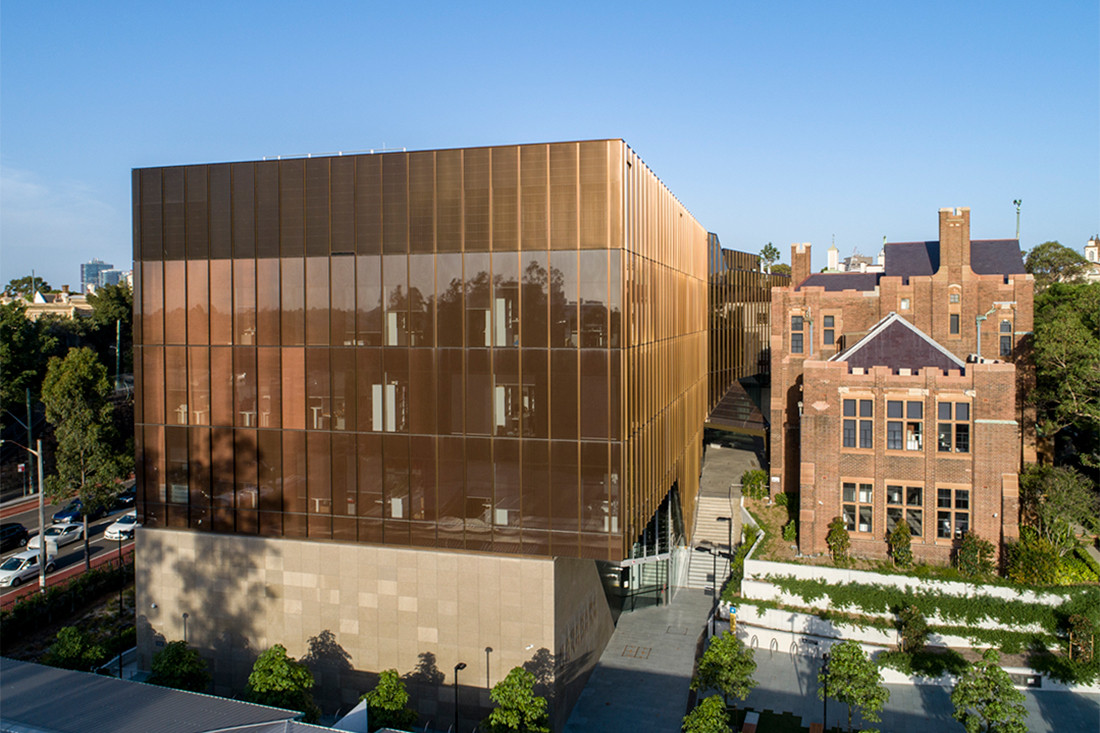
Faculty of Arts and Social Sciences, University of Sydney. Photo by Brett Boardman.
It’s a specialist approach; with an overarching generalist look to each facet of design and architecture. A cross-section that Brown believes to be one way to continue a successful practice. “I think a certain amount of specialisation is important, but there needs to be a really strong knowledge base across everything, that’s what brings the kind of rigour that is expected these days,” Brown finalises.
For more inspiring stories, join our mailing list. And read more about Architectus here.
INDESIGN is on instagram
Follow @indesignlive
A searchable and comprehensive guide for specifying leading products and their suppliers
Keep up to date with the latest and greatest from our industry BFF's!
The internet never sleeps! Here's the stuff you might have missed