The home of architecture and design in the Asia-Pacific
Get the latest design news direct to your inbox!

Get the latest design news direct to your inbox!
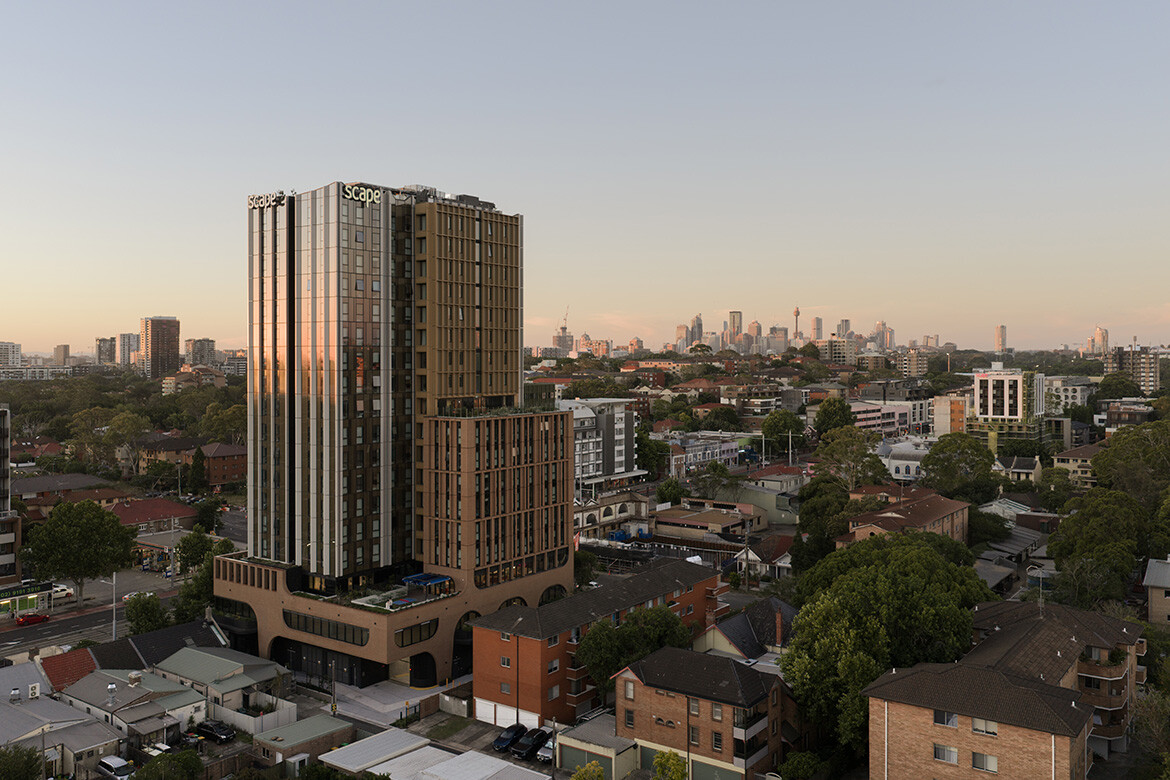
With projects such as Scape Kensington by Plus Studio, student accommodation in Sydney is shifting from isolated housing towards integrated urban infrastructure.
April 7th, 2026
Student accommodation is no longer a peripheral typology. In Sydney, it’s increasingly being used as a tool to shape entire precincts — bringing together housing, infrastructure and public life in ways that extend beyond the student cohort.
The Kensington to Kingsford (KEKI) corridor offers a clear example of this shift. Anchored by the light rail and proximity to the University of New South Wales, the area has become a testing ground for transport-oriented development, where density is tied directly to accessibility. Within this framework, multiple student housing projects are being delivered in close proximity, forming a new kind of urban cluster.

One of the most recent is Scape Kensington, designed by Plus Studio. The 19-storey building occupies a former pharmacy site in Randwick, but its ambitions extend beyond replacement. Rather than treating the site as a singular object, the project works to establish connections — between street and building, public and private, student and city.
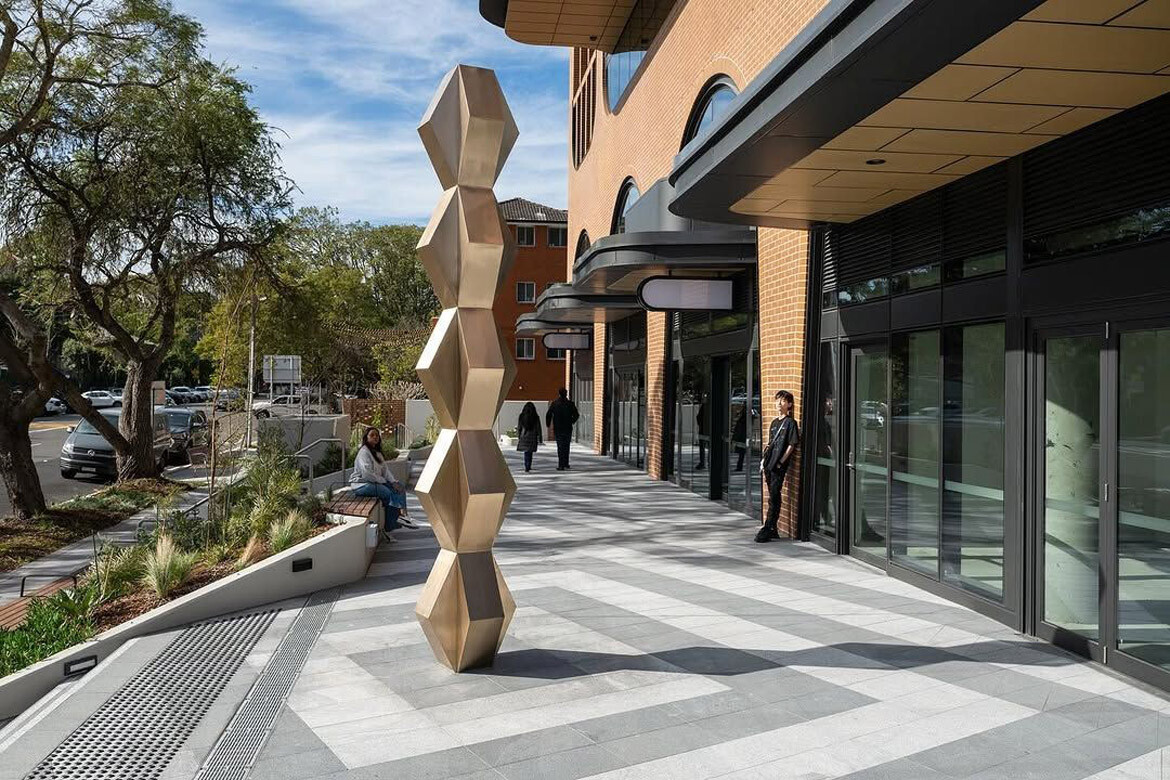
At ground level, a brick podium anchors the development within its context. This is not simply a base for the tower above, but a framework for activity. Retail tenancies, communal spaces and a council-operated community hall open directly onto a new public plaza, creating a porous edge that encourages movement through the site. Laneways cut through the building, extending the surrounding street network and allowing the project to operate as part of a broader urban system rather than a contained block.
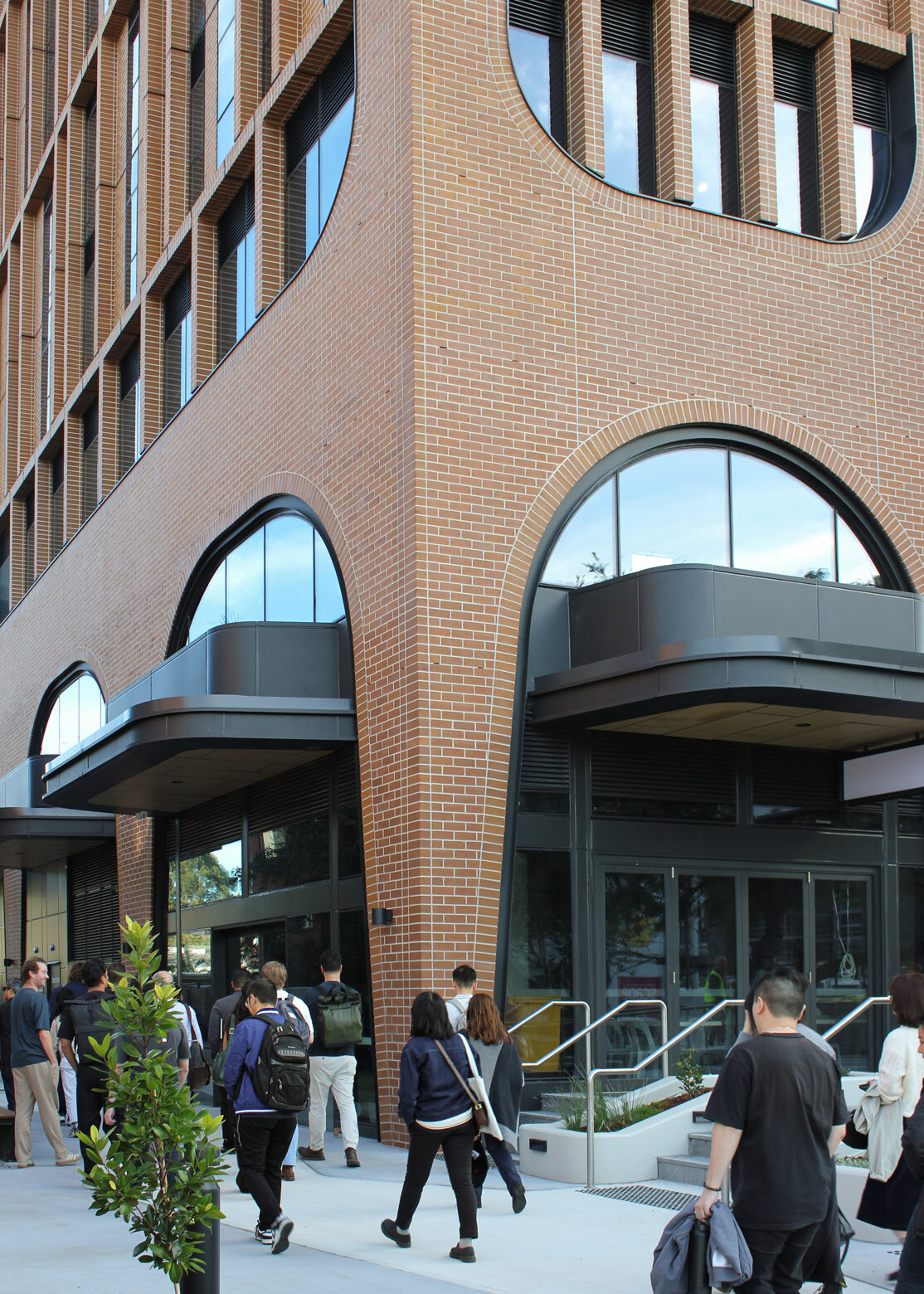
This emphasis on permeability is key. Where student accommodation has traditionally been inward-looking, Scape Kensington positions itself as outward-facing — contributing to the everyday life of the neighbourhood. A public artwork by Kamilaroi artist Reko Rennie anchors the plaza, reinforcing the idea of the site as civic ground as much as residential address.
Above, the building shifts in character. A scalloped tower introduces a more articulated vertical form, while a ‘green spine’ threads landscape from the street up through the building to rooftop gardens. The gesture is both environmental and spatial, offering moments of relief within the density while framing views towards Randwick Racecourse, the city and Botany Bay.
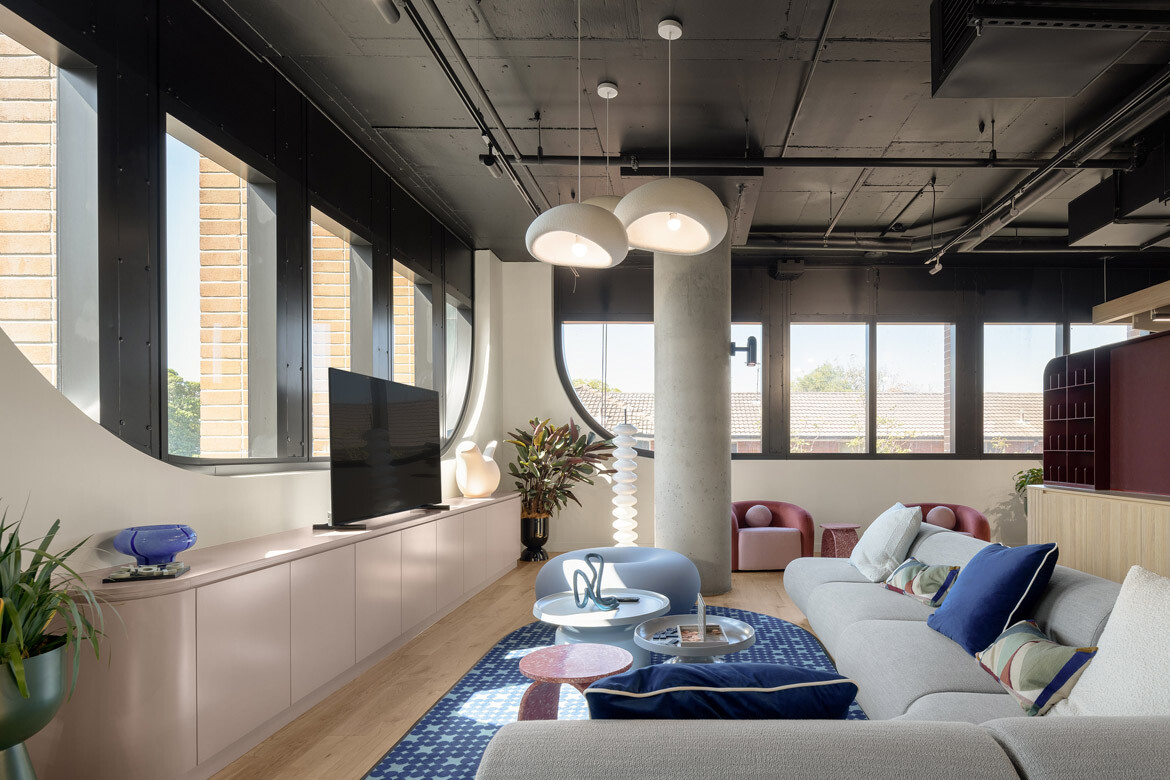
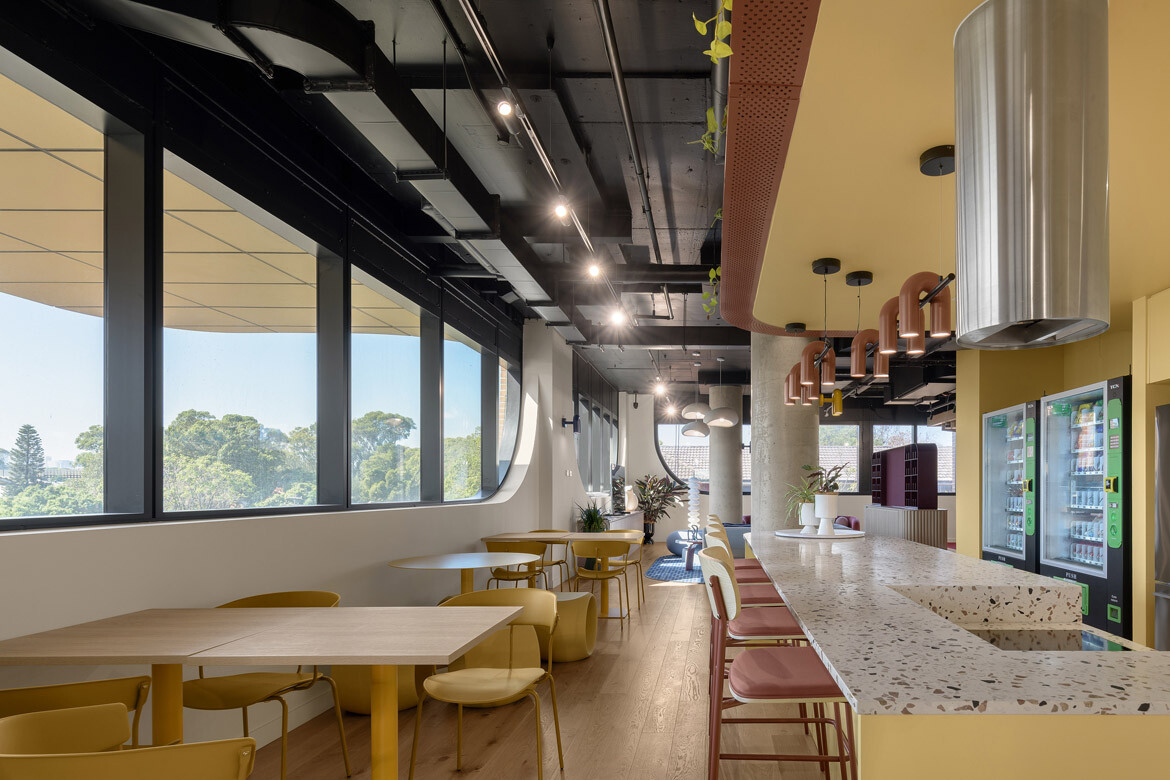
Internally, the program reflects the evolving expectations of student living. The 308 apartments — a mix of studios and shared layouts — are supported by a network of communal spaces, from shared kitchens to study areas and rooftop zones. These are less about amenity as add-on and more about structuring daily life, acknowledging that students are living, working and socialising within the same footprint.
Sustainability is also embedded at a systems level. The building is fully electric and achieves a 6 Star Green Star rating, integrating natural ventilation, energy-efficient systems and biophilic strategies.
See also: Hong Kong Art Week 2026

What emerges is a model that sits somewhere between residential building and piece of city infrastructure. Scape Kensington is one of several projects contributing to this broader transformation of the KEKI corridor — where student housing is being used not just to accommodate population growth, but to help define how the area functions.
The implications are broader than a single building. As transport investment and planning controls continue to align, developments like this suggest a shift in how density is delivered — less as isolated towers, and more as part of a connected, mixed-use urban fabric. For the student accommodation sector, it marks a move away from the margins and into a more central role in shaping the city.
Plus Studio
plusstudio.co
Photography
The Guthrie Project, Tom Roe, Viascape


INDESIGN is on instagram
Follow @indesignlive
A searchable and comprehensive guide for specifying leading products and their suppliers
Keep up to date with the latest and greatest from our industry BFF's!
The internet never sleeps! Here's the stuff you might have missed