The home of architecture and design in the Asia-Pacific
Get the latest design news direct to your inbox!

Get the latest design news direct to your inbox!
Mushrooms: The Art, Design and Future of Fungi at Somerset House offers an insight into how mushrooms could revolutionise the design and architecture industry.

January 30th, 2020
There are an estimated 140,000 species of mushrooms on the planet – from the porcini, shitake and enoki that you might pick up at the grocer to hallucinogenic psilocybin mushrooms, medicinal fungi and countless others. And, according to a growing number of experts, fungi might hold answers to some of the myriad challenges facing the world today. Mushrooms: The Art, Design and Future of Fungi – a new exhibition at London’s Somerset House (until 26 April 2020) curated by writer Francesca Gavin – takes visitors inside the fascinating world of mushrooms, celebrating both their legacy and potential.
“People are increasingly fascinated by mushrooms – they love the little things,” says Gavin. “Thinking about fungi is impacting on new ideas in architecture, psychology, medicine, fashion, and economics. Artists are equally inspired by mushrooms.”

Amanda Cobbett, ‘Fungi’ © Andrew Montgomery
The exhibition is divided into three parts across three rooms, each with exhibition design by award-winning British design studio Pentagram. There’s also seminars, a curated film programme, and a pop-up dining experience by acclaimed British chef Skye Gyngell and guests. “The exhibition could have taken over ten rooms,” says Gavin. “The challenge was editing things down to what showed the greatest breath, artistic experimentation and addressed some of the variety of ideas that are brewing around the mushroom.”
The first room, Mycophilia, looks at the revival of interest in mushrooms and the artistic response. It begins with Lewis Carroll’s 1865 classic Alice’s Adventures in Wonderland and covers everything from watercolours by Beatrix Potter to lithographic prints and collages by American artist Cy Twombly.

Beatrix Potter, Hygrophorus puniceus, pencil and watercolour, 7.10.1894
Room two, Magic Mushrooms, focuses on the poetic and psychedelic aspects of fungi. “It demonstrates the stranger and more fantastical ideas around the mushroom,” says Gavin. “It has become a symbol of mental and social freedoms somehow.” It’s here that visitors can explore the work of mushroom devotees, including the three-dimensional papier-mâché and embroidered sculptures of Amanda Cobbett, and hanging textiles by Australian fashion label Perks & Mini.

Alex Morrison, ‘Mushroom Motif’ (Black and Ochre), 2017, courtesy of the artist, care of L’inconnue Gallery, Montreal
Room three, Fungal Futures, concentrates on design and prototypes working with mycelium – the vegetative part of a fungus – as a material, and looks at how mushrooms can help create a more positive future. Over the years designers have used mycelium to create objects as varied as furniture, lighting, building materials, shoes, and even a decomposable burial suit – examples of which are on display at Somerset House. There will also be a specially commissioned mycelium-based chair by British designer Tom Dixon.


As mycologist and author Paul Stamets says in Six ways mushrooms can save the world – a 2008 TEDTalk that boasts close to six million views and suggests innovative ways mushrooms could be used, from reinventing the delivery system to addressing the energy crisis: “Mycelium infuses all landscapes – it holds soils together, is extremely tenacious, and holds up to 30,000 times its mass. They are the grand molecular disassemblers of nature – the soil magicians.”
Given the current challenges facing the world and the need to reevaluate manufacturing and consumption at all levels, it’s a timely exhibition. “We need to quickly realise how important it is to live in harmony with nature – and the paths of technology and capitalism need to be reimagined and readdressed in a more positive way,” says Gavin. “Fungi are fundamental to our existence as humans on this planet. They live in our body, and they enable ecosystems to exist. Without fungi the world would be a much sadder, more barren, and possibly uninhabitable place.”

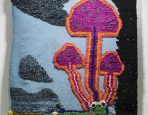


Mushrooms: The Art, Design and Future of Fungi is on at Somerset House from 31 January to 26 April 2020. Admission is free.
INDESIGN is on instagram
Follow @indesignlive
A searchable and comprehensive guide for specifying leading products and their suppliers
Keep up to date with the latest and greatest from our industry BFF's!
The internet never sleeps! Here's the stuff you might have missed