The home of architecture and design in the Asia-Pacific
Get the latest design news direct to your inbox!

Get the latest design news direct to your inbox!
As Bates Smart’s Melbourne studio celebrated 165 years of architecture, the idea of heritage came up for debate.

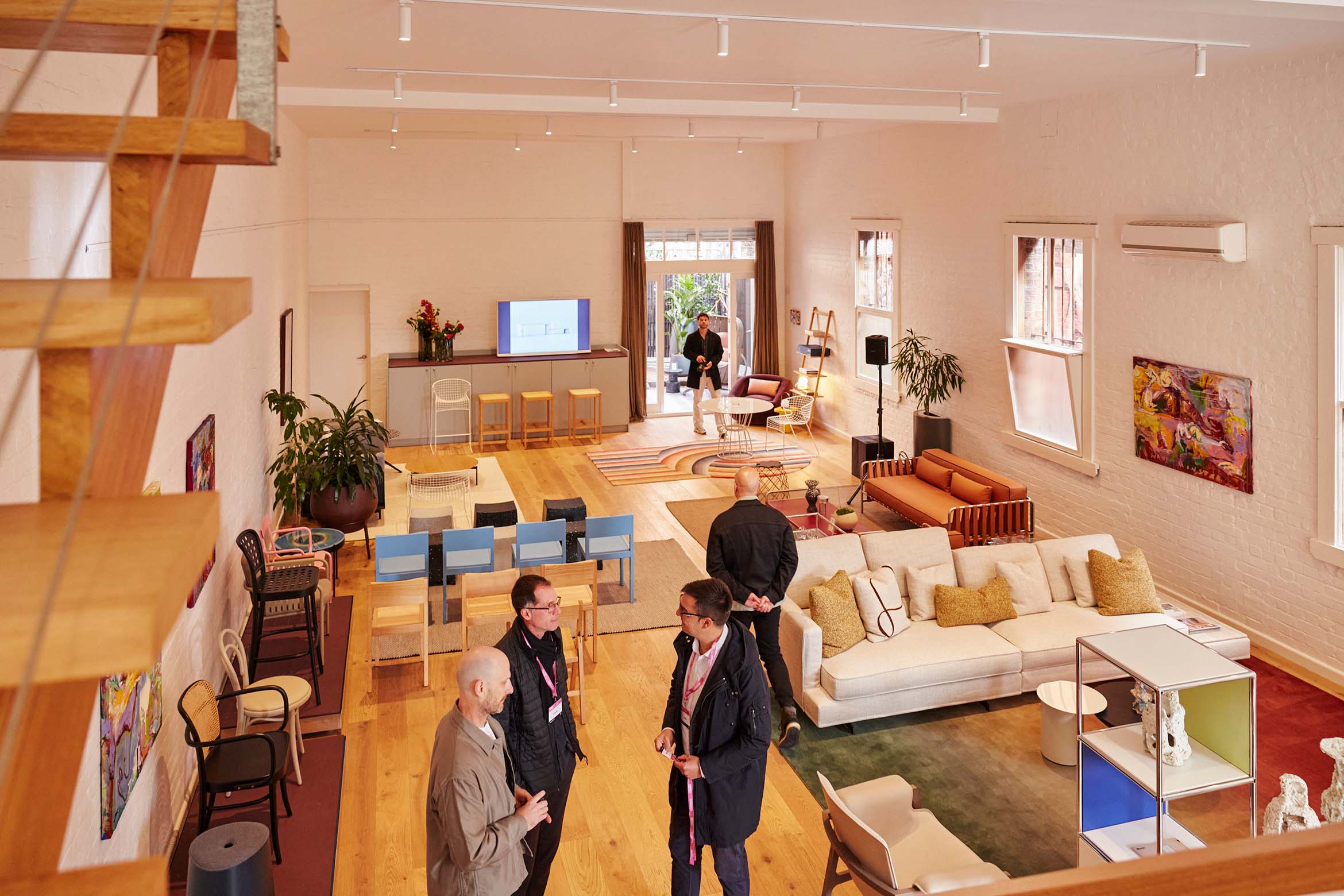
Set in the curated exhibition space of ICI House, a mixed crowd came together to hear from a panel of experts on the topic of Preservation vs. Progression in honour of Bates Smart‘s 165 anniversary.
On the panel was Chris Kakoufas (Cbus Property), Peter Lovell (Lovell Chen), Romilly Madew (Green Building Council of Australia), Professor Julie Willis (University of Melbourne), while Bates Smart’s Tim Leslie moderated.
One of the big challenges facing the built environment is the significant number of post-war buildings, which may be heritage-listed, but unless upgraded will be incredibly inefficient from an energy, comfort and accessibility perspective. Can owners afford to cover the cost of upgrading a skyscraper to meet current standards? Can heritage controls allow for this transformation to the heritage fabric? One concept that came up was the social and community value a building holds. Festival Hall is a great example of one such building that holds little heritage value in its built form, but nostalgic memories for those who have had musical experiences at the venue. This social currency being a unique point of departure for the future of heritage architecture.
The panel felt it was important to maintain a mix and diversity of building scale and typologies in the CBD, while allowing the city to evolve. There was consensus, that many recently completed buildings in the city were of poor quality, and that standards needed to be raised to avoid this in the future. This flowed on to a discussion about the city of Melbourne requiring good leadership and a clear vision to guide development in the future.


INDESIGN is on instagram
Follow @indesignlive
A searchable and comprehensive guide for specifying leading products and their suppliers
Keep up to date with the latest and greatest from our industry BFF's!
The internet never sleeps! Here's the stuff you might have missed