A new era for Indigenous collaboration
Published

Pushing forward the discussion of design, Schiavello recently hosted a panel talk with some of the brightest minds in the industry – and a key issue on the table was Indigenous design and collaboration. Here’s what came out of it.
In the last few years, a shift has occurred in the design industry, thanks to changing race relations, a growing support of the Indigenous community, and a newly-released document – the Indigenous Design Charter. Until now, there has been limited direction to help lead the design community in how to engage in collaboration with Indigenous people and culture in a respectful and mutually beneficial manner.
“While I was studying my PhD, I worked to develop protocols for appropriate representation of Indigenous culture,” says Deakin University’s Dr Russell Kennedy. “There was a greater demand for representation of Indigenous tradition in design projects, particularly in place branding. However I noticed that there was often awkwardness in the industry – and there were two approaches that were taking place: non-Indigenous designers were either appropriating by designing in an ‘Aboriginal style’, or they were avoiding it because they didn’t want to go about it the wrong way. And neither of those are ideal scenarios.”
In response, Kennedy and a team of experts put together the Indigenous Design Charter, a freely available and simple set of protocols that guide non-Indigenous designers in how to appropriately engage with Indigenous collaborators. Since its launch in 2017, the Charter has guided numerous projects and companies, providing them with direction on how to correctly engage Indigenous collaborators and peers.
.
“There was a greater demand for representation of Indigenous tradition in design projects, particularly in place branding. However I noticed that there was often awkwardness in the industry.” – Dr Russell Kennedy
.
This year, GroupGSA and Schiavello’s People and Culture Consulting team concluded work on a fit-out for an electricity distribution company. The job included teaming with the organisation’s Indigenous Representative Group and engaging Aboriginal artist Lucy Simpson – who was deeply involved in the process of the fit-out – to create a piece of art that told a story about the elemental forces in nature and how they can connect to us through energy.
Peter McCamley, Director of GroupGSA, explains the meaning behind the art. “It was based off a Yuwaalaraay term – baayangali – which means ‘the system in the natural world by which everything connects’ and explores what comes after lightning strikes the Earth. That was something beautiful that responded to the brief but also was personal to Lucy and her Indigenous background and heritage.”
As we see the use of this Charter spread, along with the understanding it brings, we are seeing the design landscape reform. A decade ago, many designers were hesitant to include Indigenous culture in their work, however we now occupy a space in which conversation and collaboration is actively encouraged and supported. This, in turn, morphs the industry into one that shares the history and tradition of Aboriginal culture with the wider community, laying its own brick in the road to reconciliation.
Interested to hear more about this timely topic? Join us at FRONT.design 2019 for our FRONT Forum talk ‘Co-creating city and country: Indigenous consultation in design and development‘.
–
Read an extended version of this article on Schiavello’s website. Or explore other stories that look at Indigenous design.
Related Articles
Events
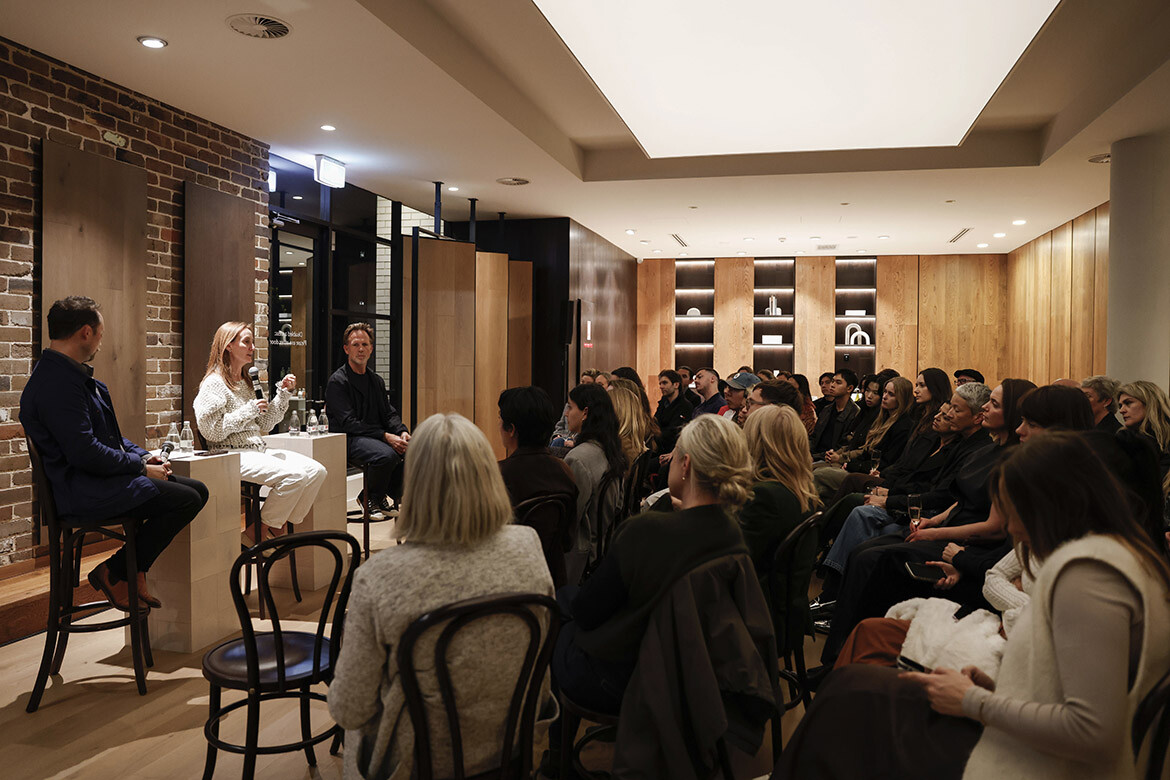
A rollicking good story with Richards Stanisich and Royal Oak Floors
Jonathan Richards and Kirsten Stanisich discussed practice, design process and the business of running a studio at a live audience event hosted by Royal Oak Floors in Sydney.
Events
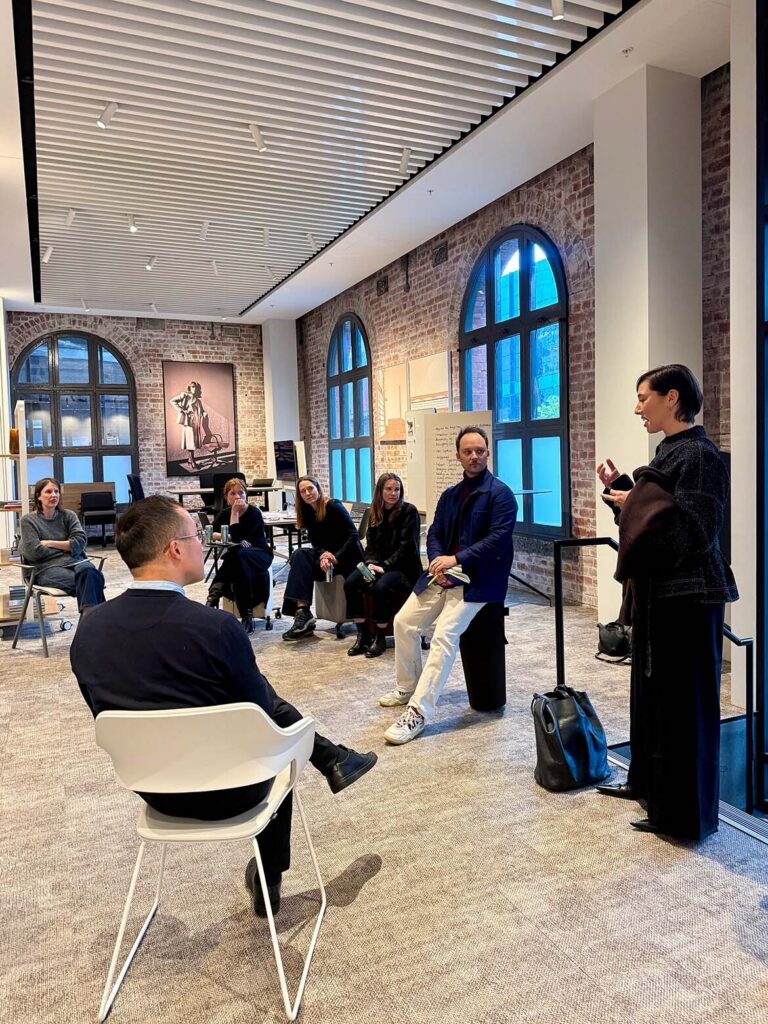
Indesign x Wilkhahn: Melbourne, where are you working?
Our latest collaboration saw a range of designers come together at Wilkhahn’s Melbourne showroom for a discussion on the workplace dynamics specific to the Victorian capital.

Events
“A journey into a whole new material world”: Plant Life at the NGV
Curator Ewan McEoin tells us about the NGV’s new exhibition on plant-based materials as alternatives to plastics, synthetic materials and other non-renewable resources.

Ideas
Beyond the panel: What makes a design event worth attending?
Ahead of Saturday Indesign, architects reflect on why smaller gatherings, unexpected voices, candid discussion and meaningful follow-up can make meeting in person genuinely worthwhile.