The home of architecture and design in the Asia-Pacific
Get the latest design news direct to your inbox!

Get the latest design news direct to your inbox!
Behind every memorable hotel stay is a carefully curated brand experience. From environmental design to placemaking, wayfinding and more, Fabio Ongarato Design has been an early pioneer of the narrative-led hotel.

Reception at W Brisbane, with wayfinding by Corlette and environmental branding by Fabio Ongarato Design.

Bar at W Brisbane

W Brisbane.

W Brisbane. (L-R): Bar details. Room detail.

Jackalope


Jackalope Hotel's famous art sculpture.

W Shanghai

W Shanghai

August 24th, 2018
Remember Michael J Fox in The Concierge? And Julia Roberts in Pretty Woman? Those vintage Hollywood flicks really brought the romance of ‘hotel stays’ to life. If you look beyond the cheesy girl-meets-guy storyline, you may recall the backdrop of studied luxury, the glamour of travel and sense of time suspended, service staff who are like family; all the hallmarks of a home away from home.
It really does take a village to bring that hotel experience to life. But it doesn’t necessarily start with the concierge – they might be part of the bigger story. With the opening of every hotel, a new brand is borne. Because a hotel is not just a place, it’s a holistic experience stemming from brand.
W Brisbane. Photo by Justin Alexander.
Enter Fabio Ongarato Design, a multi-disciplinary design studio that straddles fields of creative direction, identity creation, brand activation, placemaking, wayfinding and more, to bring that unique hotel experience to life. The work the studio does behind-the-scenes sets the proverbial algorithm for a life-long loyalty between hotel and customer.
It all starts with curating immersive design elements that, as Fabio Ongarato says, “go beyond what you can merely see or touch – design’s language is best when it is experiential.”

QT Perth. Photo by Dion Robeson.
But there are a few steps that come before the experience stage. As Ongarato explains: “We have to know what we want to say to curate a narrative for the brand and brand experiences which is why defining an identity and personality is so important. Creating a distinctive brand identity and personality is commonly part of the process and that provides a foundation for what we create.
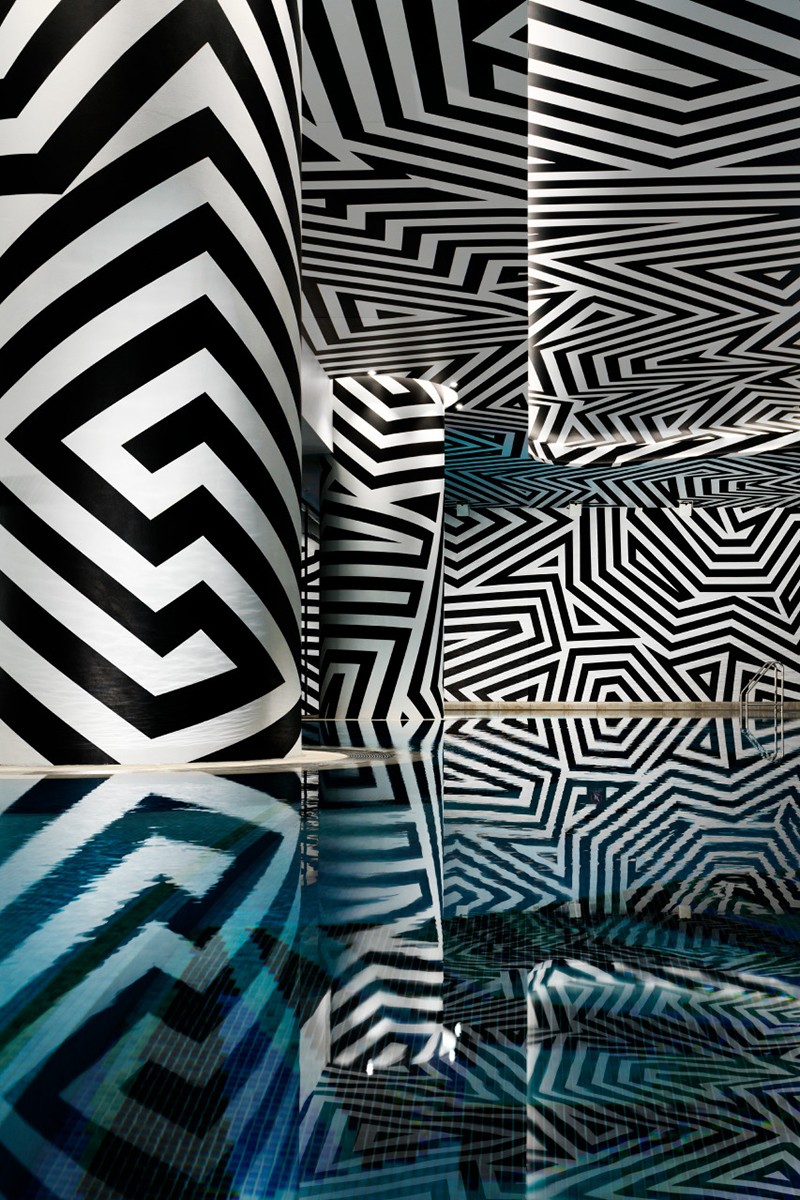
Wet Deck at W Brisbane. Photo by Justin Alexander.
“It’s not always an easy process because the obvious things about a brand don’t make it memorable or distinctive. And equally, the expression of the brand needs layers of complexity, like an interesting fragrance. In the words of French photographer Robert Doiseau, “To suggest is to create; to describe is to destroy”.”
Through its work on multiple projects, including Jackalope Hotel, QT Hotels and W Hotels, Ongarato’s studio has given rise to a culture of narrative-led hotel design, driven by a holistic approach to brand, curation and art direction.
“Our role in narrative-led hotels [can] include brand strategy with a focus on guest experience, the construct of the narrative, application to environmental design, placemaking and wayfinding right through to informing interior designers and architects,” says Ongarato. That brand foundation, he says, “enhances a guest’s experience by providing meaning to interior design, encouraging them to become more aware and engaged with their environment. It offers a world within a world for experience hunters but ultimately it aims to engage, delight and transport.”
DOOTDOOTDOOT restaurant at the Jackalope Hotel. Photo by Sharyn Cairns.
For Jackalope Hotel, Ongarato and team drew on the physical environment – in this case the vineyard – to inspire its brand foundation of ‘Alchemy’, the process of transformation. “The beauty about hotels is that design can influence a whole range of experiences that are held together by narrative,” he says. At Jackalope the narrative is expressed throughout the hotel – “more literally through the light installation in the DOOTDOOTDOOT restaurant”. Here 10,000 amber globes create a dense bubbling installation in tribute to the fermentation process inherent in winemaking. It is also expressed subtly through the cute yet sinister Jackalope creature.
Jackalope Hotel’s famous art sculpture. Photo by Sharyn Cairns.
For the QT brand’s new incarnation in Perth, WA, Ongarato and team were engaged to design a new identity and imagine a brand narrative for the entire hotel. This extended to signage and environmental design, as well as the food and beverage offering.

QT Perth. Photo by Dion Robeson.
Tracking back to one of his first narrative-led hotel projects, Ongarato references W Hong Kong. “Using narrative at that time was uncommon. It successfully injected greater vibrancy into the brand and rewrote the rulebook for narrative-led hotel design. It also successfully set the tone for all the W hotels since, right up to the launch of the most recent W Shanghai.
“W Shanghai is built on a foundation of ‘captivating contrasts’ in recognition of Haipai, [which is] the Avant-Garde, East-meets-West culture of Shanghai, amongst other social, cultural and environmental influences.”
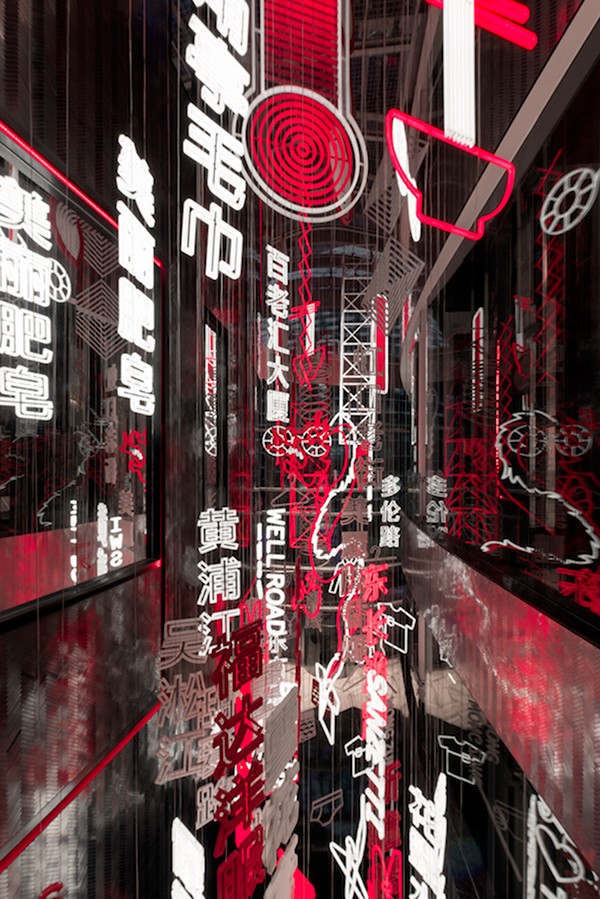
W Shanghai. Installation: Assume Vivid Astro Focus. Photo by Dirk Weiblen.
Importantly for any hotel of the future is an appreciation for branding and understanding just what can be achieved using brand. The power for hotels is in harnessing the potential for telling a story and bringing it to life. “Increasingly brands tell stories beyond who they are or what they do. It’s about understanding positioning and influencing a certain culture,” says Ongarato.
W Shanghai. Interior design by GA Design. Photo by Dirk Weiblen.
So for anyone with big visions for a hotel design, the process may very well begin with a question: Who do you want to be and what do you want to say?
Read our list of design hotels to visit.
–
Keep up to date with the latest from the design world. Sign up for our newsletter.
INDESIGN is on instagram
Follow @indesignlive
A searchable and comprehensive guide for specifying leading products and their suppliers
Keep up to date with the latest and greatest from our industry BFF's!
The internet never sleeps! Here's the stuff you might have missed