The home of architecture and design in the Asia-Pacific
Get the latest design news direct to your inbox!

Get the latest design news direct to your inbox!
Orgatec reminds us that design plays a decisive role in leadership and performance. But what can we learn from leadership, today?

As a long-time subscriber to Forbes, Bloomberg Business Week and The Economist, I have recently noticed a sudden change in their collective vocabulary. It will sound quite odd, but those publications have suddenly almost entirely stopped talking about money.
Throughout the late 90s and early 2000s publications such as these focussed largely on watchwords like ‘revenue’, ‘target’, ‘sales’, ‘efficiency’, and ‘results’. And, while such aspects of the commercial sector are undoubtedly central to its operation, what appears to have happened – and happened almost silently – is a wholesale redefinition of the word ‘success’. As the professional world has become more interconnected both in terms of the penetration of technology in the workforce and the spread of globalisation, ‘success’ has no longer become simply a game of process and results.
Take for instance Forbes’ most read article of December 2016. Entitled ‘Ten Cowardly Things Only Weak Managers Do’, the writer (who moonlights also as a CEO) enumerates a list that pointedly focuses on self-awareness, leadership, identity and the qualities of instilling motivation and wellbeing in their team. In more ways than one each of these foci speak profoundly for the increasingly pronounced role that relationships and stimulation are required to play in the workspace for successful performance.
What has happened is a change in what was once considered the ‘bottom line’. With new and constantly changing organisational structures becoming a growing part of everyday working life for employees, companies and brands alike, never has the quality of leadership been more apt to our desire for discerning, relevant and innovative work. As companies continue to seek managerial solutions to empower each employee’s peak performance as an autonomous individual and a vital team-player, the ‘bottom line’ no longer exists. We have all become leaders.
This revolution was more than apparent earlier this year for Orgatec 2016. With the best, latest and most innovative design solutions for the commercial sector descending upon Cologne, Orgatec proved that contemporary and quality design needs to promote the qualities of leadership and identity foremost as we seek to balance the challenges of transforming working behaviours/requirements and the ever-pressing need for wellbeing.
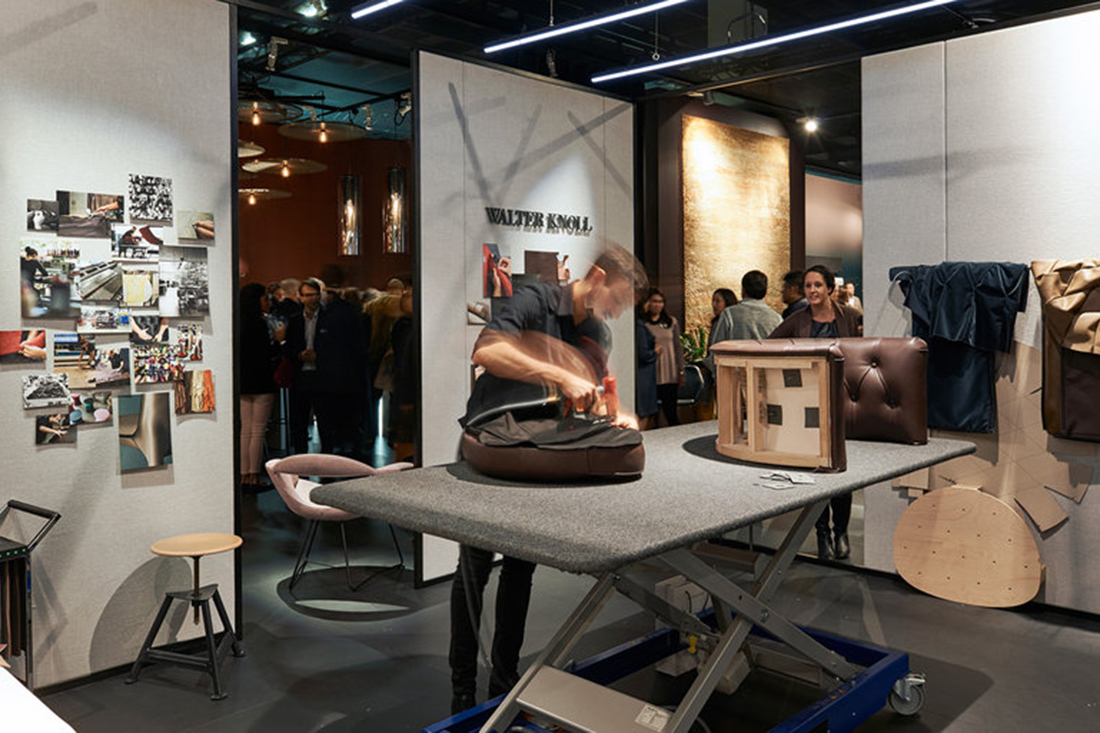
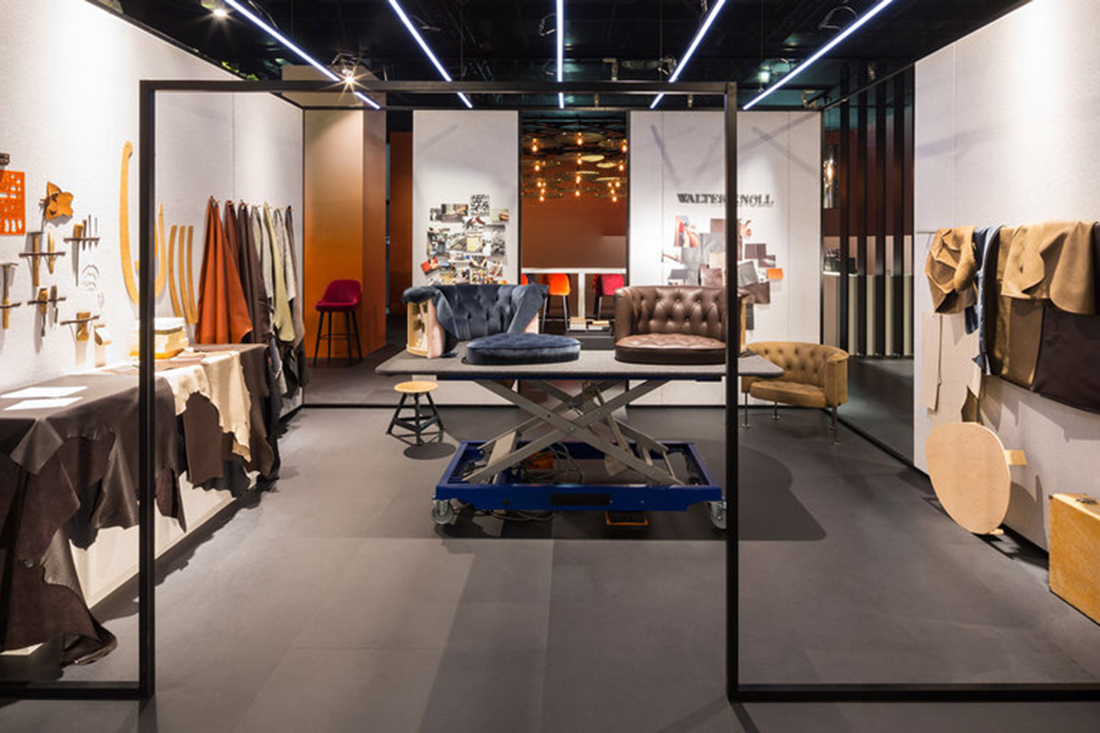
Addressing expectations of negotiating work/life balance, performance optimisation and health in the workplace, Orgatec stalwart Walter Knoll (who has been there since the festival’s beginning back in 1953) appropriately simplified the theme of their exhibition. ‘Walter Knoll: Leadership and Identity’ recognised and celebrated that the influence and worth of our environments has a direct effect on the quality of our work.
Marcus Benz, CEO and Managing Director of Walter Knoll AG & Co., rightly pronounced at Orgatec that the material environments of our workplaces “stand for the culture and identity of companies – and [are] thus an expression of how the company sees itself and of its esteem for its customers.” He continues, “[o]ur working world is changing and the design of a room is becoming ever more significant”.
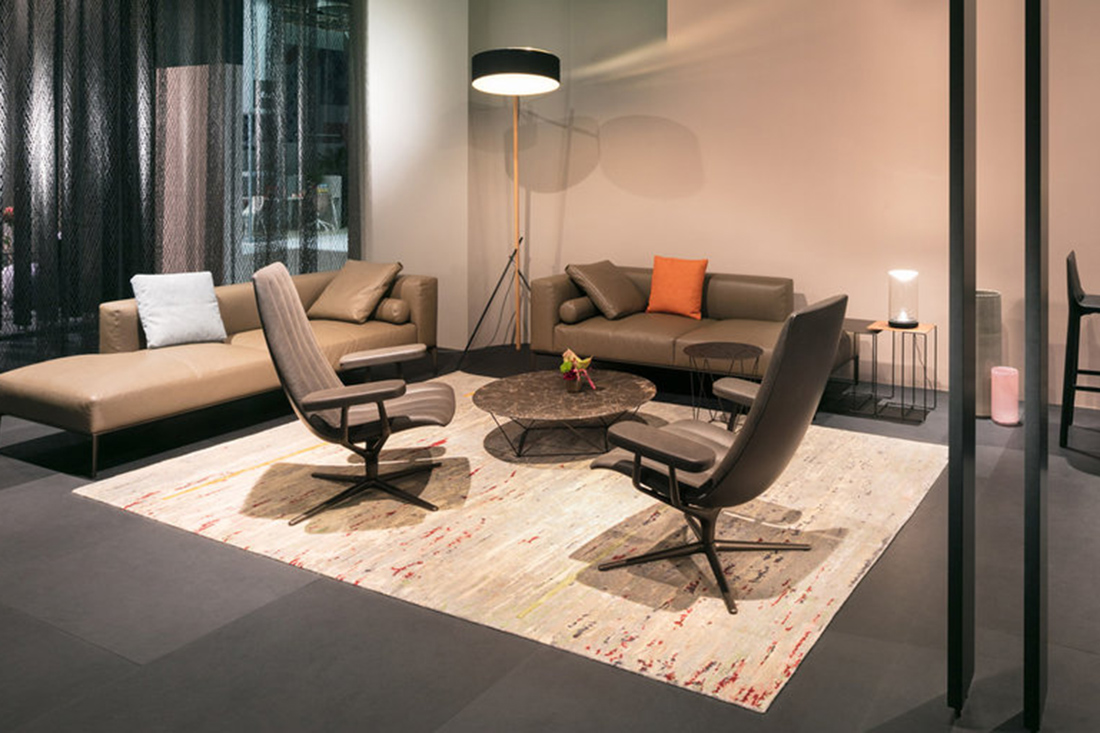
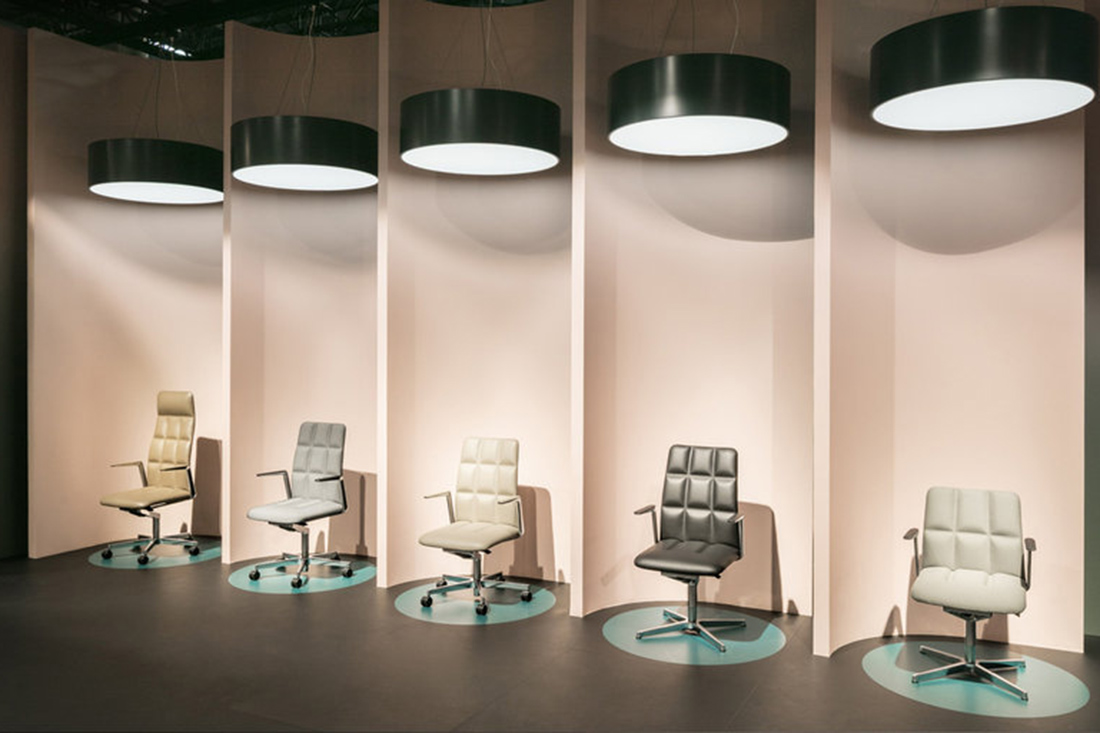
The Walter Knoll exhibition space was a feast of eye-catching ergonomy and dynamic design – of sweeping vital lines and the ever-seductive aesthetic language of mid-century modernity. Now celebrating their sesquicentenary, for me the star of the show was their latest offering to the Walter Knoll portfolio: Leadchair Management by EOOS.
Speaking so much to our individual professional desires for endurance, strength in experience and harmonious and sustained performance, the Leadchair Management joins its forebear Leadchair Executive. Both share Walter Knoll’s signature pinpoint accurate upholstery (which punters had the exclusive chance of watching in action at Orgatec this year), unerring craftsmanship and scrupulous finishings. But, its aesthetic characteristics only tell half the story of what ‘Leadership and Identity’ truly means in today’s working world.
Featuring intelligent use of negative spaces in the seat supports, user-performance is optimised for temperature regulation and blood-circulation. Coupled with meticulous ergonomic lines to support our spines and unimpeded shoulder-rotation, the Leadchair Management provides comfortable seating for sustained and finest performance possible.
INDESIGN is on instagram
Follow @indesignlive
A searchable and comprehensive guide for specifying leading products and their suppliers
Keep up to date with the latest and greatest from our industry BFF's!
The internet never sleeps! Here's the stuff you might have missed