The home of architecture and design in the Asia-Pacific
Get the latest design news direct to your inbox!

Get the latest design news direct to your inbox!
A fictional narrative of two star-crossed lovers informs the design of this well-hidden bar and restaurant.
November 25th, 2014
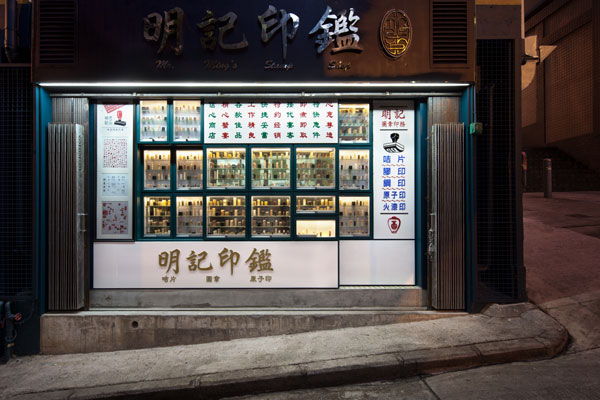
Less than eagle-eyed or well-informed passers-by who walk along Hong Kong’s famous antiques district in Sheung Wan will have no clue that Mrs Pound speakeasy restaurant and bar exists.
Designed by NC Design and Architecture (NCDA), this ‘secretive’ establishment lies well disguised behind a Chinese stamp shop on a sloping street corner along Pound Lane. Why a stamp shop, one might ask.
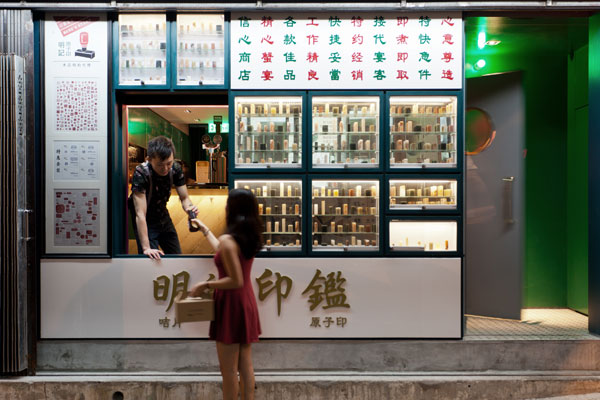
According to the designers, the restaurant’s facade is inspired by the fictional narrative of two star-crossed lovers who, as the story goes, secretly reunite in midlife.
The restaurant’s namesake character Mrs Pound was a renowned burlesque dancer in 1950’s Shanghai. Weary of the limelight, the glamorous femme fatale retires in 1960’s Hong Kong to seek refuge with her childhood love, the married Mr Ming. An avid stamp collector, Mr Ming sets up a neighborhood stamp shop as the perfect front to disguise Mrs Pound’s speakeasy – their clandestine meeting spot.
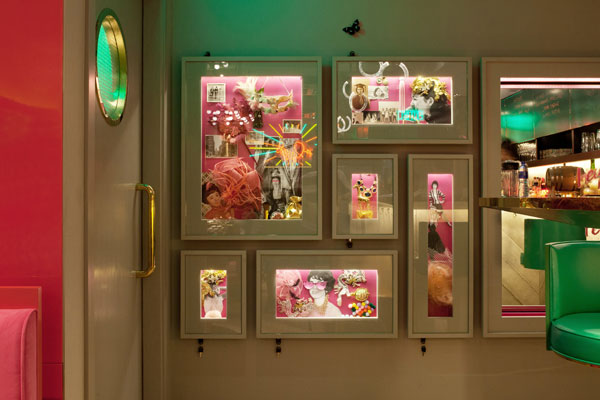
Even if you find Mrs Pound, gaining entry to the small 45-seat (150 m2) speakeasy is not so easy. To enter, initiated guests have to activate a concealed door by pressing a secret stamp hidden within the massive, illuminated vitrine. The shop facade then slides open to reveal a vibrant pink and green dining space filled with vintage photos and intimate memorabilia that tell the story of Mrs Pound’s mysterious and extravagant life.
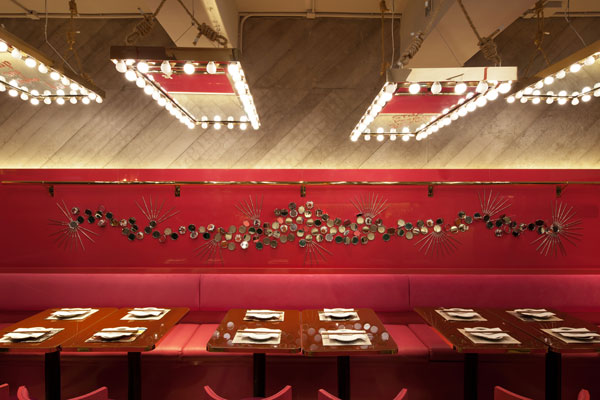
NCDA referenced the cult film classics of Wong Kar Wai to achieve a hybrid environment that fuses East and West, and traditional elements of Hong Kong with modern accents.
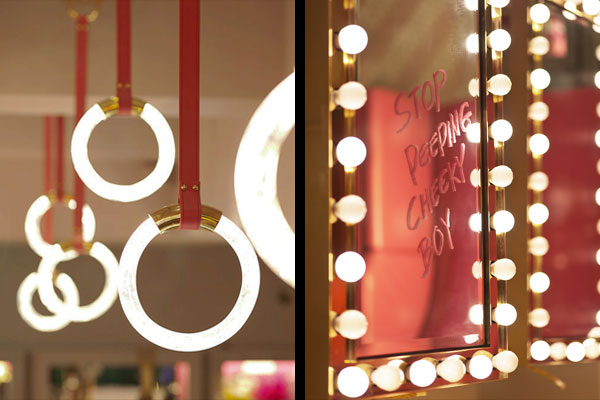
The restaurant is divided into two main zones: the lower dining area conveys feminine glamour through the bold use pink leather banquettes, mirrored marquee lights, pink patterned Chinese tile and delicate gold accents. The upper dining area serves as a masculine counterpoint with its diagonal concrete panels, green floor tiles, green barstools and colourful neon artwork.
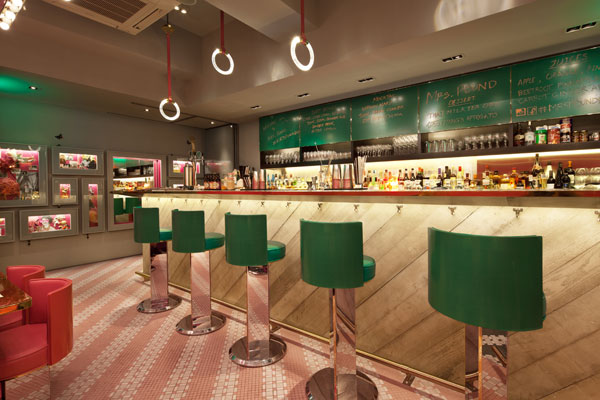
The two spaces meet at the bar, where tiles gradually change in colour from pink to green highlighted by iconic gymnastic ring lights. This aesthetic complexity extends throughout the bar, where butterflies and other artefacts take the visitor on journey through the lives of Mrs Pound and Mr Ming.
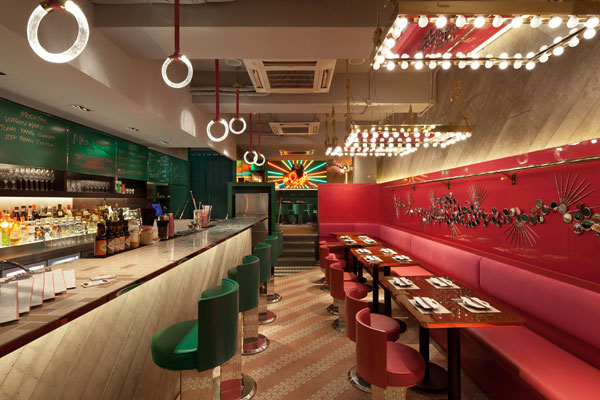
All in all, one should expect nothing less than a highly theatrical dining experience.
Photography by Dennis Lo Designs and Justin Lim
NC Design and Architecture
ncda.biz
INDESIGN is on instagram
Follow @indesignlive
A searchable and comprehensive guide for specifying leading products and their suppliers
Keep up to date with the latest and greatest from our industry BFF's!
The internet never sleeps! Here's the stuff you might have missed