The home of architecture and design in the Asia-Pacific
Get the latest design news direct to your inbox!

Get the latest design news direct to your inbox!
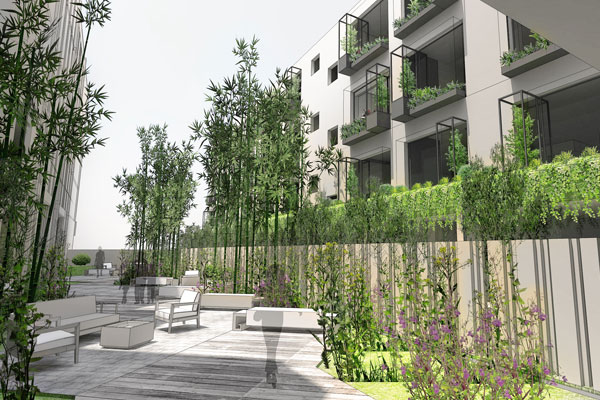
Studio Twist’s concept of a hotel that grows its own fresh air looks to address China’s air pollution crisis, and hotels in the country in need of upgrading. With the proposal having taken home the grand prize at the 2014 Radical Innovation Award, we find out more from the firm’s principal, Lip Chiong.
June 18th, 2014
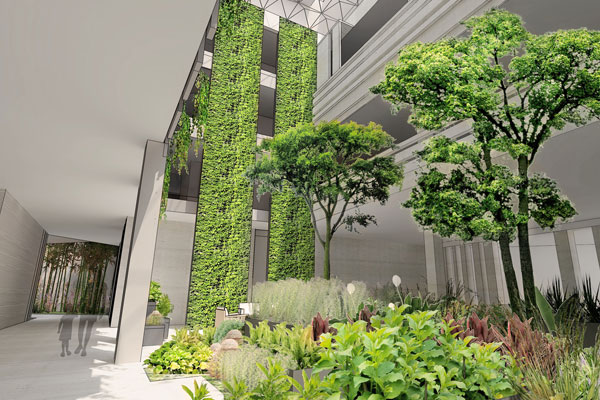
What sparked the idea for the ‘Green Air Hotel’ proposal?
Whilst working in China, we’ve observed that a large number of independent brand hotels are trapped in outdated buildings in urgent need of an upgrade. These generic hotels usually suffer from bad planning, lack of views, and ineffective branding. A typical renovation may be to rebrand the hotel through styling and aesthetics, but such a cosmetic touchup will not distinguish or give this type of hotel a truly competitive edge. The Radical Innovation Award inspired me to reconsider the power of design to solve real problems, and a pressing problem in China is air pollution. The question then became: How can one design a hotel that actually contributes to solving an environmental crisis?
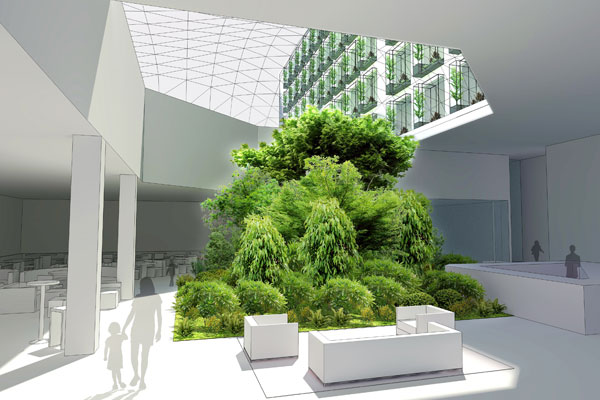
The concept of greening indoor spaces is not a new idea. Does your proposal incorporate any new or innovative features when it comes to greening buildings?
Today, as the concept of greening our built environment becomes increasingly popular amongst architects and designers, the best case scenarios are when designers deploy greenery as features within buildings as green walls or planter zones. However, the prevailing scenarios are that indoor greenery is an afterthought, added later by operators or users to beautify neglected spaces or unsightly areas. In most of these cases, greenery is deployed within the built environment to tap into the psychological benefits of plants and its beauty factor. The Green Air Hotel concept is the first generation of hotel buildings that utilises plants deliberately and extensively to improve air quality, while beautifying the environment, which is especially relevant for heavily polluted cities such as in China. Based on this conceptual shift in how we think about plants in our architectural design process, we selected plants specifically for their ability to filter air, and these plants will be deployed in quantities that correspond to the volume of air in each space. The planter integrated building components will be customised to include solar powered silent fans to increase the amount of air processed by the root microbes of our plants. This may be the first time such a technology is deployed on a building scale.
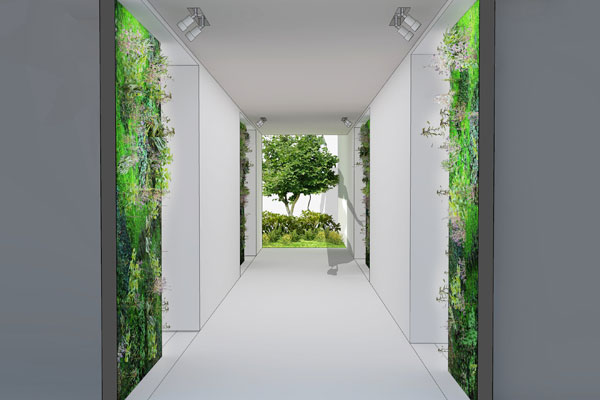
Your presentation states that indoor air quality can be worse/more harmful that the air quality outdoors. Can you explain why this is so?
Modern buildings are often hermetically sealed in order to be energy efficient, and rely heavily on mechanical air ventilation. With reduced ventilation in air conditioned spaces, indoor spaces quickly build up a mix of emissions of volatile organic chemicals (VOCs) from personal care products, home cleaning products, carpeting, fabrics, pesticides, furniture, copying machines, air fresheners, just to name a few sources. For example, formaldehyde is commonly found in pressed wood products that are used for things like subflooring, shelving, cabinets, adhesives and paints. According to the US Environmental Protection Agency, our indoor environment can be up to 10 times more toxic than our outdoor environment, and since we spend as much as 90% of our lives indoors nowadays, there is good cause for some attention. Researchers are now investigating our exposure to indoor pollutants as contributing causes to rising incidence of autism, allergies and toxin load.
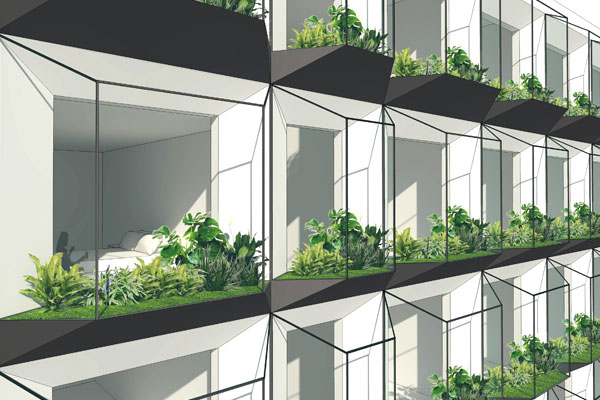
Are there any studies that show how much air quality can improve with the incorporation of these ‘green lungs’?
Dr. Wolverton who advised on our project was one of the first scientists working with NASA since the ‘70s to study phytoremediation or the cleansing power of plants whereby carbon dioxide and other air pollutants are absorbed and turned into food and energy by the plant roots microbes, giving out oxygen and water vapor in the process. Since then, there have been many other experiments conducted by various scientists and researchers to document the ability of plants to reduce indoor air toxins. To give you an example, a published 2011 study investigated the ability of plants to improve indoor air quality in schools, involving a 9-week intensive monitoring of indoor air quality in a primary school classroom in Portugal. In this case, mean CO₂ concentration in the classroom decreased, volatile organic compounds (VOC) average were three times lower than a similar classroom without plants, and there was a recorded 30% decrease in PM₁₀ concentrations after the introduction of plants into a classroom.
Watch this video:
Studio Twist
studio-twist.com
INDESIGN is on instagram
Follow @indesignlive
A searchable and comprehensive guide for specifying leading products and their suppliers
Keep up to date with the latest and greatest from our industry BFF's!
The internet never sleeps! Here's the stuff you might have missed