The home of architecture and design in the Asia-Pacific
Get the latest design news direct to your inbox!

Get the latest design news direct to your inbox!
Clifton Leung has perfectly captured the kitchen appliance brand’s personality in this warm, friendly space in the heart of Hong Kong’s Central. Tamsin Bradshaw reports.
August 18th, 2016
When Clifton Leung designed Bosch’s new 3,000-square-foot showroom on Duddell Street, food was top-of-mind. “The average person doesn’t really know much about ovens,” explains Leung. “We just know about the finished product: yummy food.”
The Canadian-Hong Kong designer founded Clifton Leung Design Workshop in 1997, and, since then, he has worked on everything from residential interiors to hospitals and showrooms for brands such as Siemens, which, like Bosch, is under the BSH Home Appliances Ltd umbrella.
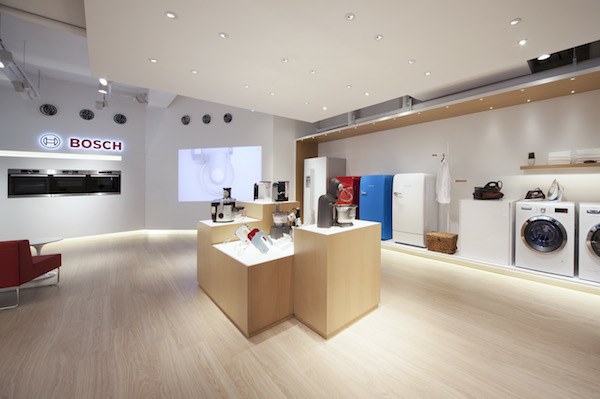
Leung worked in layers, with one layer featuring a museum-like display of products, and another featuring Bosch appliances framed inside wooden boxes
“I knew the brands already. I’d done the previous Siemens showroom on Duddell Street,” says Leung, who designed showrooms for both Bosch and Siemens this time around. “When I think of Bosch, I think of home cooking. And that’s the message here: it’s about yummy home cooking.”
Bosch’s personality comes through even before you enter the showroom. The glass doors at the entrance feature polished, circular handles that were inspired by the brand logo, and by the brand’s signature dial, which is also round. “It’s a soft touch. We wanted people to have that experience as soon as they get here,” says Leung.
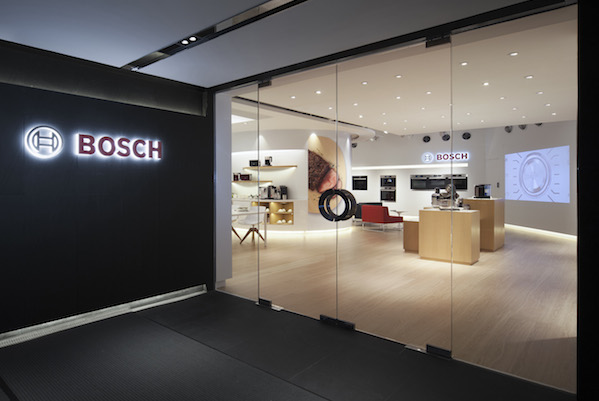
Round door handles echo Bosch’s logo and trademark circular dial
The circular elements continue throughout the showroom, with retro, round air vents along one wall – behind which hide the bulk of the showroom’s air-con units – and the structural square column has also been transformed into a circular-shaped one, acting as a display area with shelving all around, and drawing the customer into the lounge area. “I wanted to invite people to come the back of the store,” says Leung.
The structural column is one challenge Leung managed to overcome; another was the large, floor-to-ceiling windows. “Big windows mean there’s no space to display things. There’s not so much wall space,” he says.
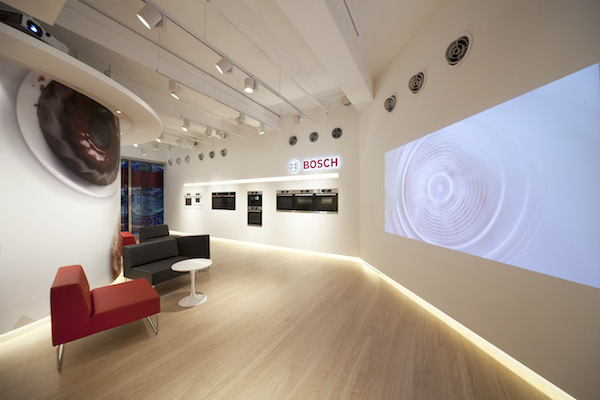
The circular column on the left draws the customer towards the lounge area at the back of the showroom. Videos and images can be projected onto the wall opposite, as pictured
To solve this problem, Leung created three framed boxes that sit in front of the windows. They are spaced out to let natural light come in, while directing the customer’s attention to the appliances via the wooden frames around the boxes.
The lightboxes also serve another purpose: to draw the attention of people passing by on the street below. Super-sized images of Bosch products and logos are displayed on the window-side of the lightboxes – a fresh take on the usual shop window. “I created three lightboxes to give people on the street a view. With images this big, they will see us and come up,” he says, adding, “Shanghai Tang [across the road] is also so bright. We had to find a way to fight for presence!”
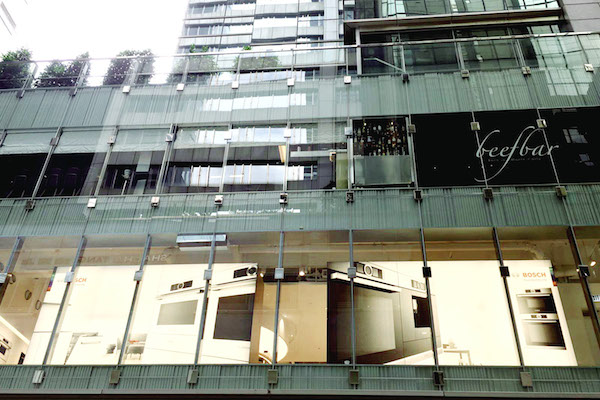
The lightboxes, as seen from Duddell Street
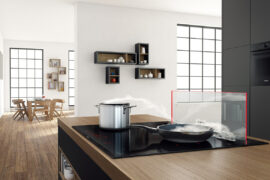
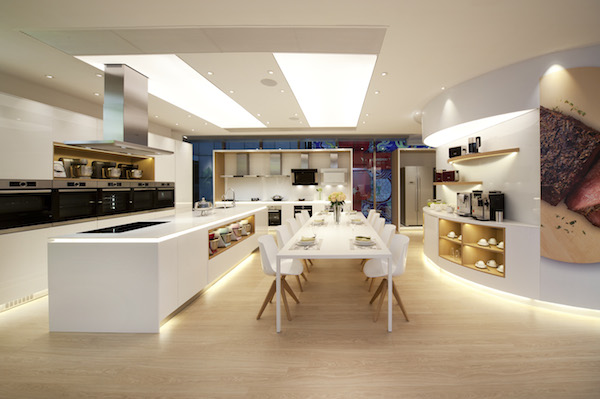
Other standout features at the Bosch showroom include the open kitchen. Here, a long dining table serves as a spot for meetings, and for people to watch cooking demonstrations and to look at the appliances, which have been placed at eye level for those who are sitting down. Over the table and the Corian kitchen island, which features Bosch cooktops of course, sit two LED ‘skylights’, which shed a remarkably natural light on the open kitchen.
“It’s a focal point – it’s about creating ambience,” says Leung. It was also a good way of bringing more light into the space; light that has been somewhat diminished by the fact that the lightboxes block some of the natural light from outside.
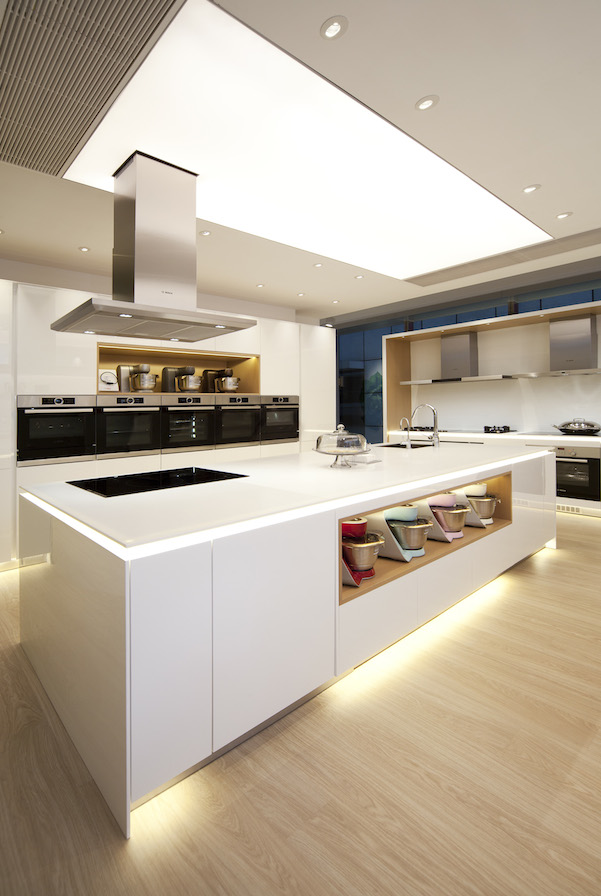
Finished in Corian, the kitchen island is a focal point thanks to the ‘skylight’ above it
Bosch were initially worried about the idea of putting lightboxes in front of the windows, but Leung reassured them. As he points out, the customer’s attention should remain in the showroom – they should not be drawn to look at what’s going on outside. “We want people to look at the appliances when they come here.”
Also giving the space a sense of warmth are the photographs of fresh ingredients and finished dishes that line the walls. “In my mind, this is about a consumer experience,” says Leung. “You want to see the end results of what you can cook with Bosch appliances.”
Clifton Leung Design Workshop
cliftonleungdesignworkshop.com
Bosch
bosch-home.com.hk
INDESIGN is on instagram
Follow @indesignlive
A searchable and comprehensive guide for specifying leading products and their suppliers
Keep up to date with the latest and greatest from our industry BFF's!
The internet never sleeps! Here's the stuff you might have missed