Pictured above is the Mactan-Cebu International Airport, designed by IDA. Image courtesy of IDA
Taking place between 26 and 30 September 2016 in Hong Kong was the biennial Asian Congress of Architects Forum (ACA17), a platform for architects from around the world to share ideas. This year, the regional event, which was held at the Hong Kong Convention and Exhibition Centre (HKCEC), focused on Growth and Diversity: The Green Age of Asia. Winston Shu, Founder and Principal of Hong Kong-based architecture office IDA, was a keynote speaker at the congress. He presented IDA’s recent sustainable projects in Hong Kong, Beijing and Saudi Arabia.
Shu worked with Foster and Partners for close to 20 years, contributing to high-profile projects such as the HSBC Main Building in Hong Kong, before establishing IDA in 1999. After his talk at ACA 17, Shu sat down with us to talk about IDA’s approach to sustainable architecture.

Winston Shu of IDA
How would you define sustainability?
There are three aspects to the idea of sustainability. The first is about energy: how to protect the earth, and how to reduce carbon emissions. The second aspect is about human needs. Men’s quest for comfort is universal. Architecture that provides comfort will be useful in both the near future and in the long run. Finally, the business model of an architecture office should be sustainable. You have to be both innovative and practical.
IDA has projects in different locations in the world. Is there a universal sustainable design approach?
The first principle of IDA’s design approach is to have a white canvas, and to be prepared to understand a client’s needs. There are certain criteria that different clients share, such as the need of space and comfort. What is crucial to design is how the space could be used. We ask our clients a lot of questions to understand their unique habits, and our design responds to them.
Social spaces are important to your design. For example, Parkview Green in Beijing has a footbridge that animates the building. Why do you think social spaces are important in sustainable architecture?
Social interactions are crucial. Good social spaces are intentionally designed to create opportunities for accidental encounters, which bring enjoyment and healthy energy to users.
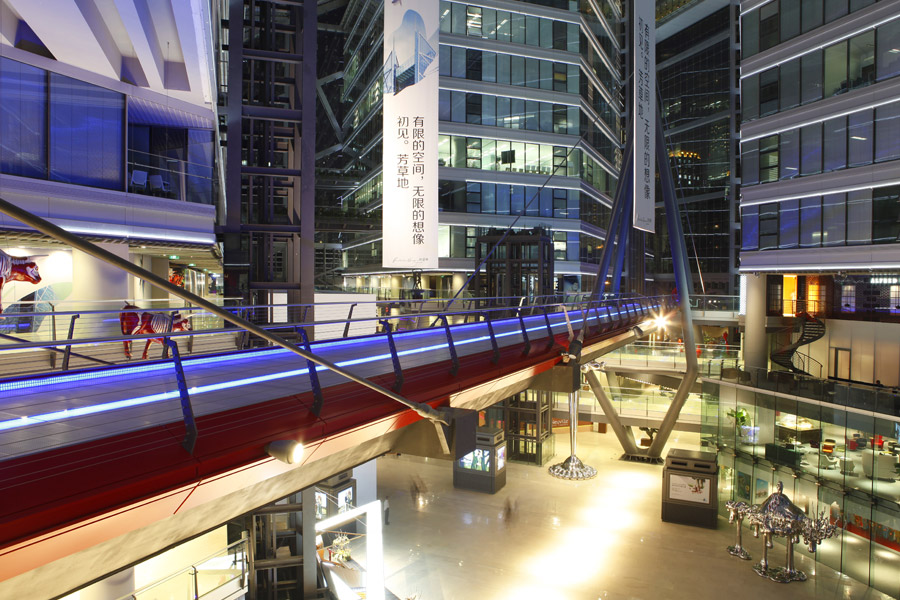
The bridge at Parkview Green in Beijing. Image courtesy of Parkview Green
What are the main challenges of designing sustainable architecture?
You have to be skillful in convincing a client to spend more on a sustainable design. We had a private house project at Repulse Bay in Hong Kong. We created a semi-open design that would minimise the use of air-conditioning. Instead of directly explaining to the client the environmental design approach, we told them the design alludes to resorts in Thailand. The client loved the design, and also realised at the end that the design is sustainable and saves energy.
Can you tell us about of IDA’s upcoming sustainable projects?
The Mactan-Cebu International Airport in the Philippines is an example of our sustainable design approach. It is under construction and will be in operation in 2018. In this project, we adopted a wooden structure in response to the local labour conditions and craftsmanship. In the Philippines, it is not easy to find labour for construction of steel structures. The wooden structure is easy to construct and maintain. We do not need to use sophisticated equipment and this saves energy during construction. Wood also provides a natural finish.
What changes would you like to bring through your sustainable design?
I hope people will think more about how we can improve the built environment. Sustainability is not only about going green; it is also about creating an enjoyable environment. A sustainable building that looks like a laboratory is meaningless. Architects should use their intelligence to create designs that bring satisfaction and that benefit the community.
IDA
ida-hk.com
ACA17
aca17hk.com