Top Image: George Nelson. Photo © Vitra Design Museum Archive
George Nelson (1908-1986) is a celebrated pioneer of American modern industrial design in the 1950s, and one of the most influential designers to have shaped the world today. And from 17 March to 2 June 2014, an exhibition in tribute to the designer is being held at the Hong Kong Design Institute gallery
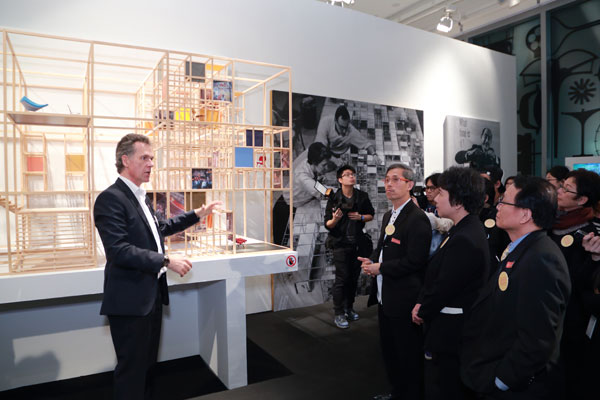
Exhibition’s opening ceremony in Hong Kong
Nelson’s expertise in the field of design extends from architecture to industrial design, and his belief that design isn’t mysterious was revolutionary among the general public at the time.
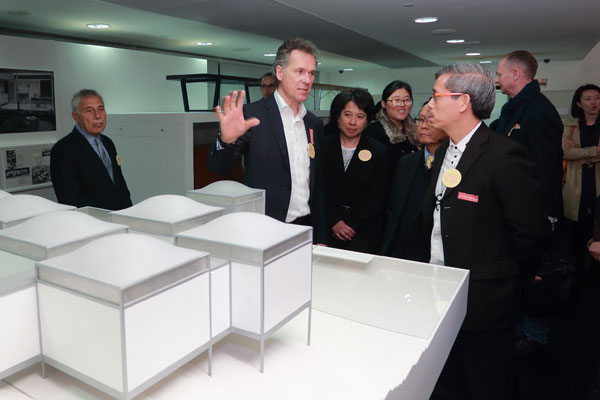
Exhibition’s opening ceremony in Hong Kong
The exhibition begins with a brief introduction to the master and showcases various models and pavilions to scale mock-ups for the viewer to experience Nelson’s evolutionary journey in the 20th century. Through studying his methodologies and witnessing numerous pieces of legendary furniture pieces, the show ties in Nelson’s architectural achievements at the end as a tribute to his contributions to the design world.
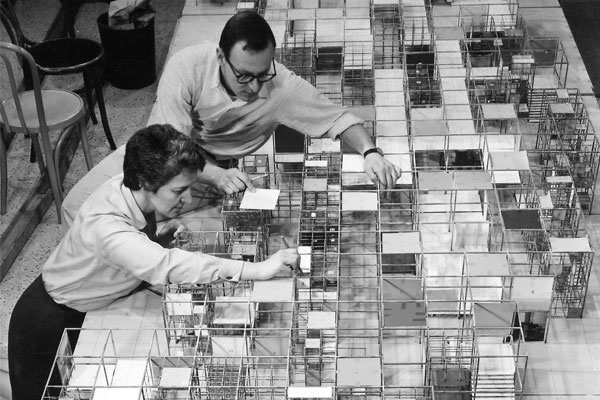
Two staff members in Nelson’s office with a model for the American National Exhibition “Jungle Gym”, Moscow, 1959. Photo © Vitra Design Museum Archive
In the 1950s, by reiterating his strong belief that design can shape the world, Nelson challenged traditional methodologies, from aesthetics to materials and craftsmanship. Through dissecting conservative designs, Nelson redefined the relationship between the user and the product, focusing on the function and structural integrity of a product, and how it can be improved to reflect the present era and cater to the habits of the user. From a working desk and chairs to prefabricated architecture, Nelson continuously tried to push for new boundaries. Certainly ahead of his time, his achievements became an endless source of inspiration for contemporary designers.
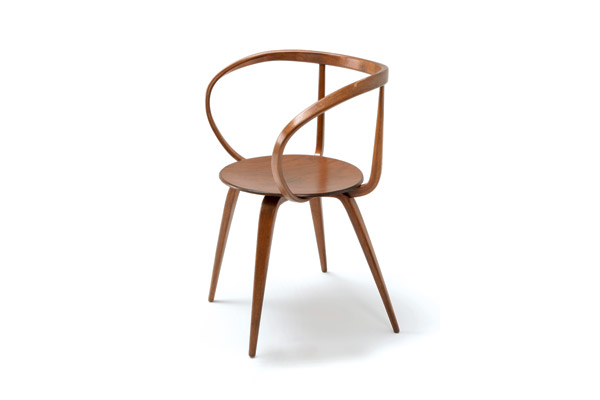
Pretzel Armchair. Photo © Vitra Design Museum Archive
His vanguard pavilion designs have changed the way exhibitions are curated for generations. Nelson redefined the dialogue between a viewer and the exhibits, enriching the experience by adding more depth and layers between exhibits to stimulate the viewing process. Such a technique is very popular in today’s practice.
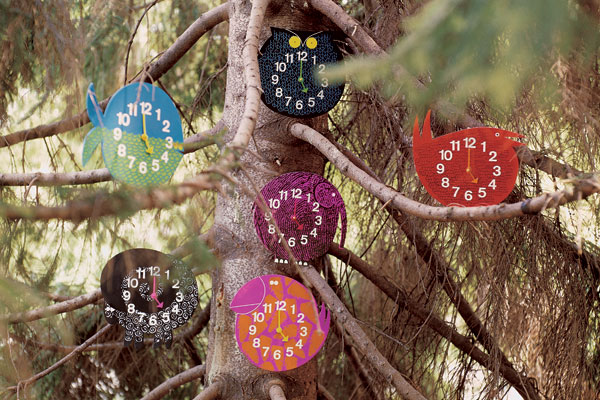
Zoo Clocks, 1965. Photo © Vitra Design Museum Archive
Nelson’s architectural works, too, were truly ahead of his time. Being one of the first to experiment with prefabricated living pods, Nelson put forward innovative ideas suggesting a new way of life, offering both flexibility and cost efficiency. Without realising it, 40 years later, the practice of mobile living and prefabrication has proliferated and become a predominant way of living and working.
Although Nelson’s era was more than 30 years ago, today, our designers and producers are still communicating with the master as if he is still teaching us. It would be interesting to see an exhibition where contemporary designers create pieces to set up a present day dialogue with George Nelson’s works, to witness the evolution of human civilisation.
The exhibition “George Nelson: Architect, Writer, Designer, Teacher” has been developed by the Vitra Design Museum in Germany and is presented in Hong Kong by Herman Miller Asia Pacific. It is being held at the HKDI Gallery from 14 March to 2 June 2014. For more information, visit hkdi.edu.hk/hkdi_gallery