The home of architecture and design in the Asia-Pacific
Get the latest design news direct to your inbox!

Get the latest design news direct to your inbox!
“People meander through this forest, as if lured by the charm of the light. Light and people interact with one another, its existence defining the transition of the other,” says architect Sou Fujimoto of his installation for COS at Salone del Mobile 2016.
April 13th, 2016
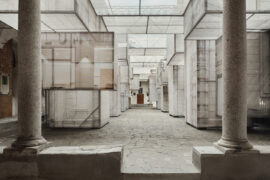
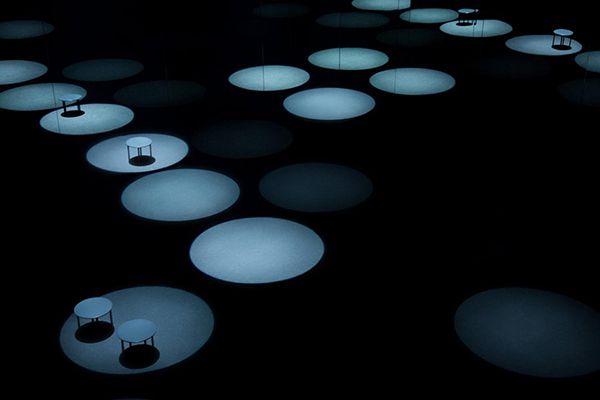
Milan’s Cinema Arti was built in the 1930s by architect Mario Cereghini and has since become a nostalgic ghost of its former theatre hosting self. Swedish fashion label COS, and Sou Fujimoto Architects, have adopted the space for their multi-sensory ‘Forest of Light’ installation in celebration of COS’ fifth year at Milan’s Salone del Mobile, the world’s largest design fair.
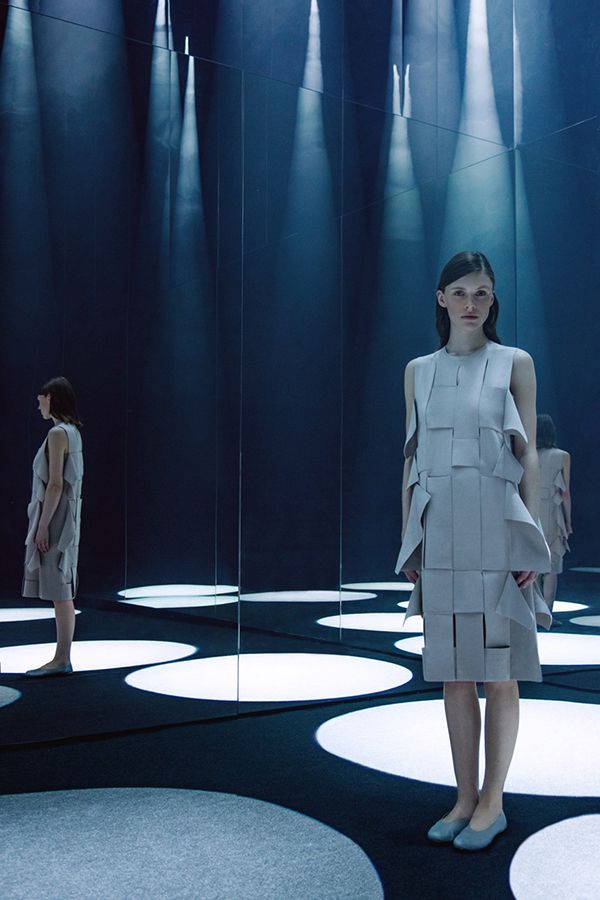
Drawing on the Cinema Arti’s previous life as a play house, the ‘Forest of Light’ installation is an homage to the idea of theatre and nature, becoming a space for observation, escapism, and experience. With walls lined in mirrors, and dappled lighting provided by a series of alternating spotlights, the sparsely spaced stools scattered inside the venue give visitors an opportunity to submerse themselves within the installation.
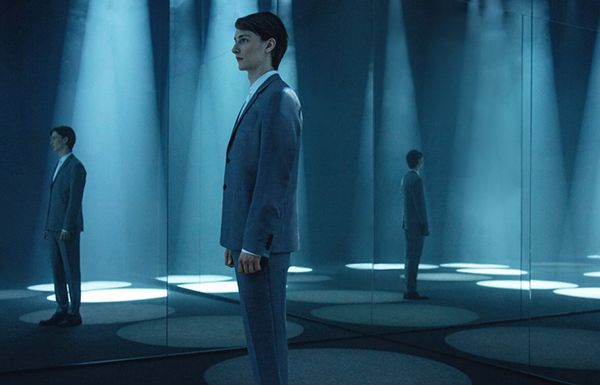
The ‘Forest of Light’s’ dancing spotlights and auditory background evoke the sensory impression of theatre by reinterpreting the cinema experiential environment of darkness, minimal illumination, and surround sound. It simultaneously adopts a more literal echo of a cinema and the Golden Age of theatre, with the spotlights recalling outmoded cinema equipment.
Fujimoto muses that, “Once, this place was a cinema, and adopting the use of spotlight is an idea of homage. The spotlight becomes an interface, which connects fashion, space, and forest, as a form of architecture.”
The installation’s conical spotlights become an interactive element of the installation, as the movements of visitors cast reflections into the mirrors and distort shadows. These refractions of light create abstract trees that seem to move throughout the space, and imitate the setting of a forest at twilight. This creates a beautiful installation that examines the idea of escapism and experience, blending the contemporary manmade experience of theatre with the natural escapist experience of the expansive forest.
COS x Sou Fujimoto’s ‘Forest of Light’ Installation can be visited during Salone del Mobile 2016, at the Cinema Arti in Milan’s San Babila district.
Discover more from 55th edition of Salone del Mobile with Milan Indesign here.
Cos x Sou Fujimoto
cosstores.com/cosxsoufujimoto

INDESIGN is on instagram
Follow @indesignlive
A searchable and comprehensive guide for specifying leading products and their suppliers
Keep up to date with the latest and greatest from our industry BFF's!
The internet never sleeps! Here's the stuff you might have missed