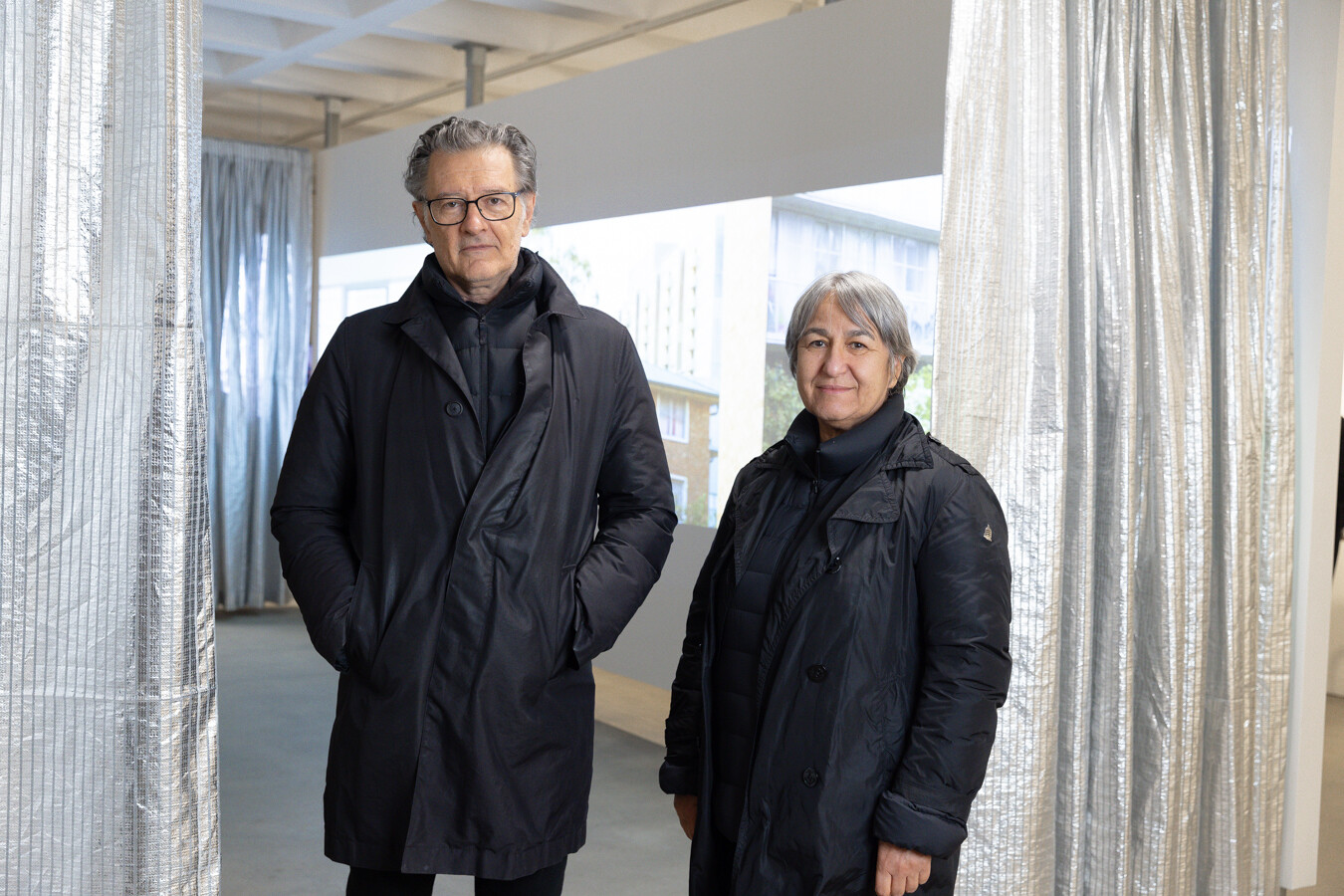
When Anne Lacaton and Jean-Philippe Vassal were awarded the Pritzker Prize in 2021, the “democratic spirit” of their architecture was decisive. The jury citation continues: “The modernist hopes and dreams to improve the lives of many are reinvigorated through [Lacaton and Vassal’s] work that responds to the climatic and ecological emergencies of our time, as well as social urgencies, particularly in the realm of urban housing.”

These are some of the very same concerns now investigated at the Tin Sheds Gallery in an exhibition hosted by the Sydney School of Architecture, Design and Planning. ‘Living in the City’ is part of the Garry and Susan Rothwell Chair in Architectural Design Leadership, a gift consisting of a Rothwell Chair appointment – with Lacaton and Vassal taking up the inaugural position as co-chairs from 2021 to 2023 – as well as research appointments and an associated program of activities.
As the culmination of three years of teaching and research surrounding the Rothwell program, the exhibition follows a week of lectures and events with the French architects visiting Sydney. The exhibition is curated by the pair alongside Catherine Lassen, senior lecturer at the University of Sydney, and Hannes Frykholm, Rothwell Chair Postdoctoral Associate.

“Living well in the big city is the most important challenge of our time and our generation,” said Lacaton in relation to the overall Rothwell Program. While the exhibition is titled ‘Living in the City’, the emphasis is very much on that crucial but unwritten part – not just living but living well. Lacaton and Vassal’s architecture is ultimately directed towards the question not only of achieving living well functionally and practically but also conceiving of this as a basic expectation or right for urban dwellers.
“This issue involves many crucial topics and challenges, such as climate change, sustainability, energy savings, cost of the land, densification, affordability, integration, social equality, and simply quality of life. Any strategy for making the city starts from the quality of housing for all,” said Anne Lacaton.
Related: Questions of density in Sydney with SJB’s Adam Haddow

With the democratic emphasis on quality housing for all, ‘Living in the City’ presents some of Lacaton and Vassal’s architectural projects alongside documentary films and research. The exhibition also presents studio work from within the University of Sydney that focuses on some of the city’s most pertinent sites with regard to questions of urban life, including the Sirius Building and Waterloo Housing Estate.
The exhibition provides an illustration of what it means in practice to have an approach that begins inside each apartment and works outwards – a democratic attention to detail on the scale of the individual dwelling. In a word, it prioritises ethics over aesthetics. As the curators note, “Transformation in our cities can and should happen through the incremental addition of improved ‘micro’ qualities: to bedrooms, kitchens, balconies, terraces, community rooms, ramps, elevators, stairs, lobbies, and gardens.”
Student engagement was also a notable part of Lacaton and Vassal’s time as Rothwell co-chairs. Olivia D’Souza, a postgraduate collaborator on the exhibition having travelled to France for a studio with the architects, commented: “It was wonderful to see the student work from the three Rothwell studios alongside the work of Lacaton and Vassal. The exhibition captured the essence of the architectural building, showcasing considered design and the positive impact design can have on the people who live and use the spaces.”
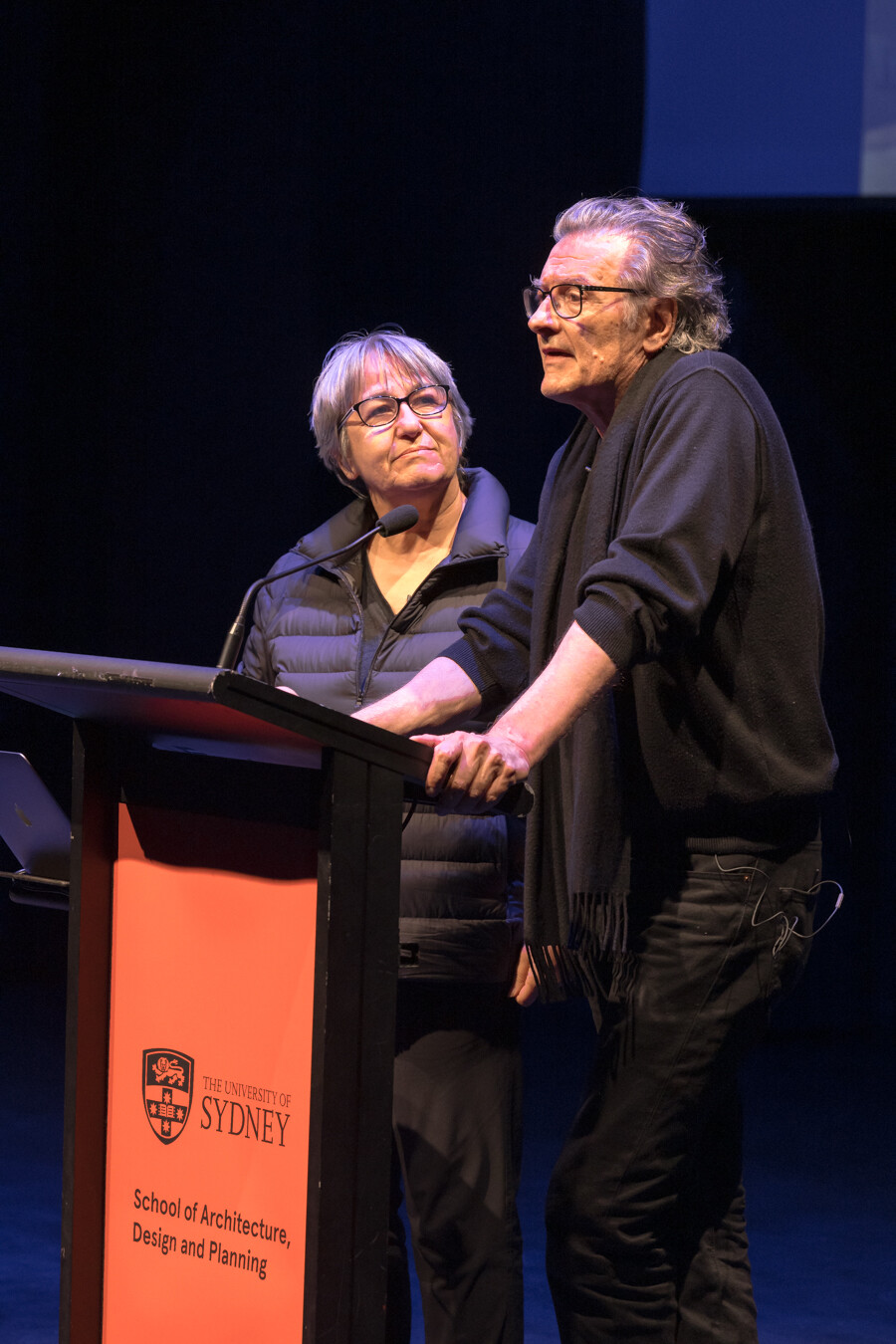
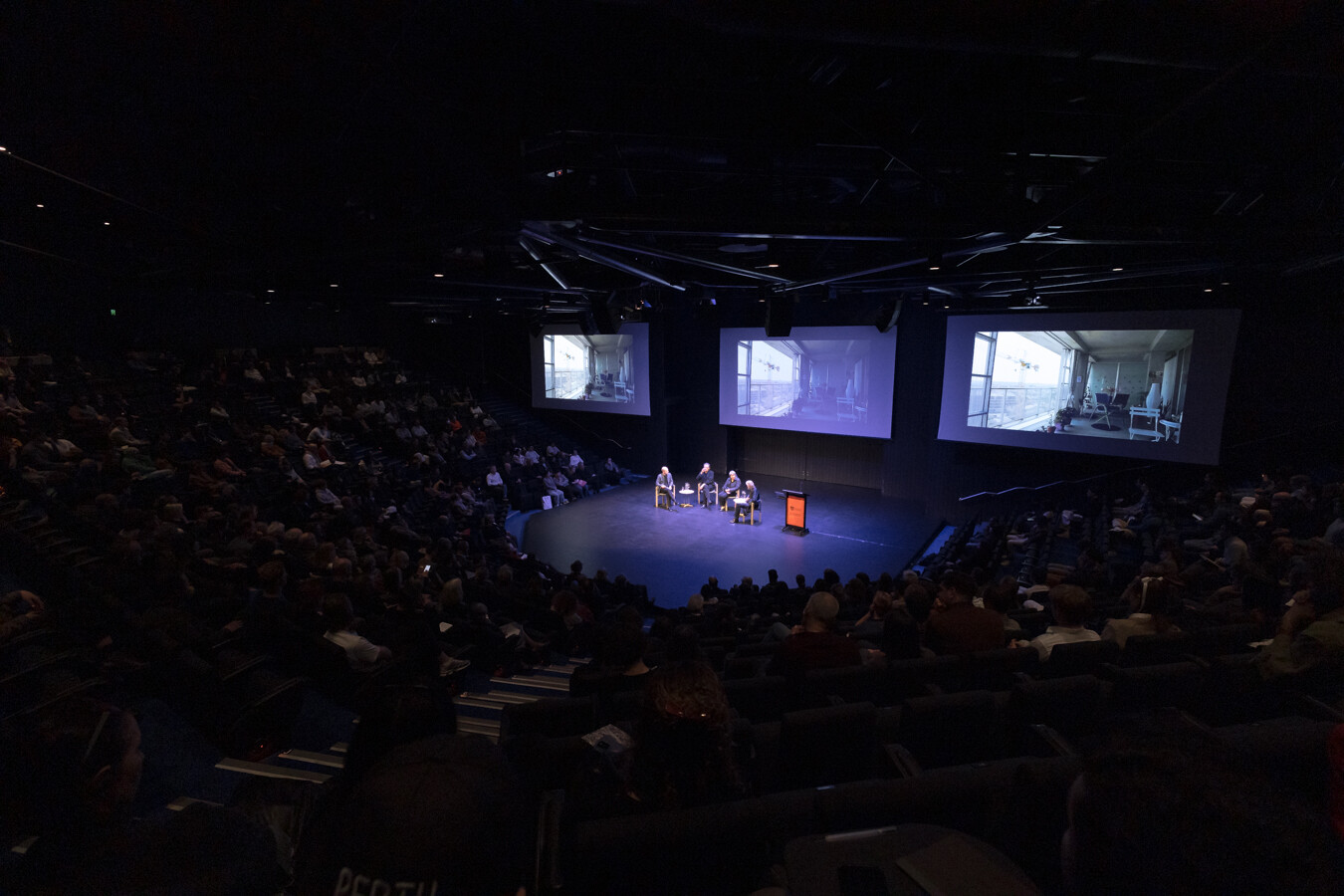
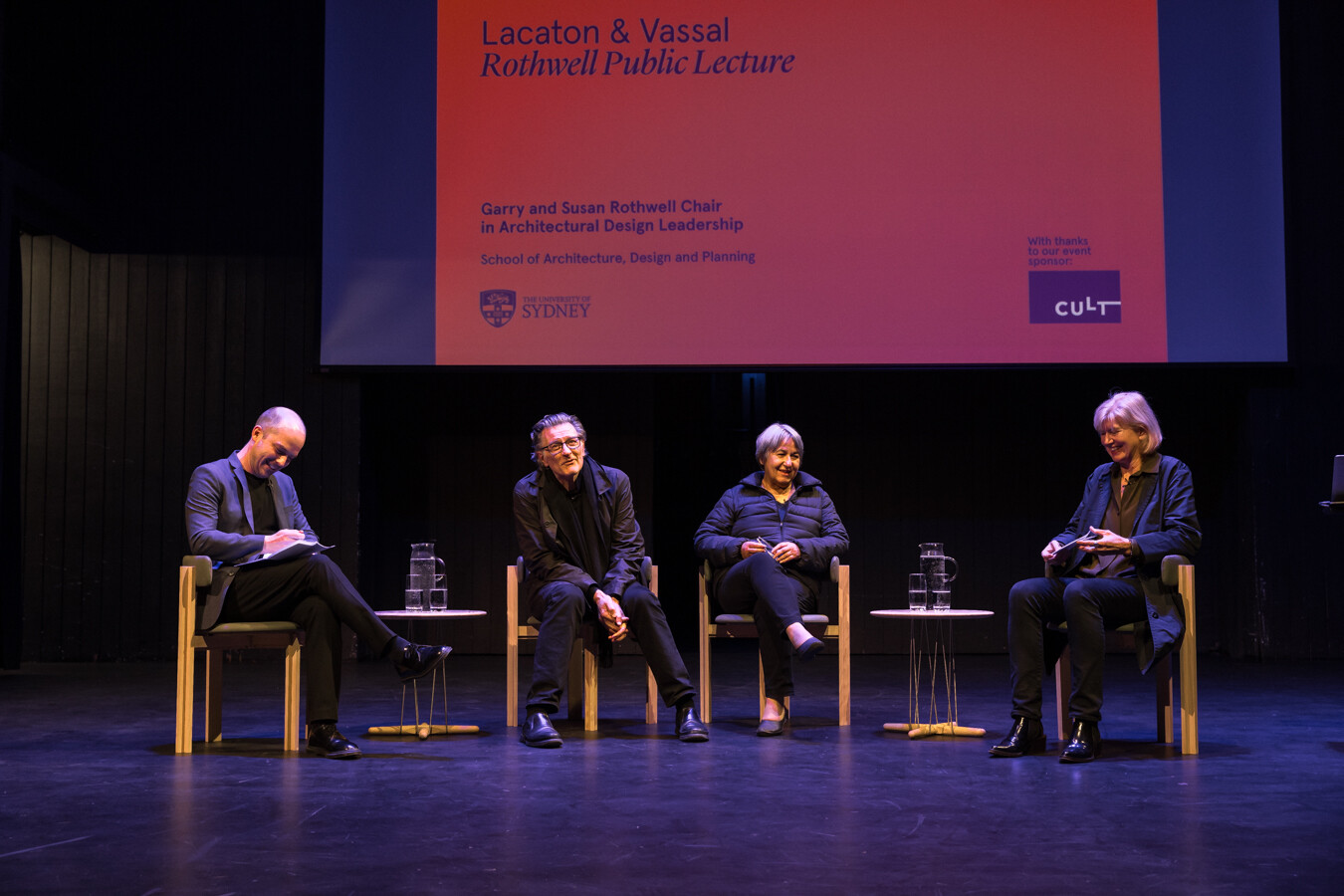
At a public lecture in Sydney on the eve of the exhibition opening, Lacaton and Vassal expounded on their guiding concept of ‘free space’. With a meticulous and rigorous analysis of costs and materials, often in relation to adaptive re-use, many of the pair’s projects are defined by the creation of more space for inhabitants and users. As they emphasise, it is a question of generosity. It’s also a question, as they rather enigmatically put it, of both not building and building double – that is, adapting and using what already exists while finding economical ways to expand it.
‘Free space’ in particular is the drive to provide space in a project over and above the programmatic dictates of function – to leave some extra space without rigidly or pre-emptively defining its purpose.
In the exhibition, this is visually displayed through drawings with blue highlights showing where ‘free space’ has been designed into a project. For Lacaton and Vassal, it’s nothing less than a question of freedom and dignity for those living in the city.
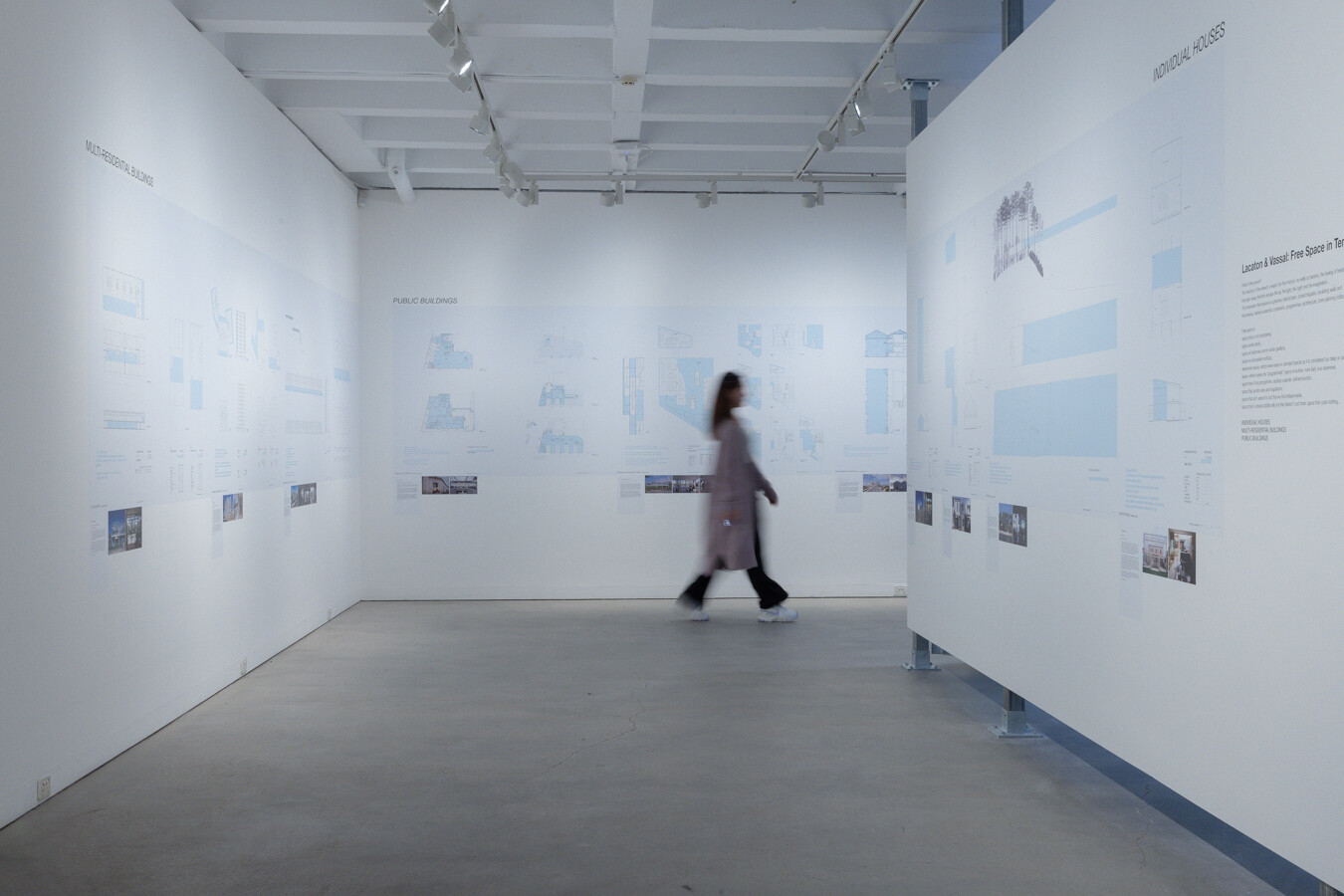
“How can each dwelling support and improve conditions for everyone living in cities? How can we densify without damaging what exists? How can we sharpen our methods for understanding different ways of inhabiting?” These are the questions – epochal in scope and importance – that have guided the curators in designing ‘Living in the City’ and indeed Lacaton and Vassal’s full oeuvre. Sydney’s architecture and design community would be foolish to miss it on show at Tin Sheds Gallery.
‘Living in the City’ runs at the Tin Sheds Gallery in Sydney from July 27 to September 23, 2023. Find out more here.
Tin Sheds Gallery
sydney.edu.au
Lacaton & Vassal Architectes
lacatonvassal.com
Photography
Maja Baska, Philippe Ruault


We think you might also like this profile of Melbourne-based Austin Maynard Architects.