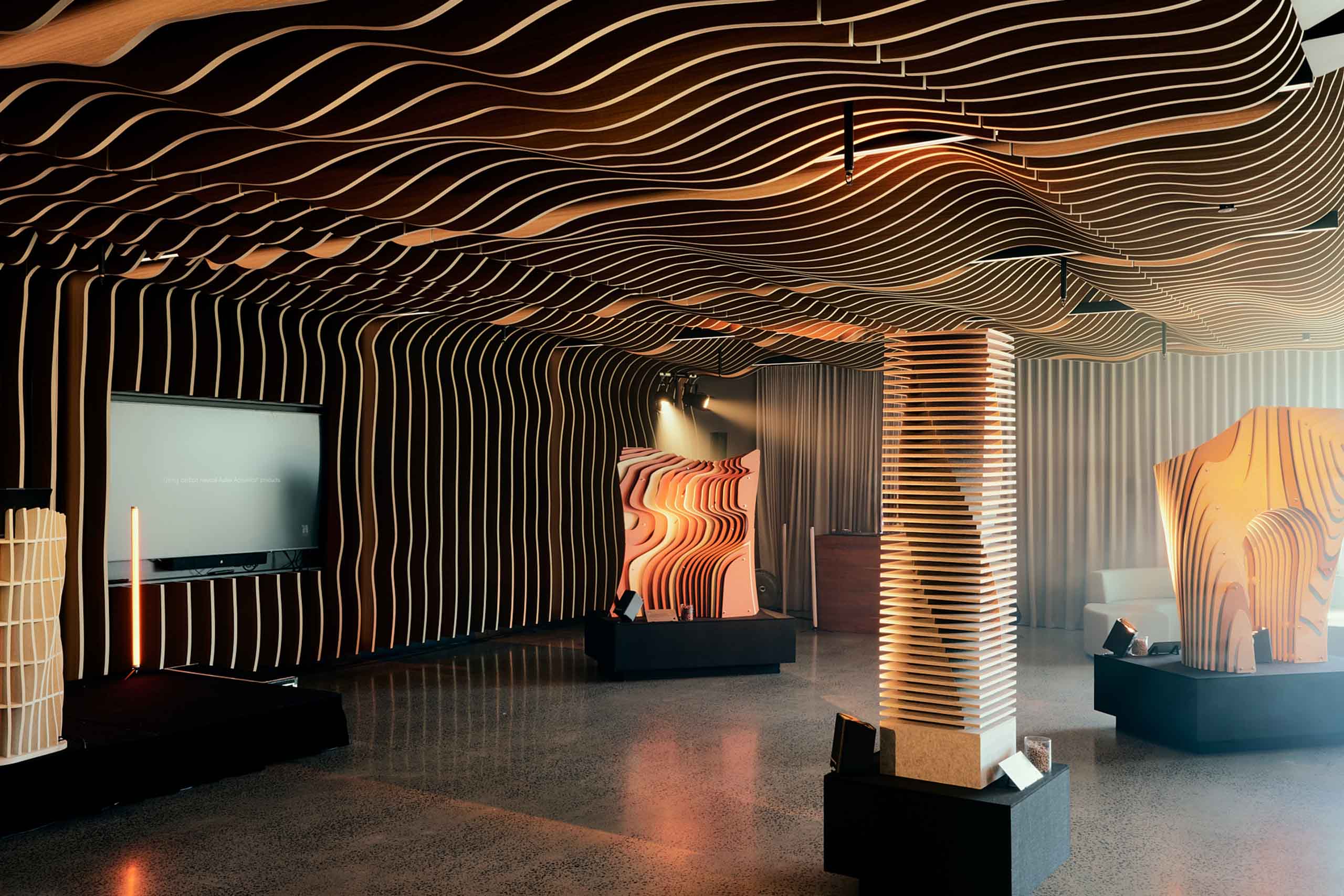
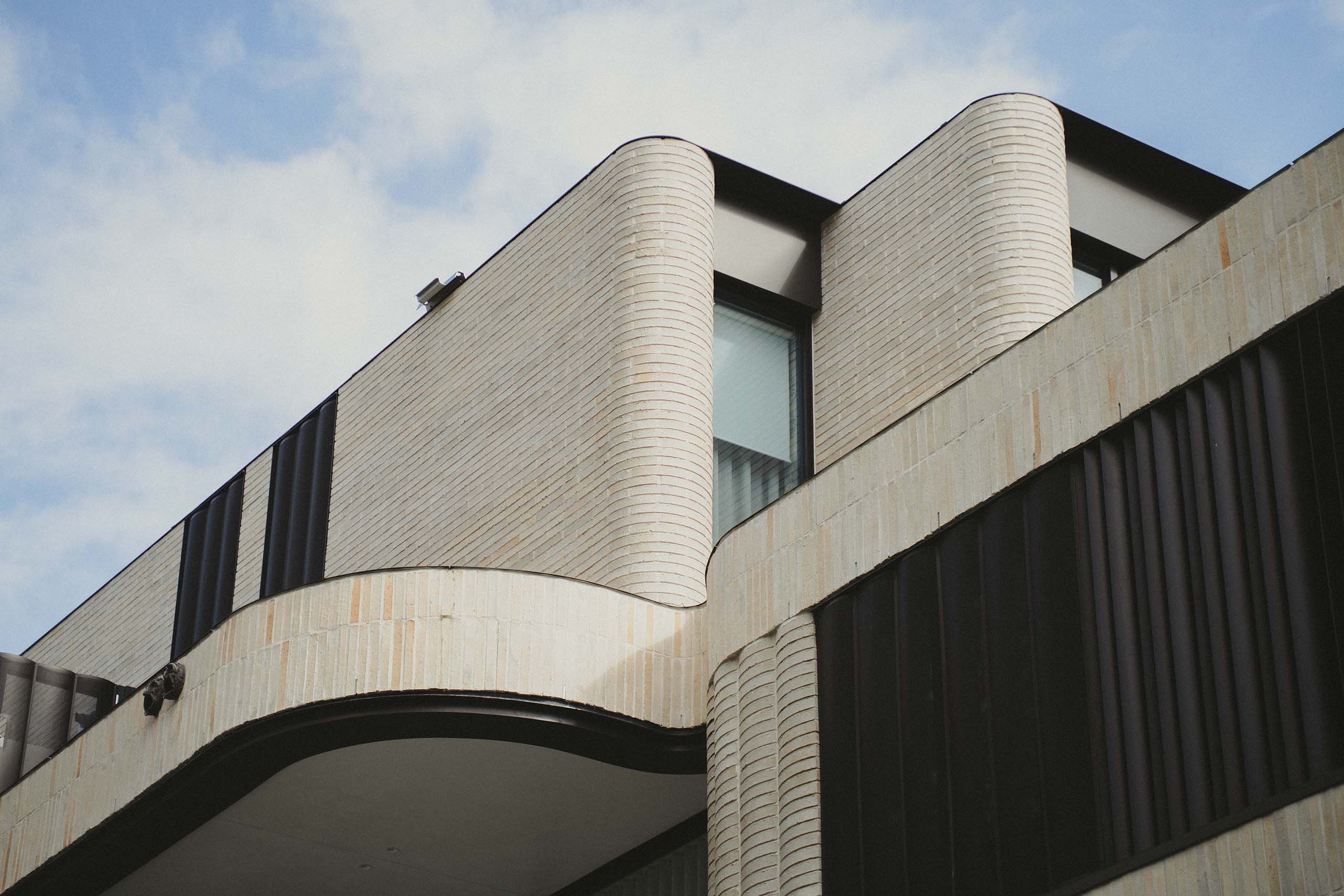
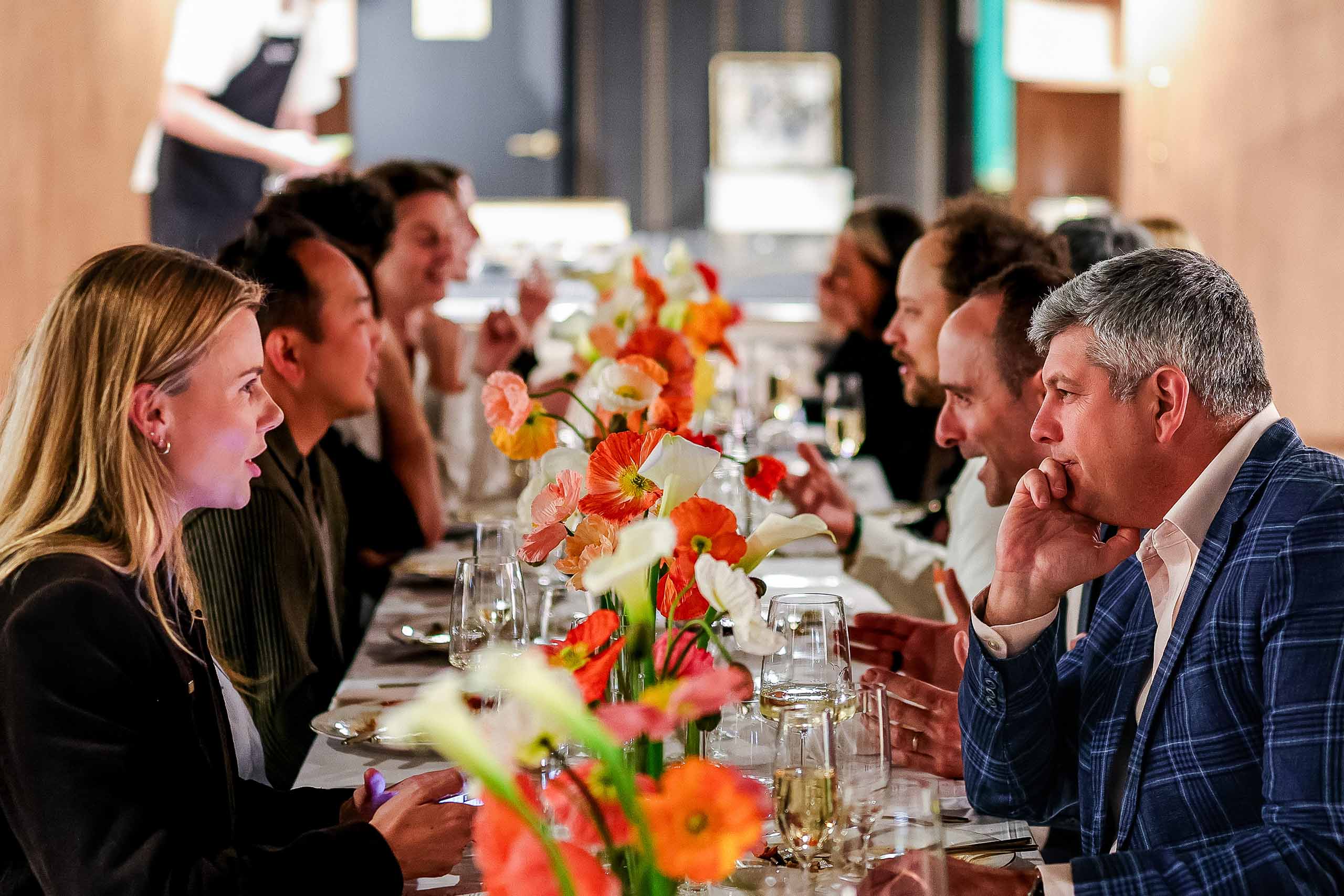
fjcstudio, in collaboration with the Australian Institute of Architects (AIA) and University of Technology Sydney (UTS), continued its stellar talk series with another busy event at The Mint in Sydney to round out 2023. On this occasion, it was also sponsored by Think Brick Australia.
Taking its cues from Richard Francis-Jones’ book, ‘Truth and Lies in Architecture’, the inaugural event investigated ‘The Fencing of Architecture and the Villa of the Architect’. The sequel turned attention towards the question of consciousness in relation to architecture. Obviously a wide topic, Francis-Jones chose in his opening lecture to focus on – and problematise – distinctions between living beings and non-living things. The immediate relevance to architects seems to be threefold: technically, in terms of the treatment of materials; ethically, in terms of the treatment of other beings and things; and personally, in terms of the individual designer’s ego or will.

Louis Kahn’s famous prompt – ‘what does a brick want to be?’ – was used as a way into the discussion in Francis-Jones’ lecture: “Is it in the asking of this question that the builder becomes an architect, when we see life and consciousness beyond our own designer wilfulness?”
It’s a provocation that undermines the architect’s claim to be the most important, or only, source of consciousness in the building of something. While that hubristic image might be evolving into something of an anachronism, its dangers doubtless live on – in the relegation of manual construction labour as unskilled, for example, or in the mistreatment of animal life and indeed all natural matter. In an age of climate catastrophe, the question of expanding our notion of consciousness takes on critical urgency.
Related: Q&A on politics with Elizabeth Farrelly

Instead of focussing on the individual designer, the opening lecture positioned a different question as front and centre: that of imbuing architecture with life. What if designers were defined less by willpower and more by their capacity to endow and uncover consciousness?
“Rather than separate ourselves from nature, objectifying it for instrumental use, an environmental philosophy of empathy that extends sentience deep into the natural world – in many ways supported by Indigenous thought and philosophy – is more intuitive and natural to our own sense of being,” said Francis-Jones.
“It is surely the natural insight of our children. This same insight is central to the art and nature of the craft of architecture, and it is hardly surprising therefore that all children are architects.”

Our modern, rationalist conceptions of consciousness are traced back to Enlightenment philosophy, the Cartesian dualism that draws a neat line between mind on one side and body, or matter, on the other. The ravages of this kind of materialist, scientific positivism are all to plain to see in the form of climate breakdown, alienation and endless commodification. The talk asked the simple question: what if those kinds of lines had never been drawn?
Responding to the lecture was a panel featuring Elizabeth Farrelly, William Smart and Shannon Foster, while Anthony Burke once again moderated the discussion. More events are expected for this year and, in the meantime, you can watch a full recording of ‘The Consciousness of Architecture and the Will of the Architect’ here.
fjcstudio
fjcstudio.com
Photography
Courtesy of fjcstudio