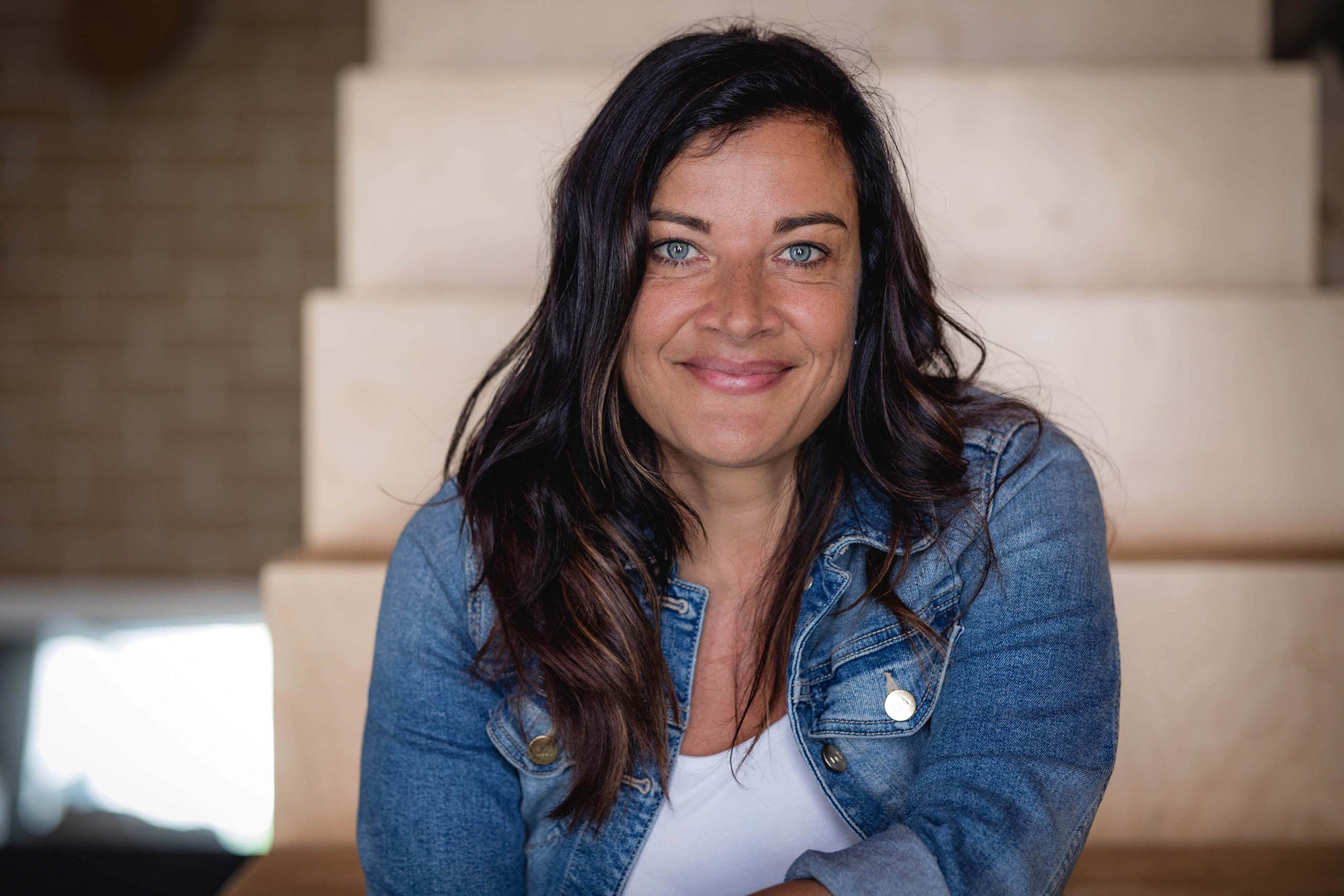
The name Alison Page is synonymous with great design that places the perspective of First Nations people front and centre in Australia. Over the past 30 years, this multifaceted artist has embraced all genres of design and conceives work that explores and embeds the rich ideas of Country in all that she does.
As a descendant of the Dharawal and Yuin people, Page was born into a craft-oriented family and, as a child of the 1970s, she credits her love of mid-century design to growing up in this period. She was drawn to the design of houses and model making at a young age and, at just 12 years old, conceived and built a housing estate for a Lego competition – which she subsequently won.
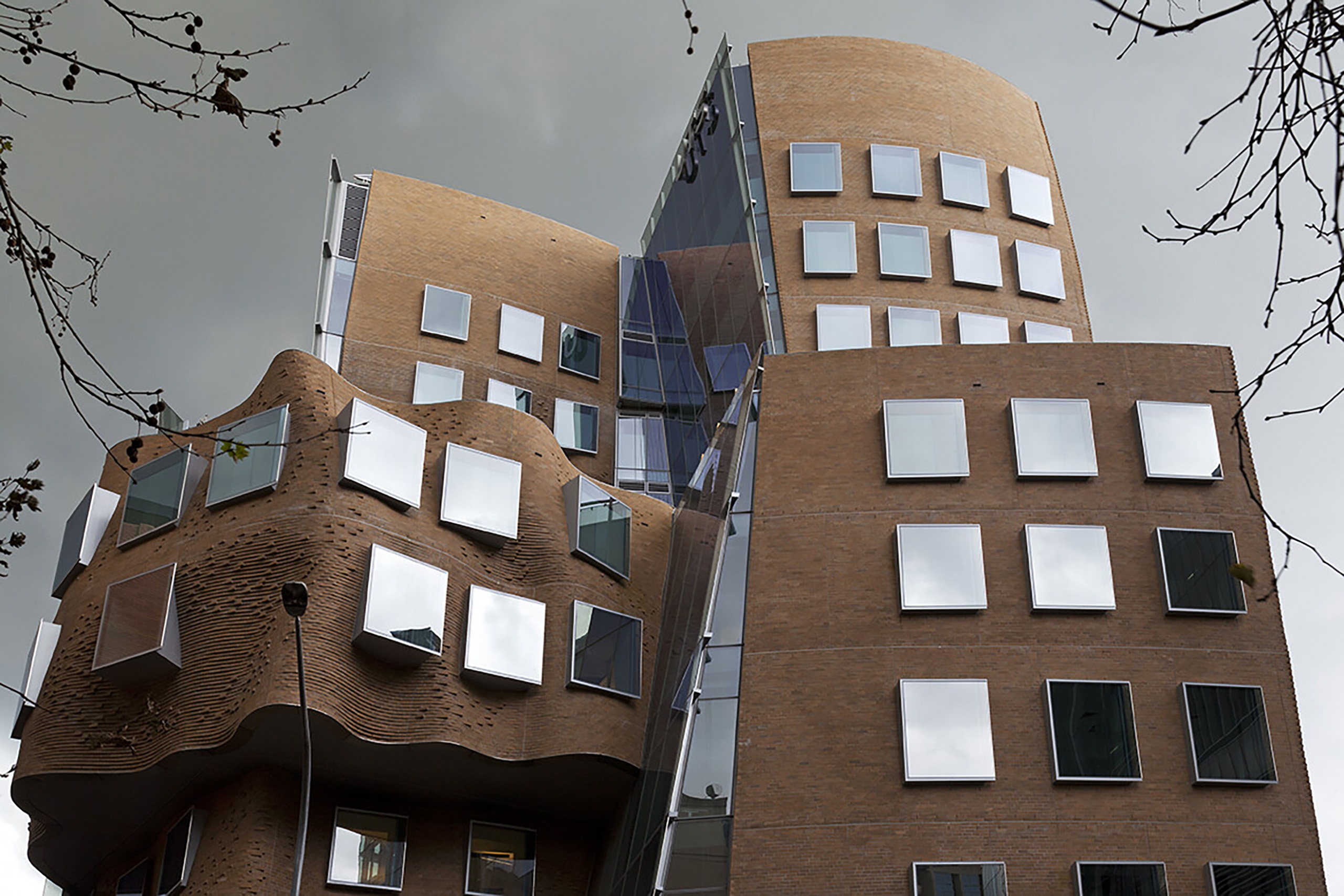
Arriving at UTS to study interior design in 1993, Page worked part-time to support herself and found the highly digitalised course challenging. By her fourth year, the budding designer was unhappy and reconsidering her career path. Concurrently, she became interested in social justice, as there was little understanding of the issues that faced First Nations people at that time.
It wasn’t until a lecturer, George Verghese, a Canadian industrial designer, asked Page a pivotal question, “Have you ever heard of Aboriginal architecture?” that Page began to see design through a different lens.
As the question resonated with the designer, there was an opportunity to further investigate just what this might mean when she was invited to participate in a study tour to Canada to meet with Douglas Cardinal, a Canadian First Nations architect. Page’s time at the University of Saskatchewan was significant, as she realised that the built environment could be an extension of Country and that storytelling might expand into a physical form.
After a month in Canada, Page returned home and in 1997 completed her Bachelor of Design with First Class Honours at UTS. However, she also possessed a changed attitude and found a new direction for her ambitions, determined to become an Aboriginal designer.
Fortuitously, she met Dillon Kombumerri and Kevin O’Brien, who were working in the office of the New South Wales Government Architect, and together they established Merrima Design, the first Aboriginal architecture group in Australia. After initiating key projects such as the Wilcannia Health Service and Girrawaa Creative Work Centre, Page and O’Brien began working independently, while Kombumerri stayed with the NSW Government Architect and today is its Principal Architect.
Related: Creating and curating with light
The idea of Merrima Design was to include an Aboriginal voice in decisions regarding the environment and architecture in all projects. Merrima Design employed Indigenous staff and reached out to other Aboriginal creatives to help support social and cultural expression to realise a holistic design.
Following her own path, Page moved to Coffs Harbour on the Mid North Coast of New South Wales, where she still lives today. Here, she extended her talents beyond interior design into the realms of urban design, sculpture and film.
“I wanted to live in a regional area close to nature and also to broaden my horizons. So, I started doing exhibition design then I moved into jewellery design. I did a bit of theatre design for urban theatre projects, and I really spread my wings and shape shifted,” says Page.
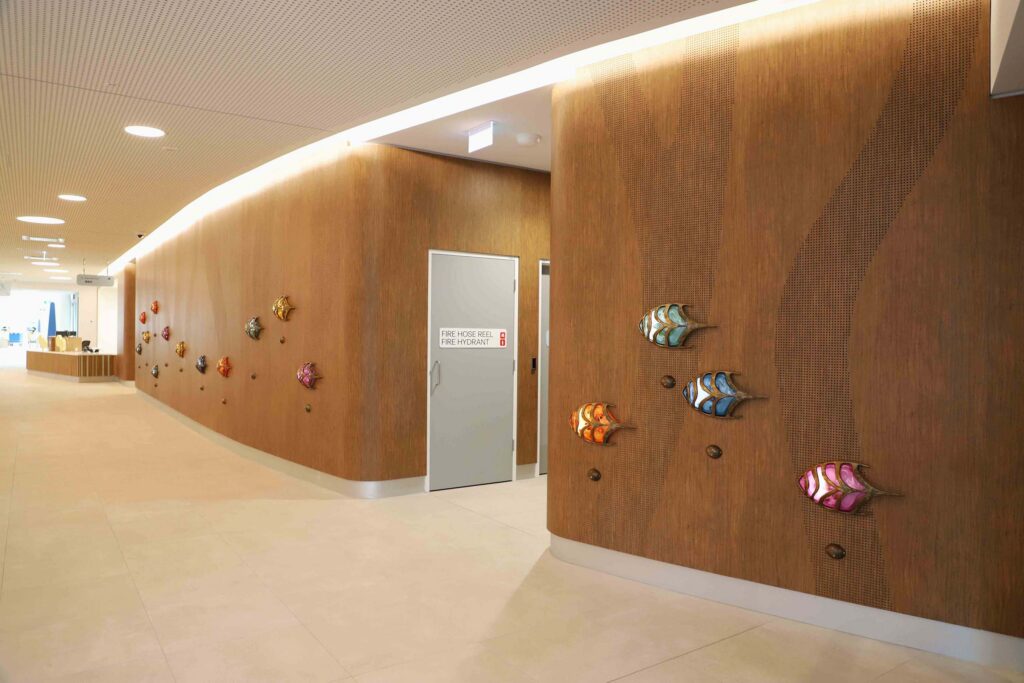
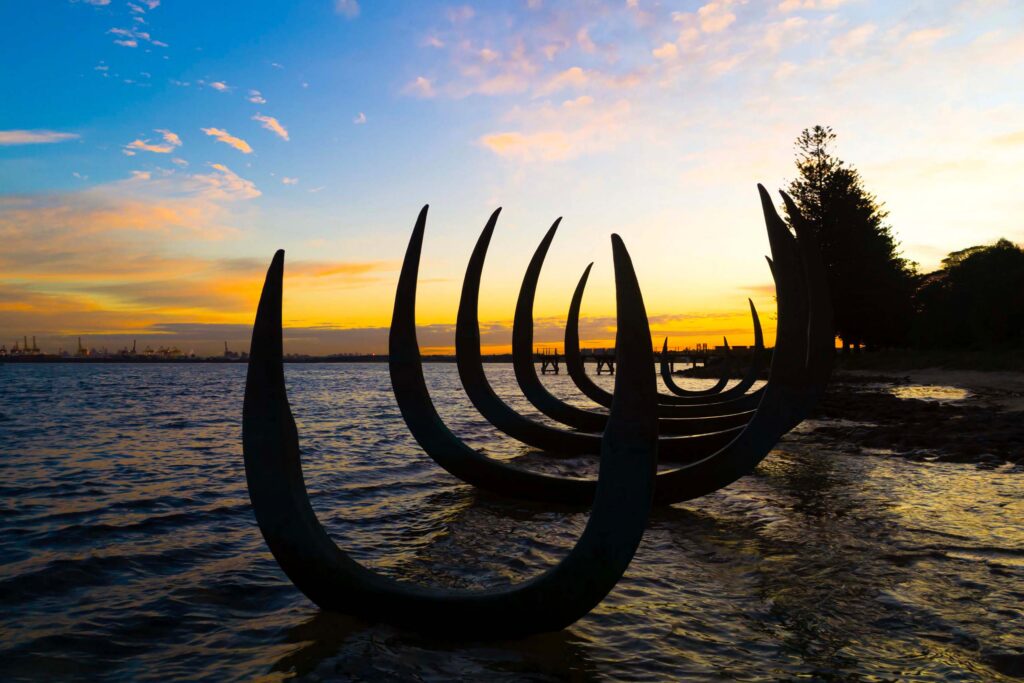
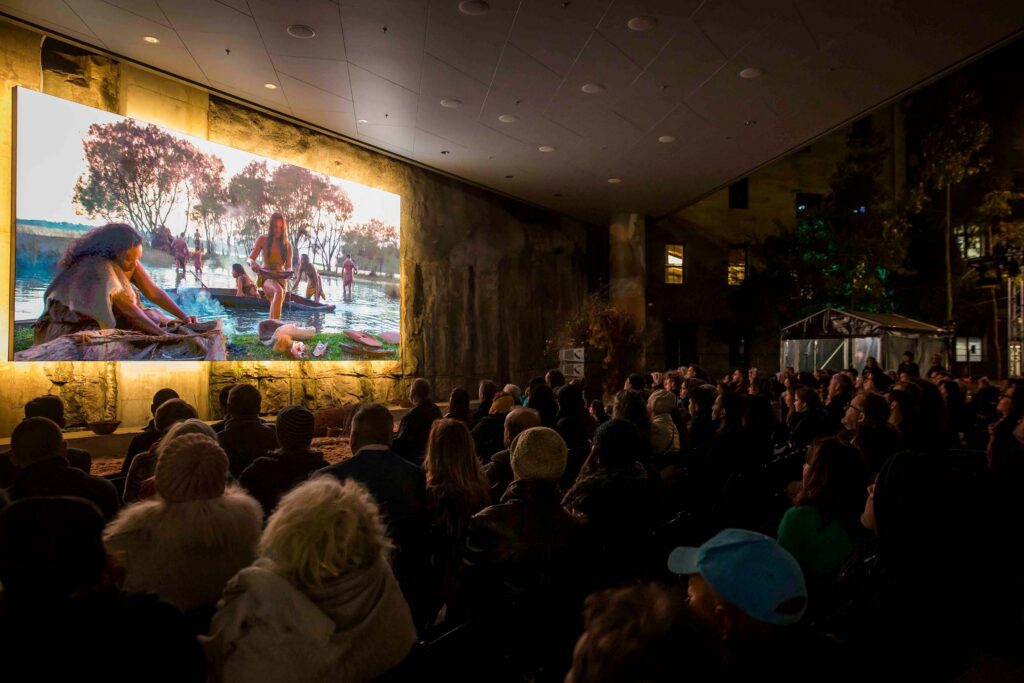
Myriad projects followed and these include Wellama (2019), a permanent film installation at Barangaroo, The Eyes of the Land and the Sea (2020), a sculpture at Kamay Botany Bay National Park, Burramattagal (2026), an interactive entrance artwork at the new Children’s Hospital at Westmead, and Land of the Giant Pippies (2026), a waterplay design at the Sydney Fish Markets, among so many other works.
At Melbourne Design Week this year, Page presented her first solo exhibition, Alison Page: Creative Shape Shifter, where her talents for the many genres of design including interior design, sculpture and art, film, festivals, theatre, Merrima and House of BLAK studio (her latest endeavour) were curated, showcased and celebrated.
Page has received so many accolades and awards it’s impossible to name them all. She was inducted into the Design Institute of Australia’s Hall of Fame in 2015, was a panellist for eight years on the ABC television program The New Inventors and co-authored Design, Building on Country with Paul Memmott, published by Thames and Hudson in 2021.
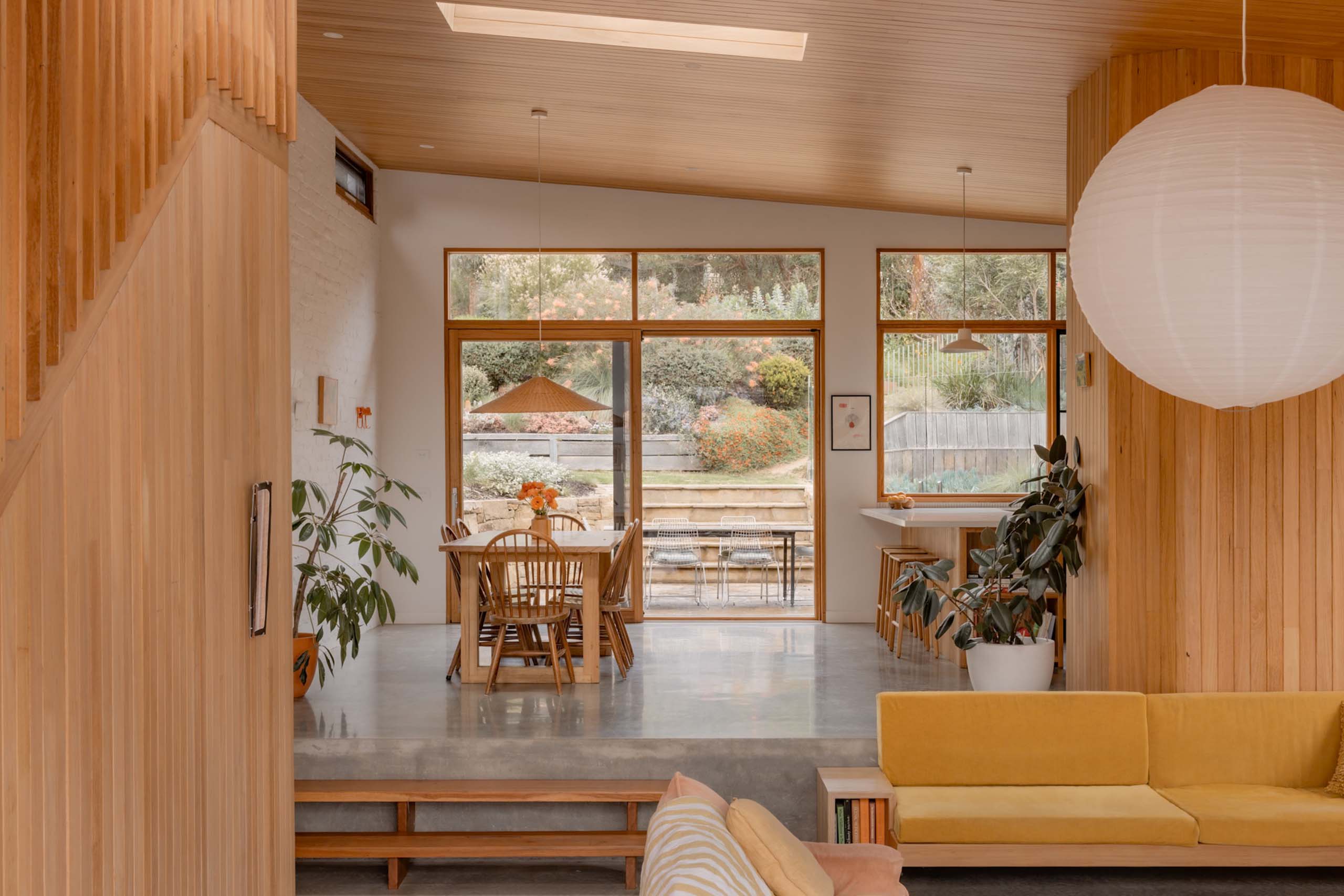
She is the founder of the National Aboriginal Design Agency and Saltwater Freshwater Arts Alliance and is more than passionate about her studio, House of BLAK, which showcases interior design reimagined through a BLAK lens.

Page explains, “House of BLAK is a collective of artists that I can invite to design different products. It could be a furniture range, or to do a customised interior in a particular place, and I can kind of shift and move according to where I am. It might be a building. I would love to do all of the colonial homes in Australia because I think those homes can be vessels for truth telling; through the making of the wallpaper or the rugs or the fabrics on chairs or the lighting, the chandeliers, through the making of these. Together we can start to talk about Australia’s true history but make objects of beauty at the same time.”
However, with all the recognition of her outstanding work, it is her voice and advocacy that speaks of First Nations people that resonates loud and long. She is tireless in her pursuit of design that encapsulates and showcases Country and is passionate about bringing a First Peoples perspective to the public domain. She is also striving to bring more Aboriginal students to campus to study and learn and, as a Professor of Practice at UTS Faculty of Design, Architecture & Building, she is the perfect role model and an agent of support for aspiring Indigenous architects and designers.
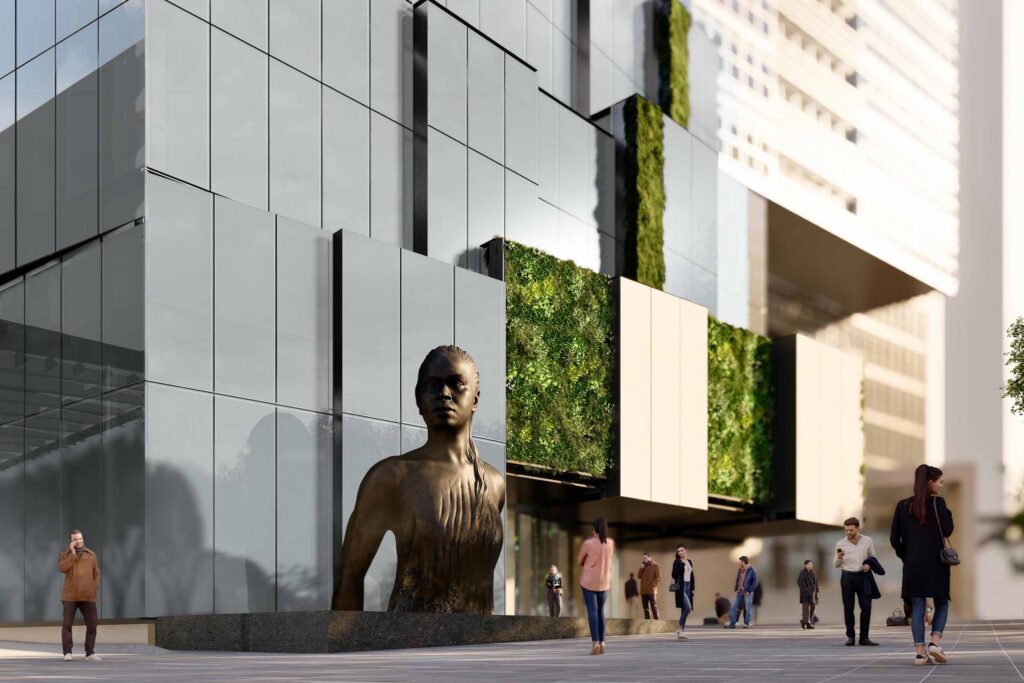
In her latest and largest commission to date (to be completed in 2027), Page is creating a sculpture at Circular Quay. The work, named Badjgama Ngunda Whuliwulawala, which means ‘Black Women Rising’ in the Dharawal language, is impressive. The 5.5-metre, part woman/part whale form comprises 72 individual cast bronze panels welded together and, in its location, it will be majestic as it rises from the water. The sculpture honours the resilience of First Nations women and acts as a cultural counterbalance to the male-dominated colonial monuments in Sydney’s CBD.
“This project is really special to me, because I was working with all of my aunties and my family at La Perouse to imagine one of our ancestral beings. Because when we talk about totemic relationships, we have some of our human energy in the whale, and the whale has their energy in us, and so this is the female embodiment of that,” reflects Page.
Page juggles a plethora of projects at any one time and it’s challenging to keep up. She is ever shape shifting (the perfect title for her latest exhibition), creating and conceiving, exploring and extending her design vision – but is always the artistic conduit for Country and a First Nations voice – and these drive her practice. She is a legend and makes her presence felt. Long may she continue to be a guiding light for design on Country both now and for the future.
Alison Page
alisonpage.com.au