The home of architecture and design in the Asia-Pacific
Get the latest design news direct to your inbox!

Get the latest design news direct to your inbox!
A steel-framed cargo shed has been turned into a significant cultural icon by the team at LAB Architecture.
June 30th, 2011
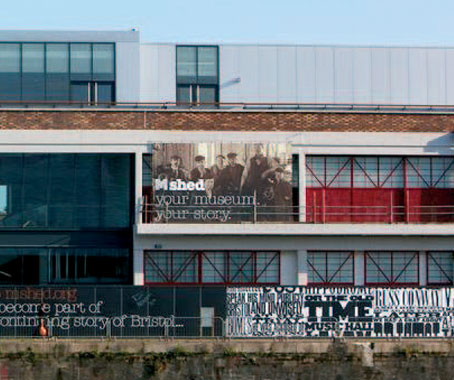
LAB Architecture, the international practice with studios in Melbourne, London, Shanghai and Dubai, recently celebrated the opening of their project M Shed, the new Museum of Bristol.
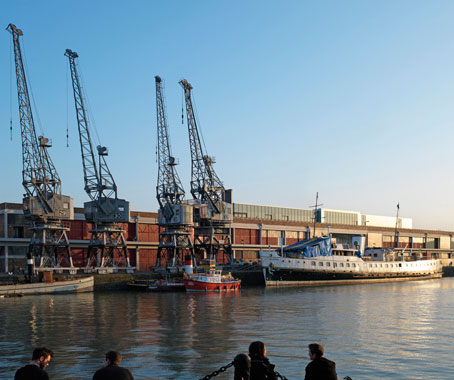
The original building, a transit shed for storing goods, was constructed in 1951 and is located in the heart of Bristol on the quayside of the city’s Floating Harbour.
Housing a collection of cranes, steam trains, boats and other industrial objects, the building forms a key part of Bristol’s cultural and history – which had to be both respected by and reflected in the new design.
The sliding doors of the shed’s north façade were carefully restored from the damage of corrosion and dents, with replica doors added where needed to preserve the original features of the façade.
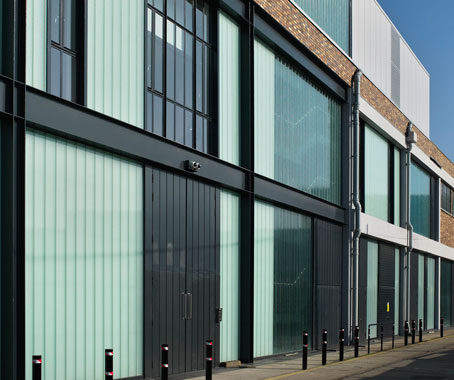
The shed’s concrete frame was left exposed, and the doors painted bright red to replicate the original colour of the building.
“The very nature of the façade is an undifferentiated repetitive frame, yet it was important to create an entrance that was visibly inviting, both from across the harbourside and on the oblique approach on the quayside,” said the architects.
“The entrance was probably our most radical intervention, formed by demolishing a column and part of the loading platform and inserting an inclined 2 storey glazed foyer.”
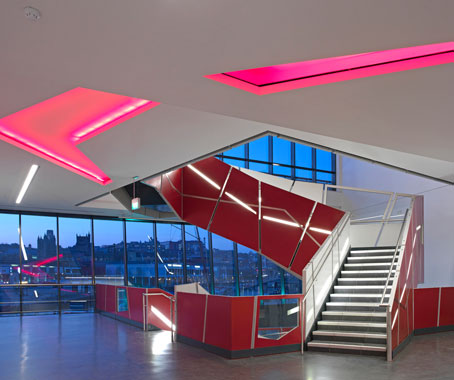
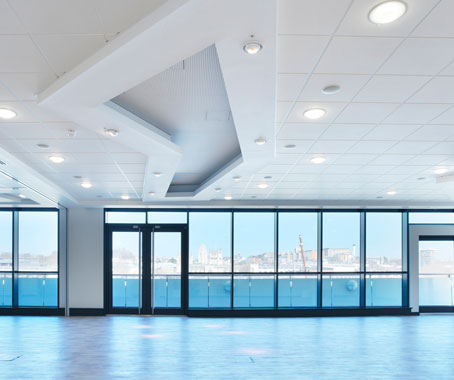
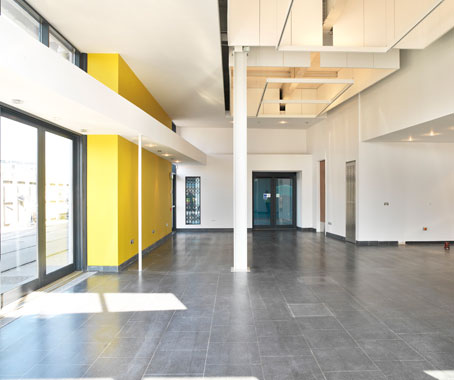
Inside, the 2 foyers – the West Foyer and the Main Foyer – are dramatic spaces with views over the entire city.
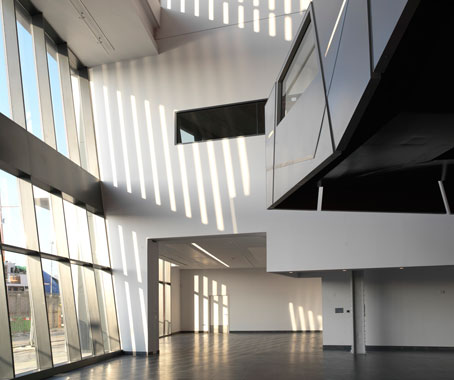
Overcoming the limitations of a tight budget and taking into consideration the heritage of the existing building and site, the architects have created a contemporary facility that “is a fitting tribute to all the people who have helped shape the city’s history,” said Bristol Councillor Simon Cook.
LAB Architecture
labarchitecture.com
M Shed
mshed.org
INDESIGN is on instagram
Follow @indesignlive
A searchable and comprehensive guide for specifying leading products and their suppliers
Keep up to date with the latest and greatest from our industry BFF's!
The internet never sleeps! Here's the stuff you might have missed