The home of architecture and design in the Asia-Pacific
Get the latest design news direct to your inbox!

Get the latest design news direct to your inbox!
The new headquarters of Sunray Woodcraft Construction may be located in one of the oldest industrial estates in Singapore, but from its exterior to its interior, the building redefines the traditional ideas of a factory in Singapore.

September 2nd, 2014
One of oldest industrial neighbourhoods in Singapore, Sungei Kadut is currently undergoing rejuvenation, thanks to government initiatives to champion the growth of the furniture industry here. And as one of the first developments in the estate, the Sunray headquarters is setting the standard for other upcoming developments in the area.
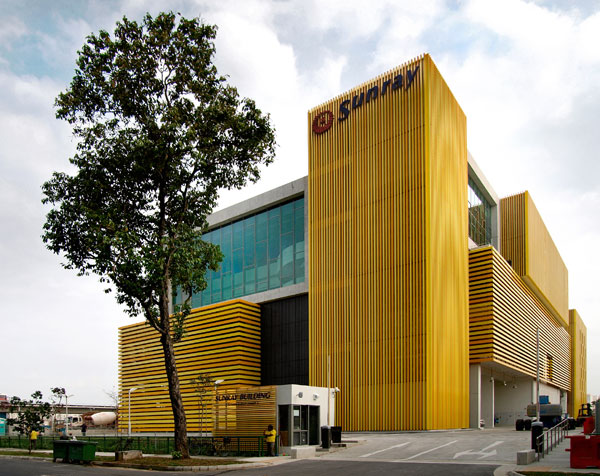
Comprising a production space, workers’ dormitories, a warehouse, offices and showrooms, the new eight-storey building – designed by DP Architects – was an opportunity to look at the light-industrial factory typology with fresh eyes.
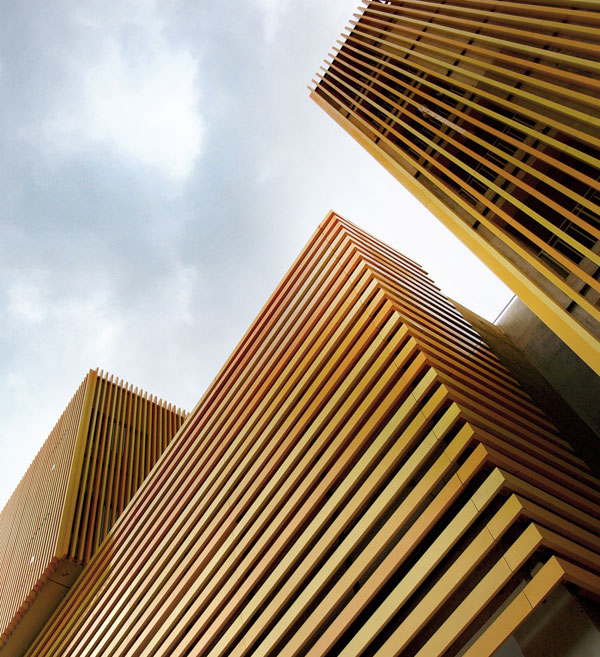
The building’s stacked box design is an expression of the client’s trade – woodcraft and furniture making – with each box reflecting the different stages of production. Factory production and warehouse space are almost completely clad in striking yellow horizontal aluminium louvres, flooding the spaces with the maximum amount of natural ventilation and light while helping them to remain shaded from the sun and protected from the rain.
Deep recesses between boxes create intuitive points of entry and exit while also allowing natural light to penetrate deeper into the floor plate.
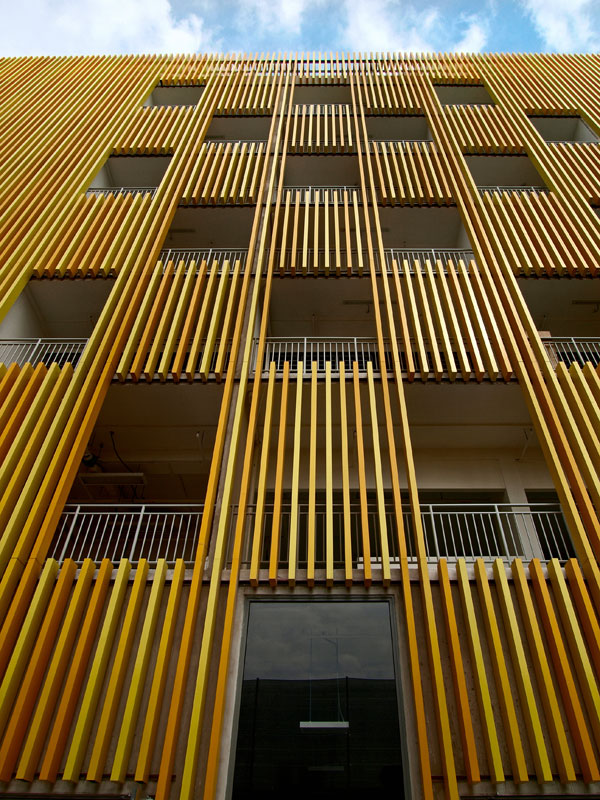
Office spaces are clad in closely spaced vertical aluminium louvers, shading the interior and maintaining a view to the outside. In contrast, the showroom box is wrapped in concrete, its large window highlighting the furniture on display.
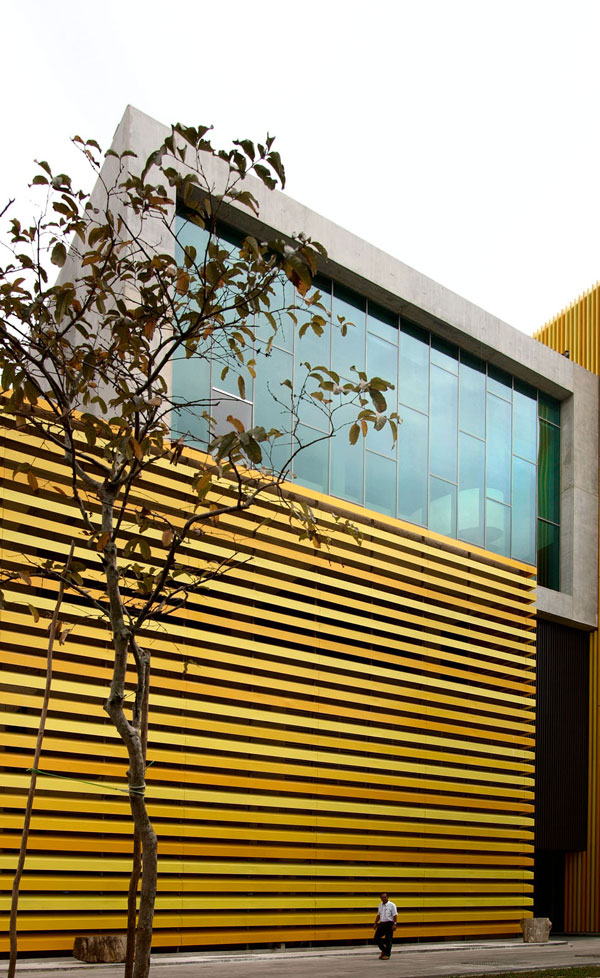
The use of yellow throughout the building pays homage to the company’s corporate colour, with the three tones serving as an interpretation of the stacked timber box concept.
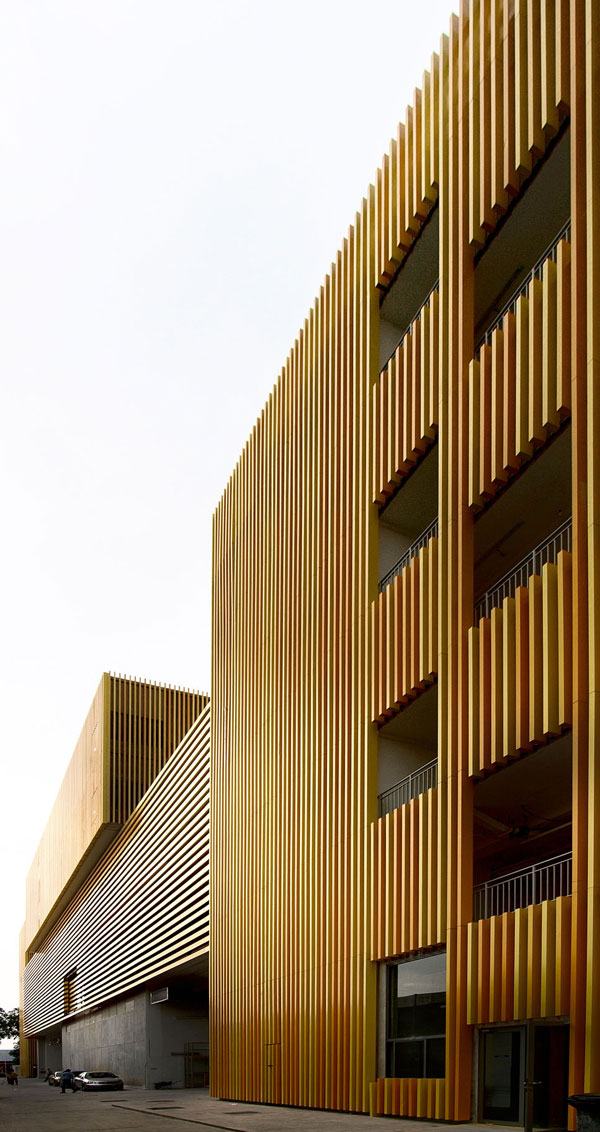
A seamless flow of workspaces, easily navigable volumes and efficiently planned areas are designed around the movement of materials, finished products and three separate user groups (showroom and office visitors, staff, and dormitory workers). In addition, the building experience for each group is carefully planned with the user’s requirements driving the design. For example, contiguous floor space between production zones and dormitories allow fast and easy access for workers.
And so whether one looks at it from the outside or inside, the building makes a striking statement about efficiency and the pride the client has for their craft.
DP Architects
dpa.com.sg
INDESIGN is on instagram
Follow @indesignlive
A searchable and comprehensive guide for specifying leading products and their suppliers
Keep up to date with the latest and greatest from our industry BFF's!
The internet never sleeps! Here's the stuff you might have missed