The home of architecture and design in the Asia-Pacific
Get the latest design news direct to your inbox!

Get the latest design news direct to your inbox!
What’s most important to us in our homes, across the range of scales, types and locations? Cubes 94 focuses on the creation of homes that are sensitive, efficient, meaningful and delightful.

Cubes 94: We Dwell. On the cover is the Expandable House by the Future Cities Laboratory at the Singapore-ETH Centre. Photo by Dio Guna, courtesy of FCL
January 1st, 2019
In Asia’s largest cities, living spaces come under the constant pressures of spatial compression, construction productivity, climate change, technological infiltration and the social negotiation that comes with density.
In less dense areas, questions of material, craft and engagement with landscape often continue to be well pronounced. It’s a broad range of factors to contemplate with regard to a single typology.
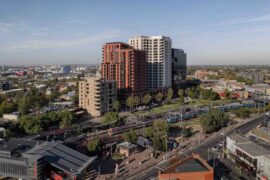
We venture from the factory floor (with a conversation about prefabricated homes) to the notoriously cramped subdivided units of Hong Kong (via the research and practice of HKU academic Juan Du), to the urban fringes of Batam (where a prototype expandable house by the Future Cities Laboratory is tackling rural-urban migration in a flexible format).
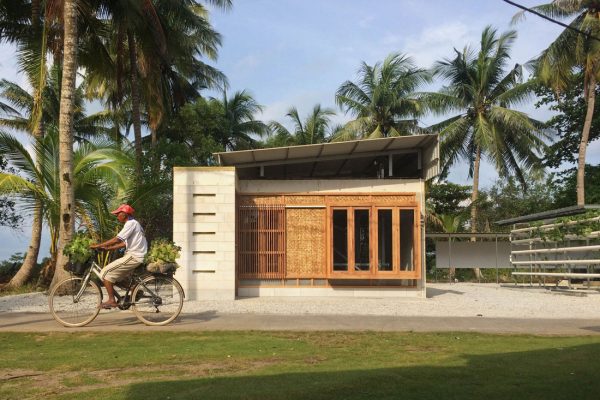
Expandable House by the Future Cities Lab at Singapore ETH Centre. Photo by Dio Guna, courtesy of FCL
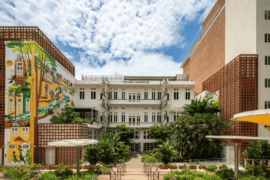
We also venture into some of Singapore’s most luxurious homes, as well as its public housing, uncovering design ingenuity that challenges conventional forms and living patterns.
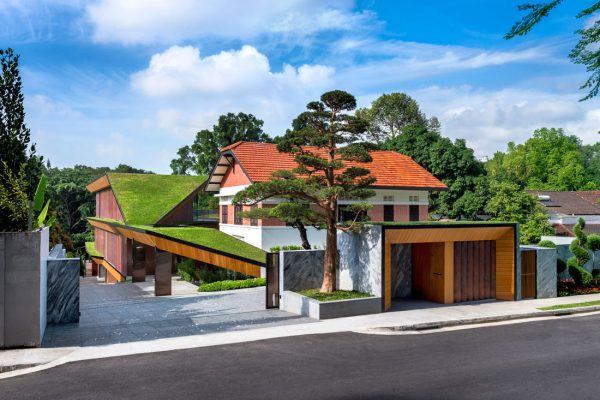
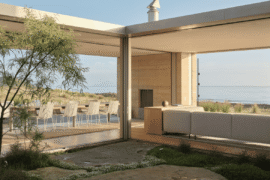
The Hidden House by Produce and TA.LE Architects. Photo by Edward Hendricks, courtesy of Produce and TA.LE Architects
We hear from Kengo Kuma about how future residential design can learn from the past, and we turn our gaze skyward to find out how NASA is preparing for Martian colonisation. Can the technical exercise of building extraterrestrial homes be fused with a concern for spatial quality?

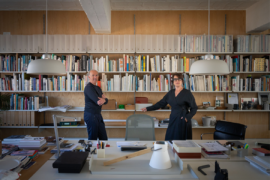
Kengo Kuma at KKAA. Photo by Nik van der Giesen
Digesting the many aspects of a theme in this way is fundamental for Cubes, and after two cycles, we know it’s also something that arises naturally in our region-wide INDE.Awards program. The 2019 jury will be on the lookout for entries that demonstrate the ingenuity of our region’s architects and designers in addressing the enormous spectrum of issues driving our lives in the Indo-Pacific region.
Entries for the INDE.Awards 2019 are now open! Don’t wait till the 29 January deadline – head to indeawards.com now to start your entries!
Let’s show the world why the Indo-Pacific is a region to watch!
INDESIGN is on instagram
Follow @indesignlive
A searchable and comprehensive guide for specifying leading products and their suppliers
Keep up to date with the latest and greatest from our industry BFF's!
The internet never sleeps! Here's the stuff you might have missed