The home of architecture and design in the Asia-Pacific
Get the latest design news direct to your inbox!

Get the latest design news direct to your inbox!
An evocative setting is as addictive as a good drink and the dreamy, sci-fi atmosphere of the new HEYTEA store in Clarke Quay by MOC Design Office is set to have customers returning.

August 29th, 2019
With a minimalist storefront framed in glass and metal, the new HEYTEA store in Clarke Quay distinguishes itself from the surrounding rose- and lemon-coloured shophouse setting. Bright white light brings attention to the whitewashed interiors, capped with a floating timber matrix below a skin of white perforated metal.
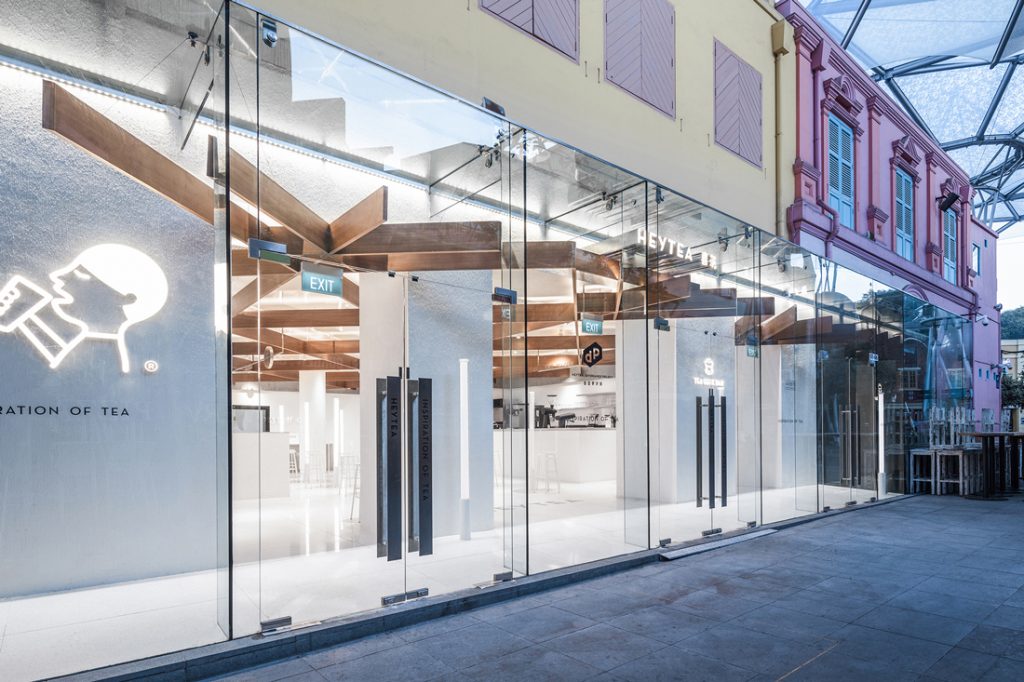
Hailing from China, HEYTEA offers artisanal tea incorporating non-conventional ingredients such as cheese. Constant research and development activity results in unusual products that invigorate the age-old tea-drinking practice for a younger audience. The modern, Zen-influenced aesthetic of its stores worldwide is iconic. The stores are perfect Instagram magnets for the experience-hungry millennial.
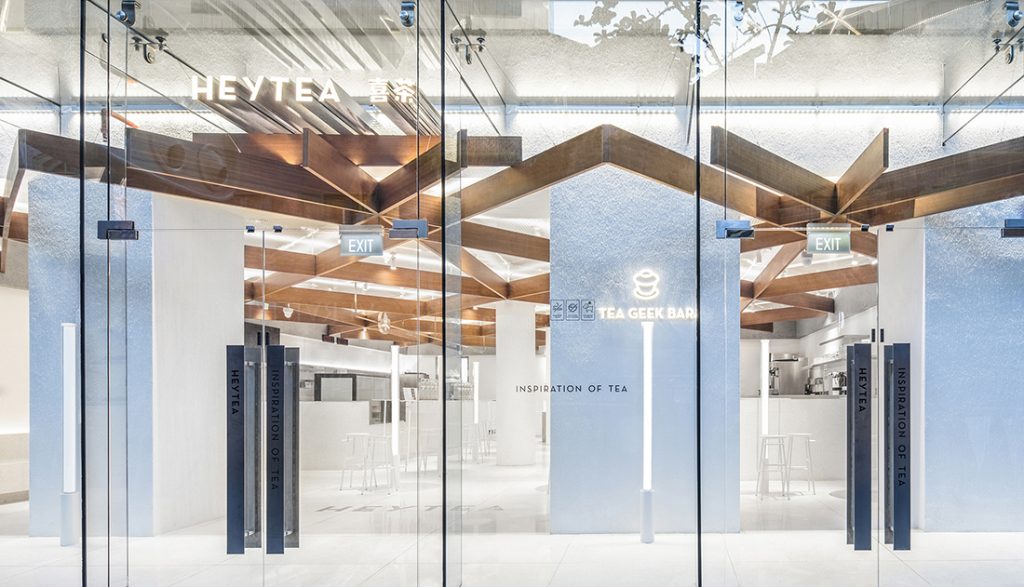
The Clarke Quay store is HEYTEA’s third and Singapore’s first installation of the brand’s Daydreamer Project that explores the social aspects of tea drinking via collaborations with independent interior designers. These stores also offer unique services such as the Tea Experience Laboratory labelled Tea Geek, where guests can witness staff in laboratory coats concocting limited-edition HEYTEA bubble tea themed after the seasons.
Shenzhen-based MOC Design Office designed the interior. Their points of reference were Clarke Quay’s bustling port history and the lighthouse on Fort Canning Hill. “The lighthouse is extremely symbolic and significant as it guides the ships, gives a sense of belonging to the seamen and witnesses the development of Clarke Quay,” says Sam Liang, co-founder of the studio.
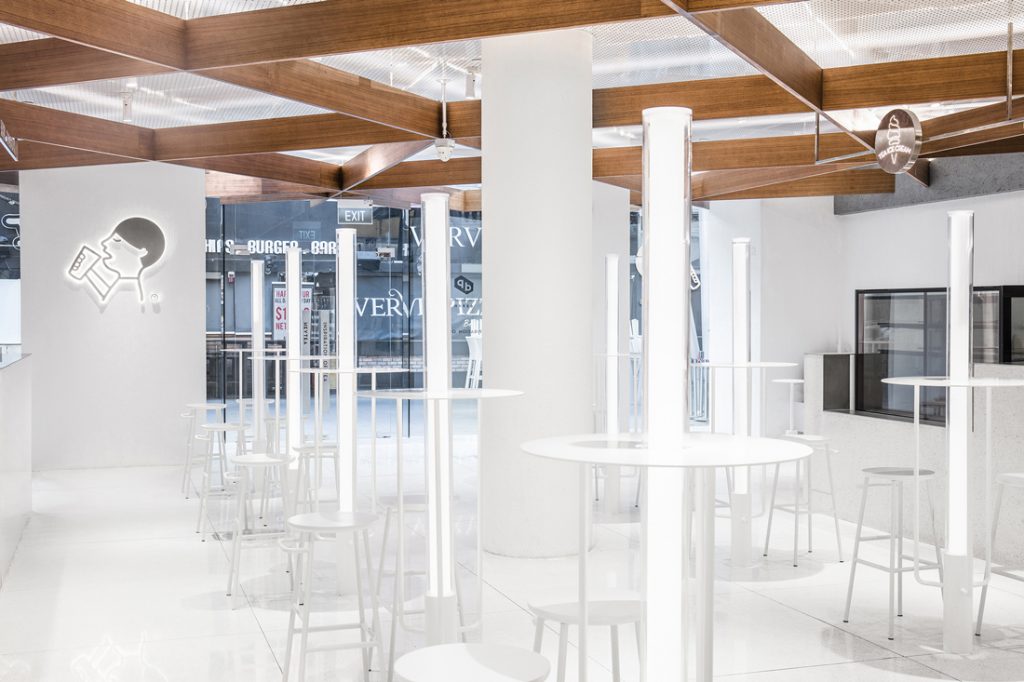
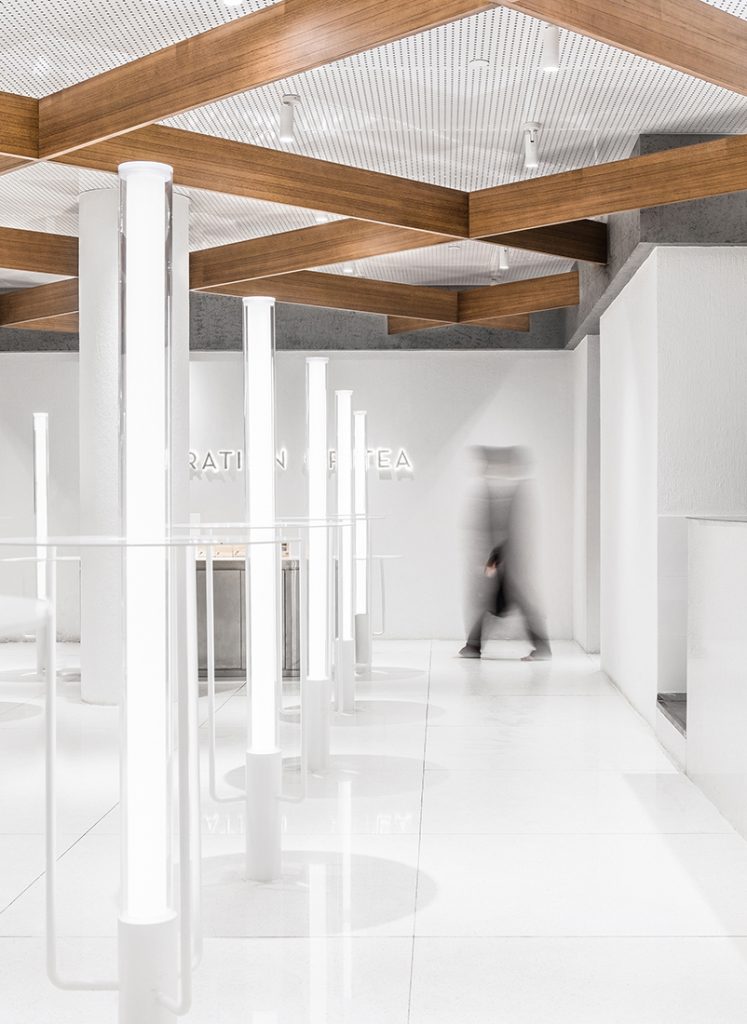
Hence, 20 ‘lamp posts’ convene in the middle of the store to guide customers in. Some are fitted with a surface for customers to gather around and enjoy their drinks. “The size of the round tables are small so as to bring people closer together,” explains Leung, alluding to tea drinking as a social act. Bar stools add to the casual and convivial atmosphere.
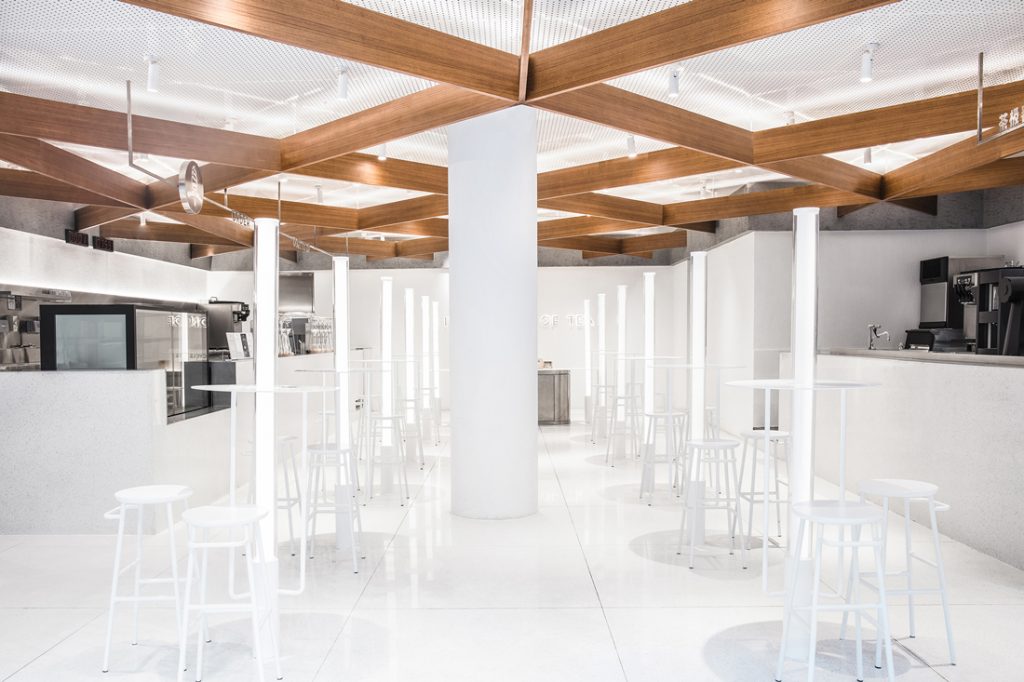
The ‘lamp posts’ emit light that dims and brightens in 15-second cycles to reinforce the lighthouse concept while attracting passers-by. “The overall white and bright space is seemingly out of place in the block but the periodically flashing ‘lighthouses’ make the space fascinating and playful, which is consistent with the atmosphere of the street,” says Vivi Wu, the studio’s other founder, referring to the restaurants, bars and clubs crowding this entertainment district.
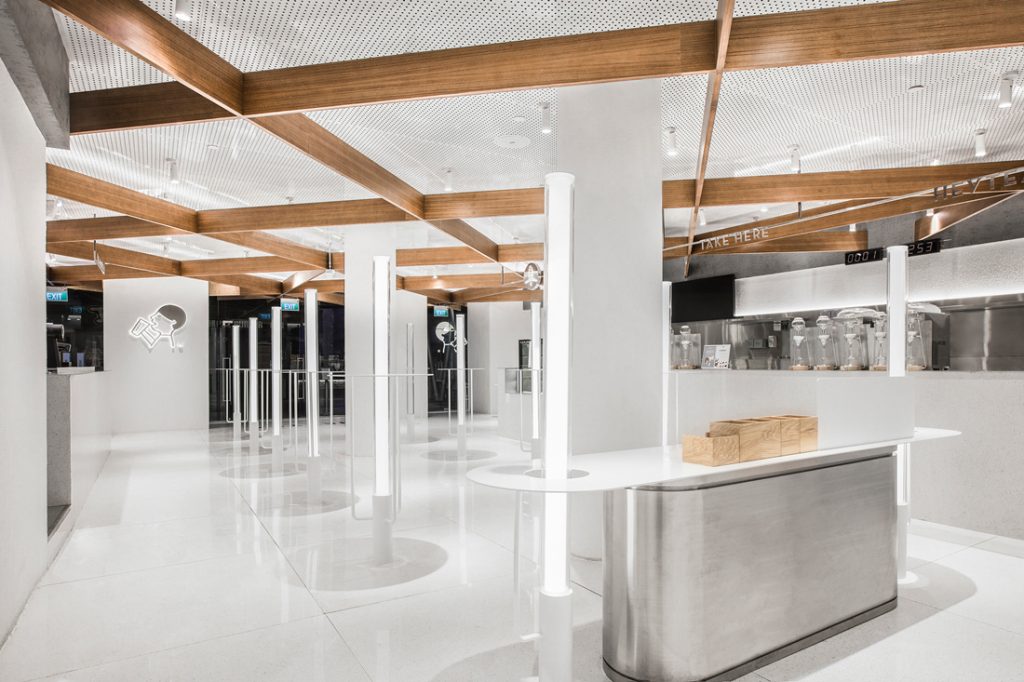
All other functions – the Tea Geek Bar, regular ordering counter, small seating, self-service bar and kitchen – are tucked to the sides, putting the focus on the lampposts. Everything is painted white save for the timber trellis and the self-service bar glossed with a metallic silver finish. Walls sprayed a rough texture evoke the rusticity of bygone times while existing columns are preserved and contribute visually to the forest of vertical elements.
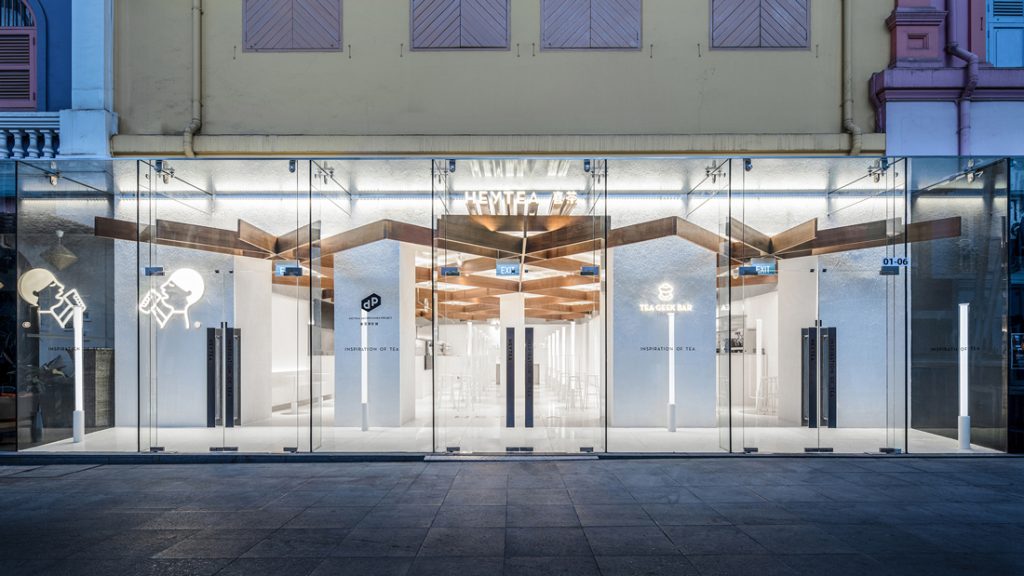
The all-white décor also gives rise to many other interpretations, such as a gallery that elevates tea drinking to an art form and a laboratory investigating the potentials of the humble drink. This canvas of calm is interjected by the timber trellis, which the designers reveal is based on abstracted latitude and longitude lines. These lines accompany the lampposts to symbolise the evolution and spread of tea from its origin in China.
Tea can be as simple or complex as one desires and the design of this store mirrors that.
INDESIGN is on instagram
Follow @indesignlive
A searchable and comprehensive guide for specifying leading products and their suppliers
Keep up to date with the latest and greatest from our industry BFF's!
The internet never sleeps! Here's the stuff you might have missed