The home of architecture and design in the Asia-Pacific
Get the latest design news direct to your inbox!

Get the latest design news direct to your inbox!
Indigenous-settler reconciliation is not just an intention, or even an outcome, writes Nicky Lobo. It’s an ongoing creative process that will challenge, reveal and ultimately transform relationships.

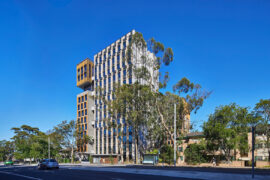
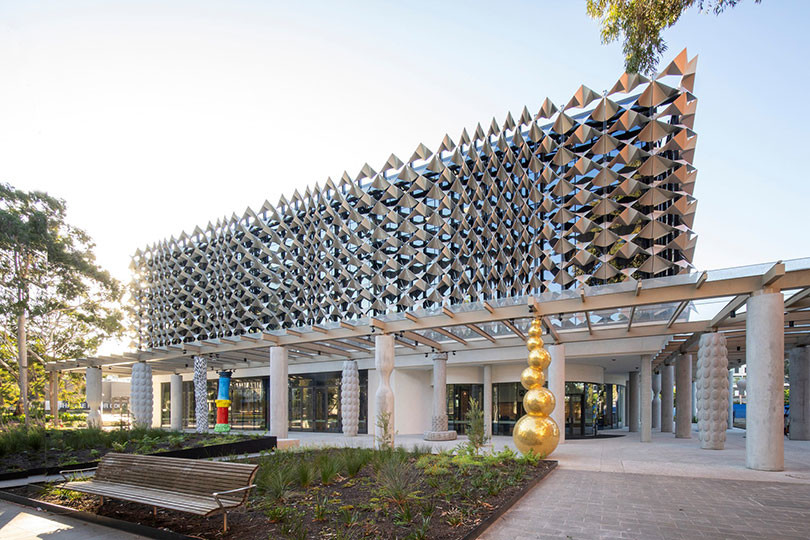
Barak Building (2015/16), ARM Architecture.
May 27th, 2022
A complex and sensitive discussion took place recently in an ‘Architecture as Reconciliation’ event during Melbourne Design Week that revealed characteristics of a reconciliation process which draws from the word’s mid-14th Century etymology – to ‘restore to union and friendship after estrangement or variance; to bring together again’.
As a place-based practice, architecture is inherently and intrinsically linked to Indigenous concepts of place and Country. With architectural practices and projects in Australia located and operating on unceded sovereign Indigenous land, there are not just opportunities but also responsibilities to acknowledge the uneasy tension between modern places and the violent histories and landscapes they are built upon and benefit from.
Integrating truth telling and deep listening into processes and built forms is one entry point into this murky, often uncomfortable and sometimes-painful project.
Jesse Judd of ARM Architecture alluded to this discomfort throughout his own and ARM’s journey of Indigenous-collaborative projects like the Barak Building (2015/16) and Monash University (2016), recalling the ‘struggle to grasp at the threads of a complex issue’. Despite often-inevitable criticism, he insists that any action that starts a conversation is worth it, and that continuing the journey of learning and listening has led ARM beyond iconography to deeper, richer conversations with Indigenous voices and integrated placemaking approaches that more effectively share Indigenous stories, experiences and language.

Yemurraki Egan, winner of the Maurie Pawsey Scholarship for Indigenous Place Making, made similar points on the importance of persistence in relationship building in order to make gestures more meaningful. On his own fascinating global journey of understanding universities’ relationships with their Indigenous communities, Yemma shared insights from his study tour, such as a traditional wigwam on a campus in Ontario, Canada, that was an important symbol, but inconveniently located and dysfunctional for use in traditional fire ceremonies; design issues that could have been avoided through earlier consultation with the universities’ First Nations community.
Closer to home, Yemma spoke passionately about a truth-telling process at the University of Melbourne, which responds to a crucial need for both Indigenous and non-Indigenous communities to come to terms with often-violent and uncomfortable histories.
Related: Jasmax’s Elisapeta Heta brings an authentically Māori design voice to the region

This process can elicit challenging emotions, and N’arweet Carolyn Briggs of the Boonwurrung Foundation is grateful that the younger generation of design students are able to come to the discussion a little more open and a little less encumbered with (or perhaps ready to embrace) shame and guilt.
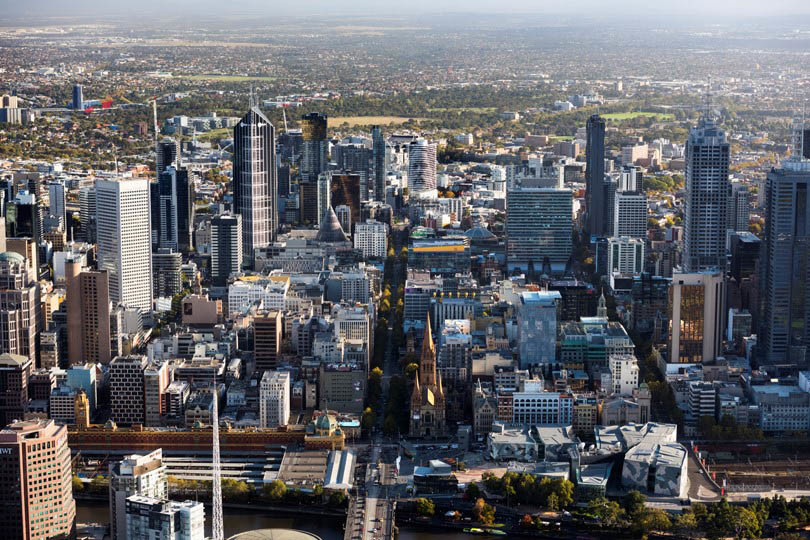
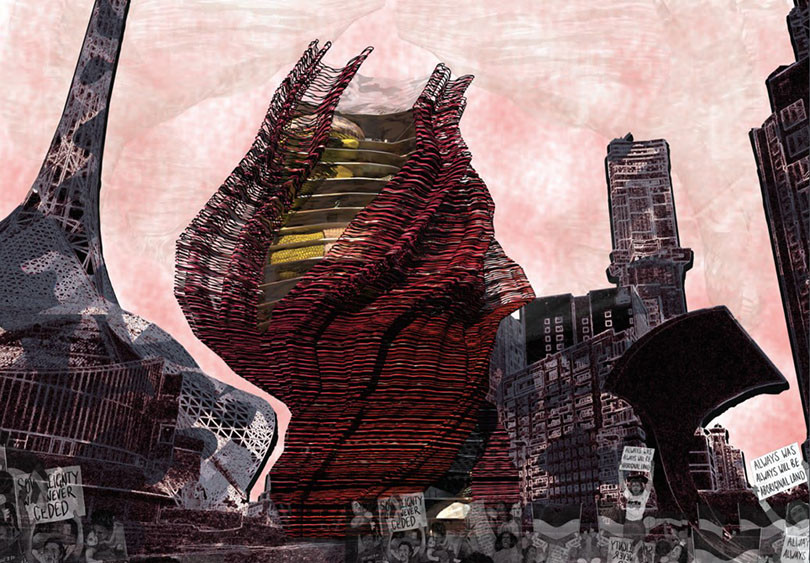
A brief, co-designed with Dr Christine Philips of RMIT University and Stasinos Mantzis of Greenshoot Consulting and Greenaway Architects, for a permanent home for the First People’s Assembly in Melbourne was recently put to students. Set on ‘crown land’ in the CBD, visions comprised performing arts and admin spaces, cafe and restaurant, research centre and art gallery with outdoor spaces and art throughout – all in dialogue with the surrounding cultural precinct.
N’arweet described the importance of a place that was permanent, rather than temporary; commemorative rather than silent; and circular or meandering, rather than gridded.
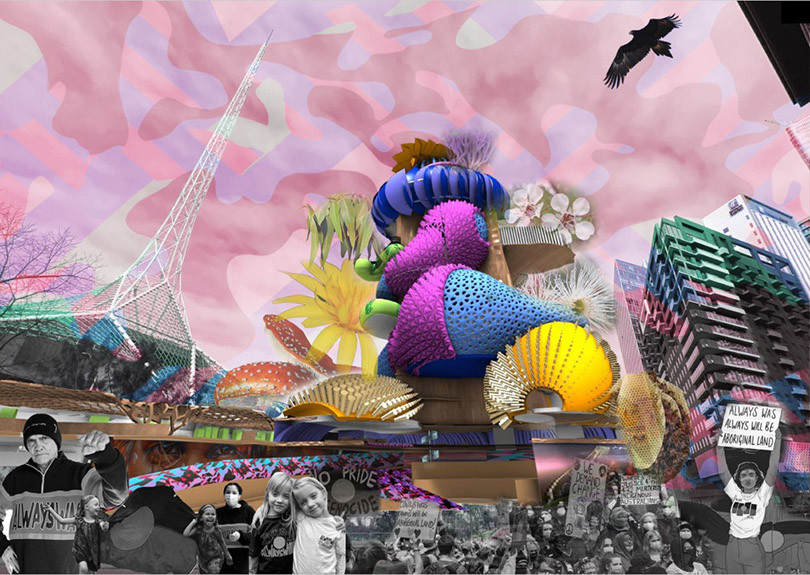
Tensions are integral to architecture, design and human relationships – post-conflict or not – and so is their resolution. Though creative tensions are often grounded in the physical, this ability to embrace a multitude of forces, perspectives and stories is a transferable skill for the kind of dynamic, persistent dialogue required for the Indigenous reconciliation project.
Through embarking on journeys, conversations and relationships with dedication, reconciliation can be a way of initially imagining, and ideally forming, more restorative and mutually beneficial relationships. A shared respect for place gives architecture and design particular languages, approaches and opportunities to engage in this process; and to move beyond intention into living and practising a way of being poetically described by N’arweet Briggs:
‘You are in mine
And I am in yours’
ARM Architecture
armarchitecture.com.au
Yemurraki Egan
linkedin.com/in/yemurrakiegan
N’arweet Carolyn Briggs
firstpeoplesrelations.vic.gov.au
Dr Christine Philips
rmit.edu.au


We think you might like this article about cultivating an authentic Māori design voice with Jasmax’s Elisapeta Heta.
INDESIGN is on instagram
Follow @indesignlive
A searchable and comprehensive guide for specifying leading products and their suppliers
Keep up to date with the latest and greatest from our industry BFF's!
The internet never sleeps! Here's the stuff you might have missed