The home of architecture and design in the Asia-Pacific
Get the latest design news direct to your inbox!

Get the latest design news direct to your inbox!
In the wake of its first completed project, we catch up with Hammond Studio’s Todd Hammond to talk building a business, the client-designer relationship, and why adaptive reuse is the way forward.

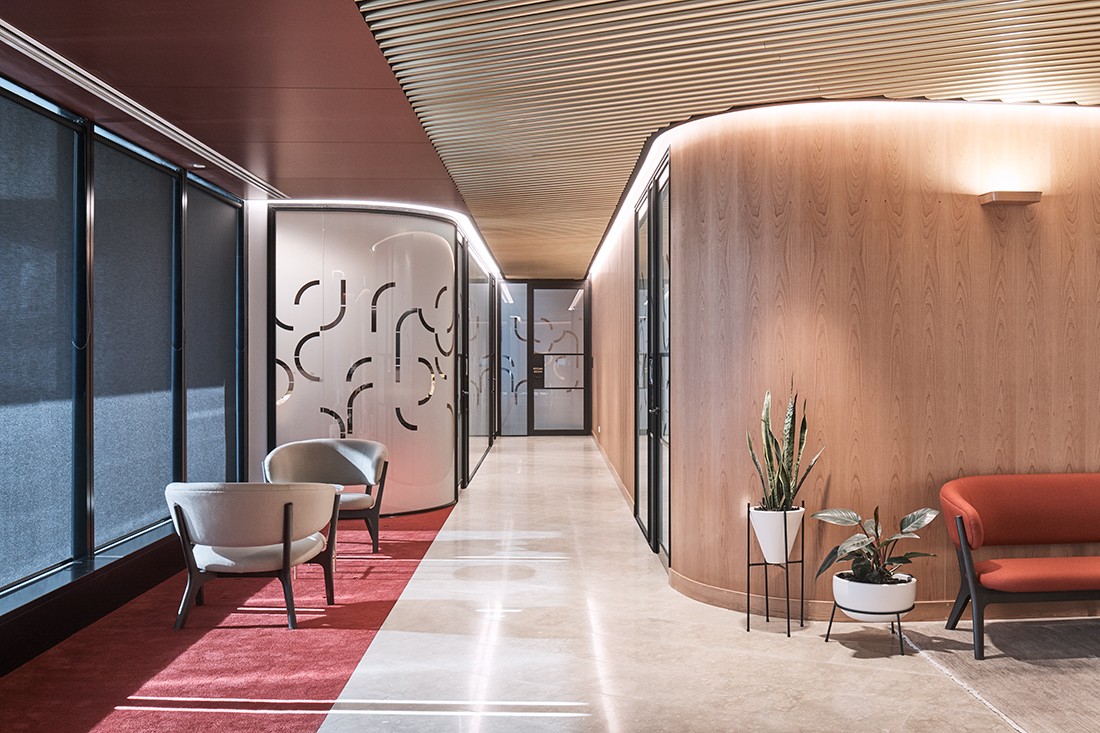


“The most successful projects,” says Todd Hammond, “Are always the ones where the clients are engaged.” It’s a brisk Friday morning in Sydney and we’re sitting in the lobby of Tower 2, Darling Park, a commercial precinct that takes its name from the adjacent Darling Harbour.
If anyone knows what it takes for a commercial project to succeed, it’s Hammond: prior to starting Hammond Studio just over a year ago, he was the Head of Workplace Interiors at Woods Bagot, and before that a Practice Director at BVN Architecture.
A true heavyweight in national interior design, his is the keen eye behind a number of now-iconic projects including Paramount by The Office Space, Sydney’s Challenger headquarters, and Herbert Smith Freehills’ AIA NSW Interior Architecture Award-winning Sydney office.
Though Hammond has been instrumental in shaping the look, feel, and overall understanding of contemporary Australian workplaces, his humility belies this fact. When we meet in Darling Park, he’s quick to point out that successful projects are the product of collaboration and strong client-designer relationships.
“It’s so important to have the client involved in [the design] process,” he says, “You can just imagine the outcome if the client wasn’t engaged and staff walk in at day one, only to find spaces which are clearly not aligned with the culture of the business.”
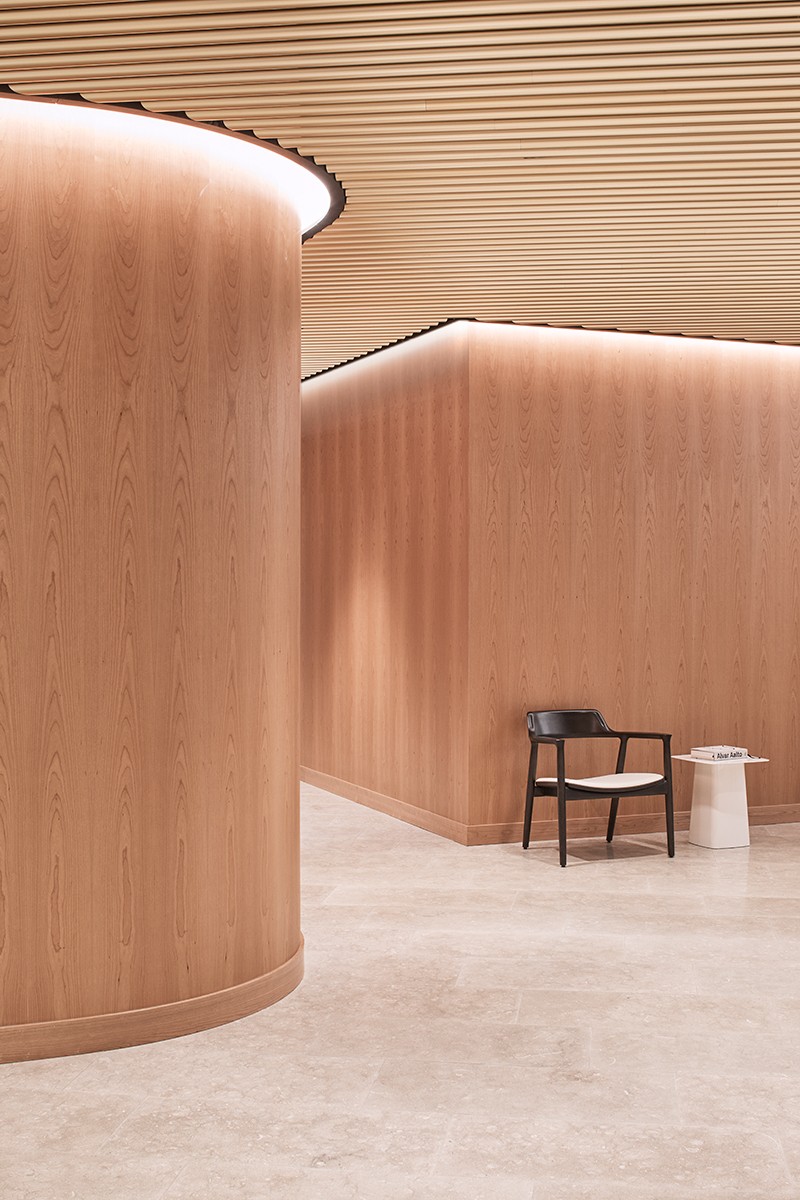
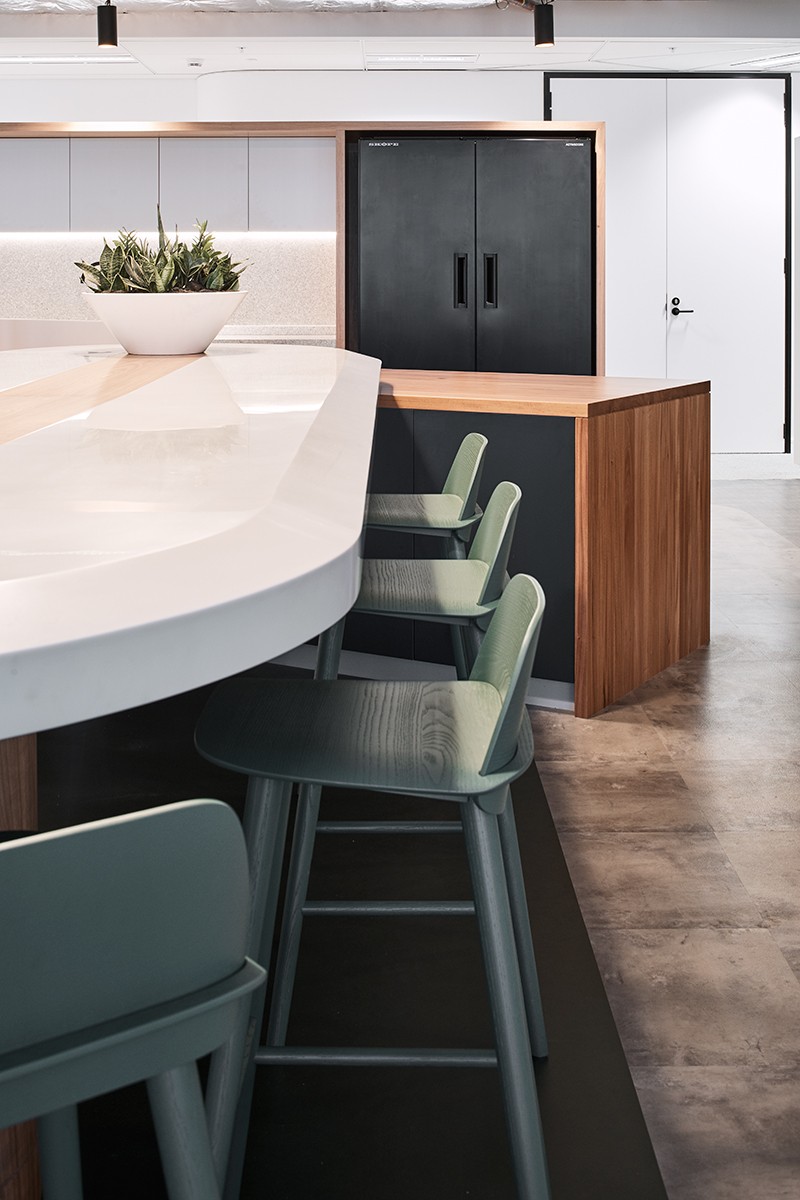
Eighteen storeys above us are the freshly minted headquarters of Chinese-Australian coal company Yancoal, the first project completed by Hammond and his team since he left Woods Bagot to start Hammond Studio Pty Ltd a little over a year ago.
Completed in a whirlwind twenty-two weeks, the new office is a stylish, considered take on the contemporary workplace that puts company culture first. To achieve this, Hammond worked closely with the client to develop a firm grasp of where their culture was at and where they wanted it to be. From there, he set about designing a space that bridged the gap between the two and left room for flexibility.
“It’s important that designers make sure that we’re meeting the brief and ticking off all the functional requirements to make sure that the project has the longevity for the length of the lease and beyond,” Hammond explains, “When people move in they always use spaces a little bit differently to what they were designed for, and it’s about designing spaces that can be malleable by the end users.”

For the Yancoal project, Hammond had to be mindful of all of this in addition to navigating the complex terrain of running his own design business. For someone accustomed to leading teams within a larger organisation, branching out on his own was a steep learning curve, but one he relished nonetheless.
“I have great satisfaction in servicing my clients the way that they deserve to be serviced,” he says, “Because [in the past] I couldn’t do that. At a big firm, you’re spreading yourself constantly across a large group of people and not actually feeling like you’re servicing any of them the way they deserve.”
As it stands, the Hammond Studio team comprises five people – including Hammond himself – with little plan of expansion in the near future.
“I think for the time being it’s a good size,” muses Hammond, “I want it to grow organically, [and] I don’t want it to ramp up too quickly. I’m happy being selective about who and what we take on, because I want to make sure that we’re hitting the right outcomes and that the journey is enjoyable and that everyone is serviced correctly.”
In addition to nurturing his commitment to servicing clients in a thorough, meaningful way, Hammond has kept busy with other projects, including an Ambassador role as part of Indesign’s inaugural FRONT event.
As part of the two-day event, he led a panel discussing the importance of adaptive reuse in the commercial space, a subject about which he feels passionately.
“As designers,” he says, “We need to make sure that we’re not designing spaces in a way that eliminates any other potential use of space. Being able to manipulate space is so important from a user perspective.”
See what was specified in the Yancoal HQ here. And for regular design insights and updates, join our community.
INDESIGN is on instagram
Follow @indesignlive
A searchable and comprehensive guide for specifying leading products and their suppliers
Keep up to date with the latest and greatest from our industry BFF's!
The internet never sleeps! Here's the stuff you might have missed