The home of architecture and design in the Asia-Pacific
Get the latest design news direct to your inbox!

Get the latest design news direct to your inbox!
Despite being a stone’s throw away from Singapore’s busy Orchard Road, Lynn Tan reports that Helios is an oasis of tranquility.
April 10th, 2012
The luxury property market in Singapore has been picking up momentum in recent years. This is driven both by domestic demand and by foreigners living and investing in Singapore.
Within and around the city centre and other prime locations, condominiums are sprouting up like mushrooms.
As with any up-market apartment, a desirable postal code is a given; so are premium fittings and top-notch finishes.
With so many developments all vying for buyers who are able and willing to pay top-dollar for their real estate, developers and designers have to come up with offerings that distinguish them from the rest of the pack.
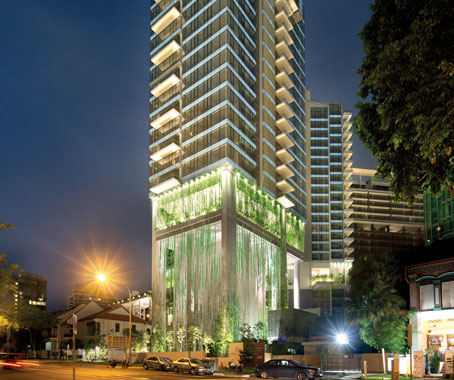
In fact, they are not just selling apartments; they are marketing a lifestyle and Helios Residences was conceptualised as an urban oasis that offers residents their own private sanctuary within a densely built-up neighbourhood.
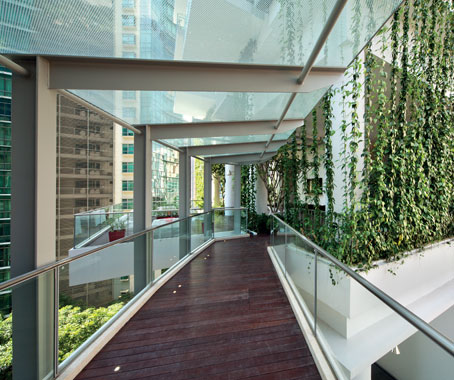
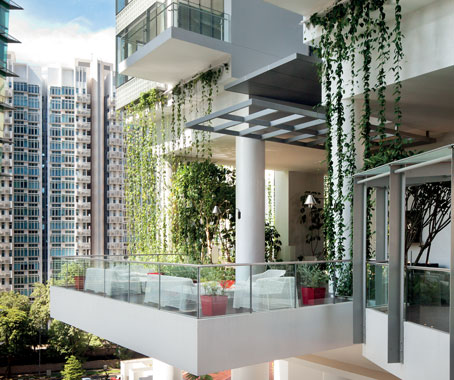
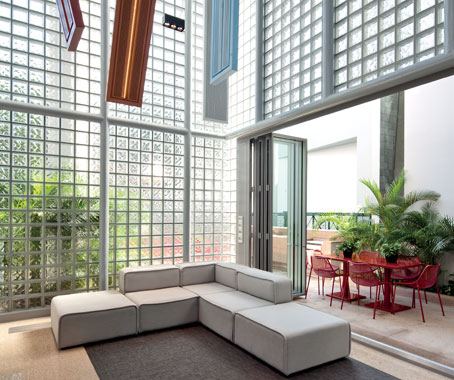
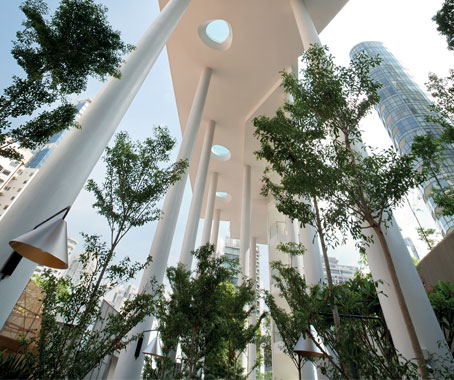
Guida Moseley Brown Architects (GMBA) achieved this through a macro-strategy of elevating many of the common areas and swimming pool to a Treetop Recreation Deck on the fourth storey.
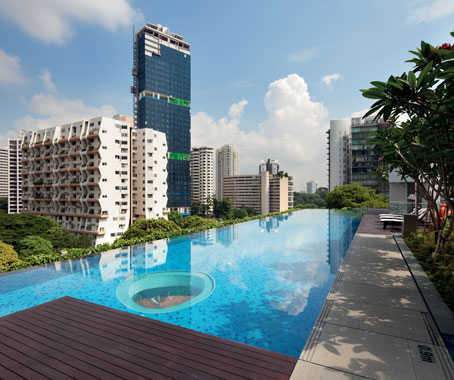
“By maximising the gross floor area from the fifth storey upwards, the ground level is freed up for a sprawling tapestry of interesting gardens terracing down the 12-metre topographical drop, while negating the need to build into the slope. This creates two levels of landscape and also frees up the circulation,” explains Design Partner, Hal Guida.
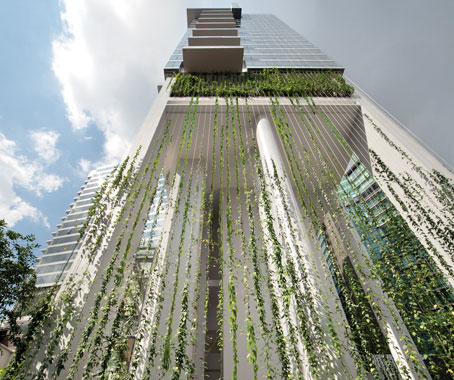
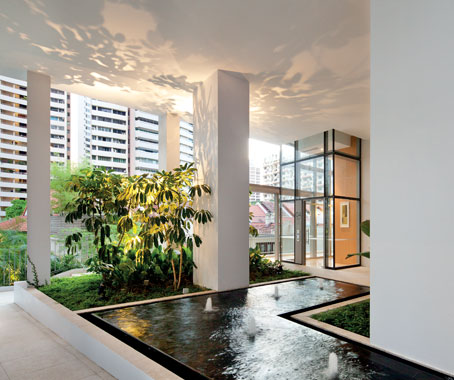
While landscaping is nothing new to condominiums in Singapore, where almost every development boasts verdant greenery and water features aplenty, many bear the overly manicured, tell-tale man-made signs that are familiar across the Garden City.
At Helios Residences, however, you genuinely feel as if you have stumbled upon a Garden of Eden within the city.
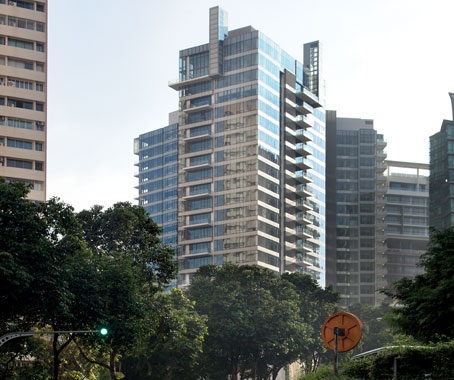
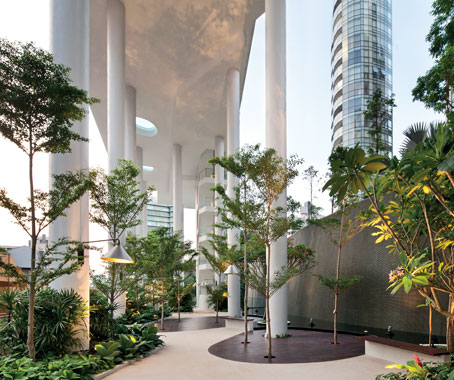
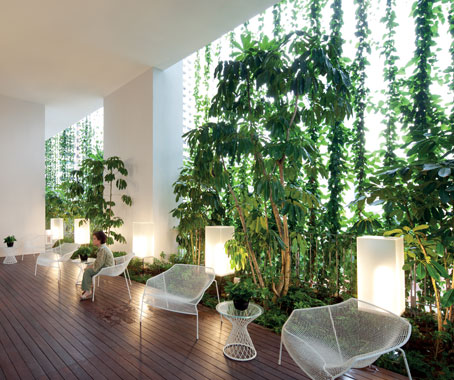
Photography: John Gollings
Read the full story on Helios Residences in Indesign #48, available now.
Guida Moseley Brown Architects
gmbarchitects.com
INDESIGN is on instagram
Follow @indesignlive
A searchable and comprehensive guide for specifying leading products and their suppliers
Keep up to date with the latest and greatest from our industry BFF's!
The internet never sleeps! Here's the stuff you might have missed