The home of architecture and design in the Asia-Pacific
Get the latest design news direct to your inbox!

Get the latest design news direct to your inbox!
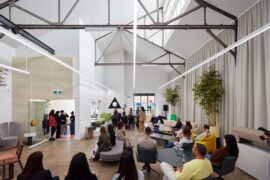
In this issue of Indesign, we look at the idea of the workplace – or more specifically, our ‘work, live, play’ dynamic. Here’s a sneak-peak of what’s inside…

February 1st, 2017
Is it just us, or does anyone else feel like agile is old news? We know, that’s a little audacious! Particularly seeing as it’s become the paradigm upon which modern workplace design is based. But in a world where change is the only constant, we’re pretty sure that ‘agile working’ – at least as we know it – is on a limited shelf life. So we’re moving forward, looking at where the future of workplace design is heading and courageously calling the shots on a new commercial revolution.
In this edition of Indesign: the ‘Work, Live, Play’ issue, we cut the buzzwords and vague terminology to uncover what our industry is facing in the world of workplace design. We ask, if agile has become the norm, then what will the new, radical paradigm look like? Here, we take a critical look at current models of workplace wellbeing: Is it all just a big sell, or could we just be using too narrow a definition in addressing it? Using some of the regions most progressive commercial projects, we uncover how and why we are redefining the term to embrace emotional and spiritual wellbeing as a means for designing engaging, positive and interactive commercial environments.
As part of our up-to-the-minute survey on agile working, we take you behind the scenes of Orgatec 2016 to critically review the latest workplace fittings, fixtures, furnishing, big ideas – and even the event itself! We also address the hot topic of commercial kitsch versus experimentation and how to navigate between what’s progressive and what’s naff. We’ve also discovered that with the surge of popularity in material selection in contemporary workplace design, pairing our clients’ new-found appreciation for materiality with the big bad data movement could well hold the answer to that all important question, ‘What is the future of the workplace?’ (Flip to page 172 to find out exactly what we’re getting at!)
In these many pages, we critically review the role of architects and designers in shaping the ever-evolving work, live, play dynamic; and the people, products and projects that are driving them. Enjoy the issue!
Indesign co-editors, Sophia Watson & Alice Blackwood.
Read more in issue #68 of Indesign.
On sale February 17, subscribe here.
INDESIGN is on instagram
Follow @indesignlive
A searchable and comprehensive guide for specifying leading products and their suppliers
Keep up to date with the latest and greatest from our industry BFF's!
The internet never sleeps! Here's the stuff you might have missed