A metallic façade elegantly wrapping itself around the base of Three Tower at the 300 George Street precinct in Brisbane, forms a striking new landmark in the soon-to-be-completed, high-end commercial area.
The artwork is a response to Brisbane City Council’s requirement for the integration of contemporary public art into the new development as such developers Multiplex enlisted the help of UAP. The team, who experienced great success producing another façade project in Brisbane’s Wintergarden, selected artist Alexander Knox from a limited competition pool. UAP assisted during the design process and were responsible for the construction and installation of the new façade.
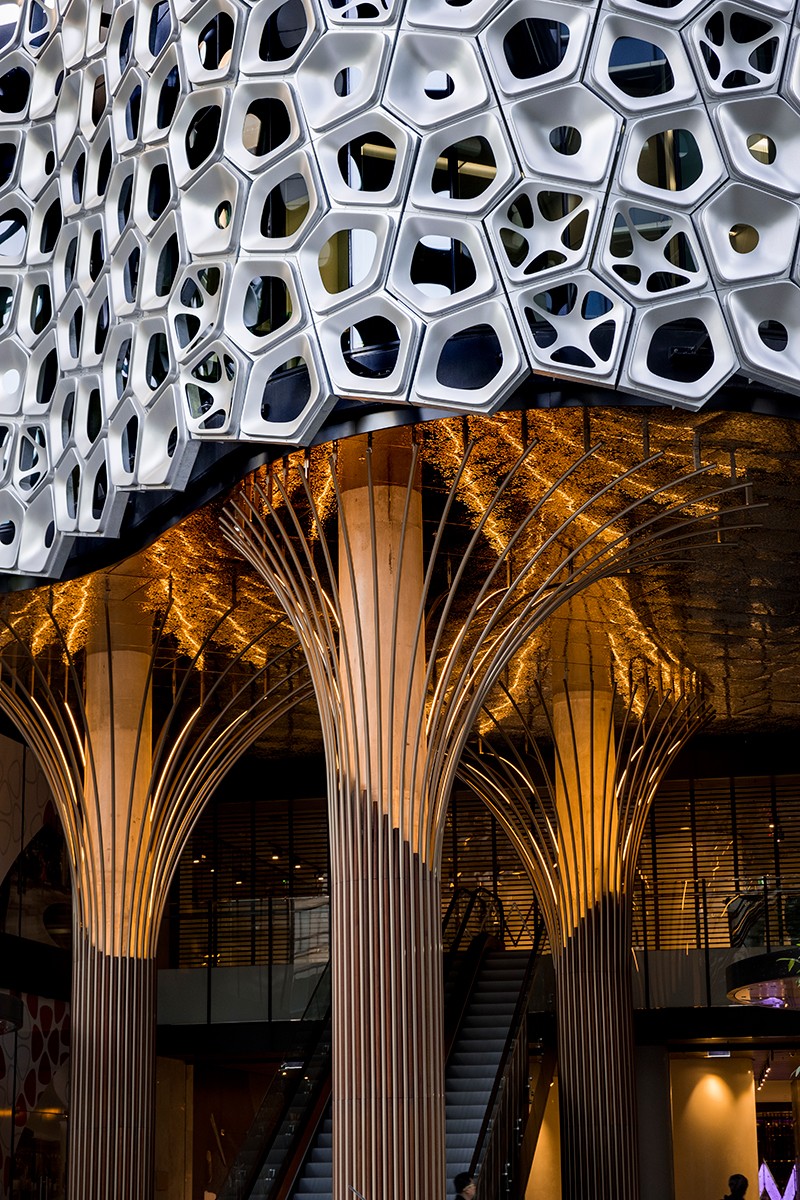
“This [project] provided an opportunity for the provision of a world-class artwork of landmark value,” explains Samuel Mayze, UAP Project Director, adding, “It’s an integrated artwork feature that will significantly enhance the public realm and individualise 300 George Street as a unique urban address.”
The main component of Knox’s artwork entitled ‘The Sound that Light Makes‘ manipulates geometric and organic shapes in poetic fashion. “[The façade] explores the highly variable effect of light shimmering on the surface of water,” explains Knox. “It speaks about how we sense and interact with, and are influenced by natural forces, even within the highly urbanised setting of central Brisbane,” he says.
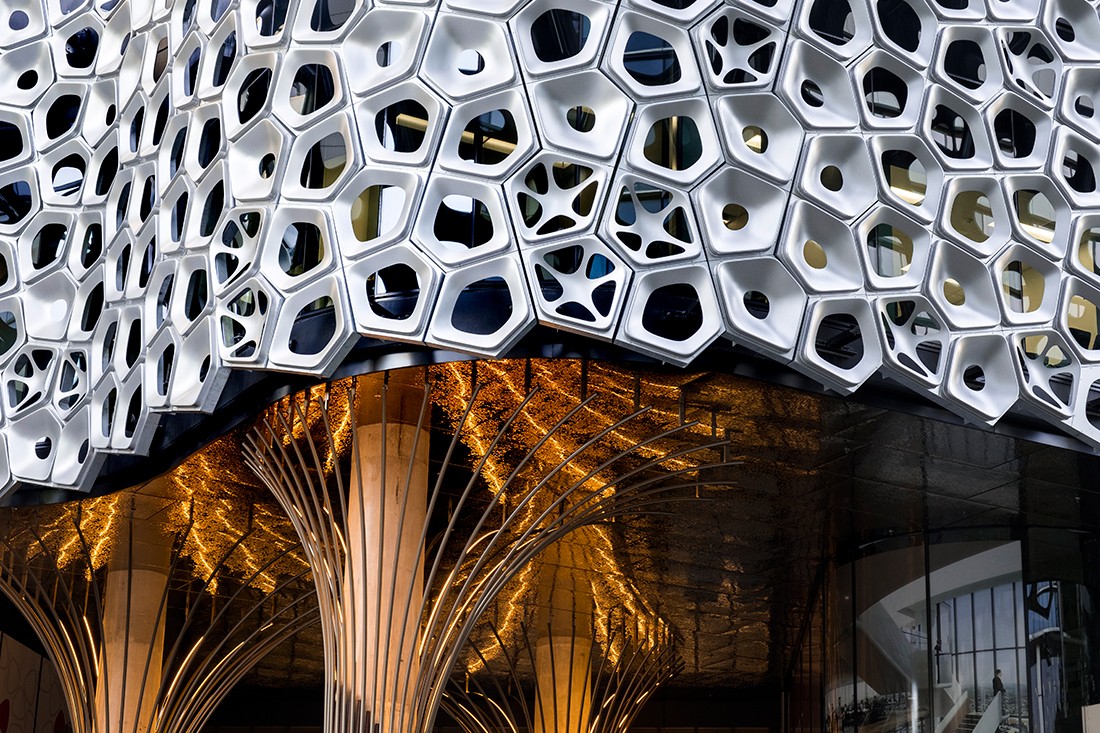
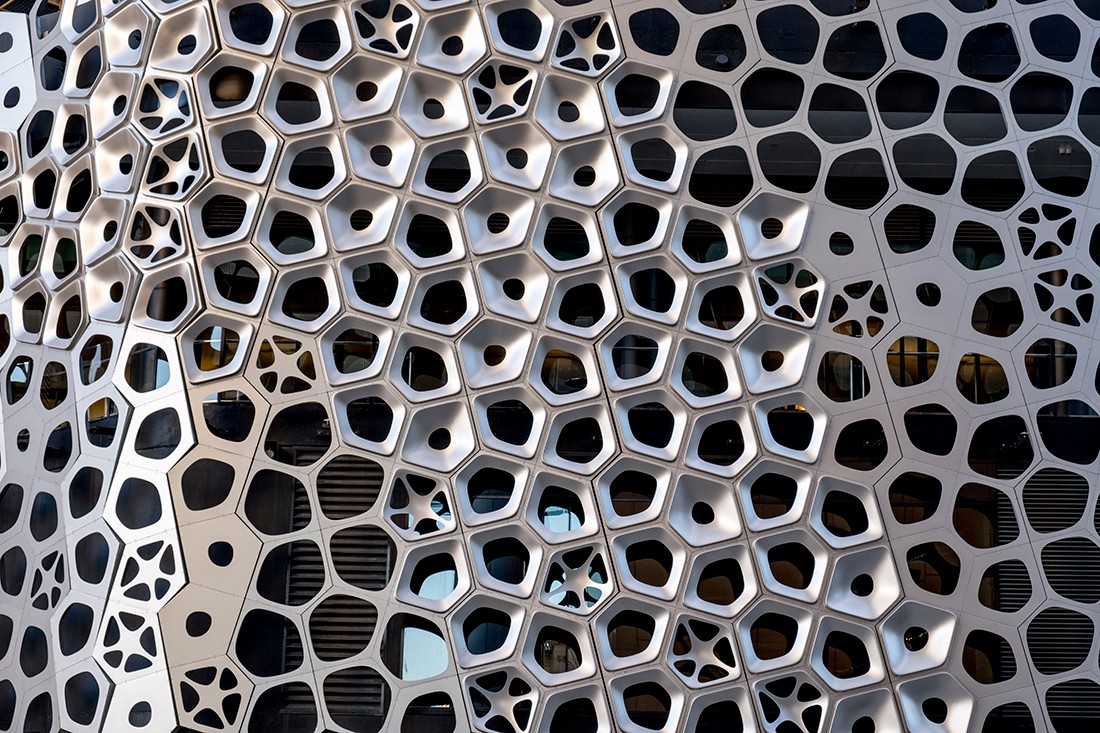
Knox was inspired by an enquiry into the structural languages inherent in microscopic creatures and mineral arrays while working with the visual language of the architecture. “The surface of the work is on a single plane with repeating mineral-like geometry, while the surfaces in between seem to be gently breathing back towards the building,” he explains. “The play of light and shadow and the exchange between the geometric and the organic creates a visually dynamic effect that is not a representation of light on water but rather an engagement with its nature and its effects.”
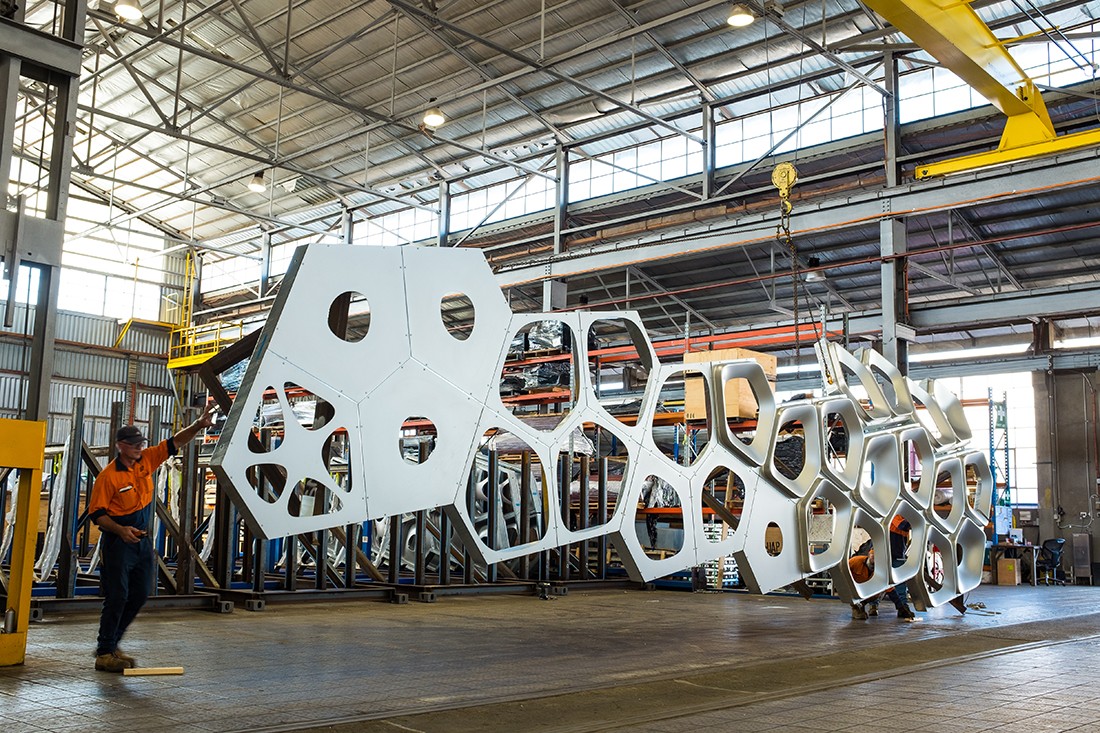
The façade consists of three-millimetre-thick aluminium sheet and aluminium pressed panels that have been powder coated and laser-cut. The 3D aluminium art panels have then been pressed into shape.
“Ultimately, the piece will generate visual interest and aesthetic value for building users, occupants and the general public, and will culturally enrich the public realm of Brisbane’s CBD,” concludes Mayze.
Photography courtesy UAP.
We interviewed two art dealers and an art consultant to get the lowdown on art in commercial spaces, have a read.