The home of architecture and design in the Asia-Pacific
Get the latest design news direct to your inbox!

Get the latest design news direct to your inbox!
Recognised for his game-changing disruption of the architecture and design industry, HY William Chan has earned a well-deserved place on Forbes magazine’s coveted “30 Under 30” list for architectural leadership and advocacy in 2019.

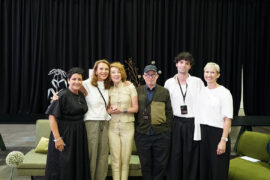
'Refugees as Architects of Their City and Future' TED talk opened TEDxYouth 2019. Photography by Visionair Media.
In just 10 years of studying and practising architecture, HY William Chan has made a name – and impact – around the world. He has headlined a sell-out TED Talk, addressed the UN General Assembly, co-authored the UN-Habitat World Urban Youth Declaration, and championed the UN Sustainable Development Goals. In recognition of this work, the “youthful visionary” has earned a well-deserved place on the “Forbes 30 Under 30” list in the Industry, Manufacturing and Energy category, and is the only honouree in architecture practice.
Where once the Forbes list celebrated wealth as a sign of success, now it celebrates innovation and change. The criteria for honourees included leadership and disruption in their field; entrepreneurial mind-set and results; and the likelihood of changing their field over the next 50 years. Indeed, William’s leadership and advocacy is driven by the desire and need for architects to have a positive and direct impact on social, economic and environmental sustainability and in shaping the cities of the future. “Our voice, as architects, isn’t loud enough,” says William, who works at Cox Architecture, in addition to his award-winning innovation work and advocacy.

Cox Architecture
More than a decade of being involved with community-building design projects around the world has garnered William international attention. At the UN World Urban Forum in Naples and Medellín, he advocated on the Professionals Roundtable alongside then-International Union of Architects (UIA) President Louise Cox. He collaborated with the late humanitarian-architect Paul Pholeros in the slums of Bhopal and Johannesburg. And in Venice, William learnt from Pritzker Laureate Alejandro Aravena, having showcased his own project on environmental resilience at the international exhibition of Aravena’s Venice Biennale.
“I realised that architecture could do a lot more to help people, and that impact is direct, having seen it first-hand,” he says. “My work has since focused on getting things done, and how to continuously create the greatest impact.”

‘People Building Better Cities’ research and action program travelled to 20 cities.
His latest venture empowers displaced people living in refugee camps to transform plastic waste, using 3D printers, into elements that improve their built environment. The project was conceived through first-hand experience of the refugee camps and developed in collaboration with those who live there. “Giving people ownership and control over their environment helps to give them dignity,” William says. “It empowers them to build capacity, to solve their own problems and transform their community and environment.”
The project also reflects William’s interest in how everyone can and should have a part to play in shaping the cities of the future, and particularly how architecture and design can help address global problems, such as rapid urbanisation, climate change and humanitarian crises, through social enterprise. “I’m passionate in how architectural practice can be more entrepreneurial, and how to make sure ‘disruption’ becomes the norm,” he says.
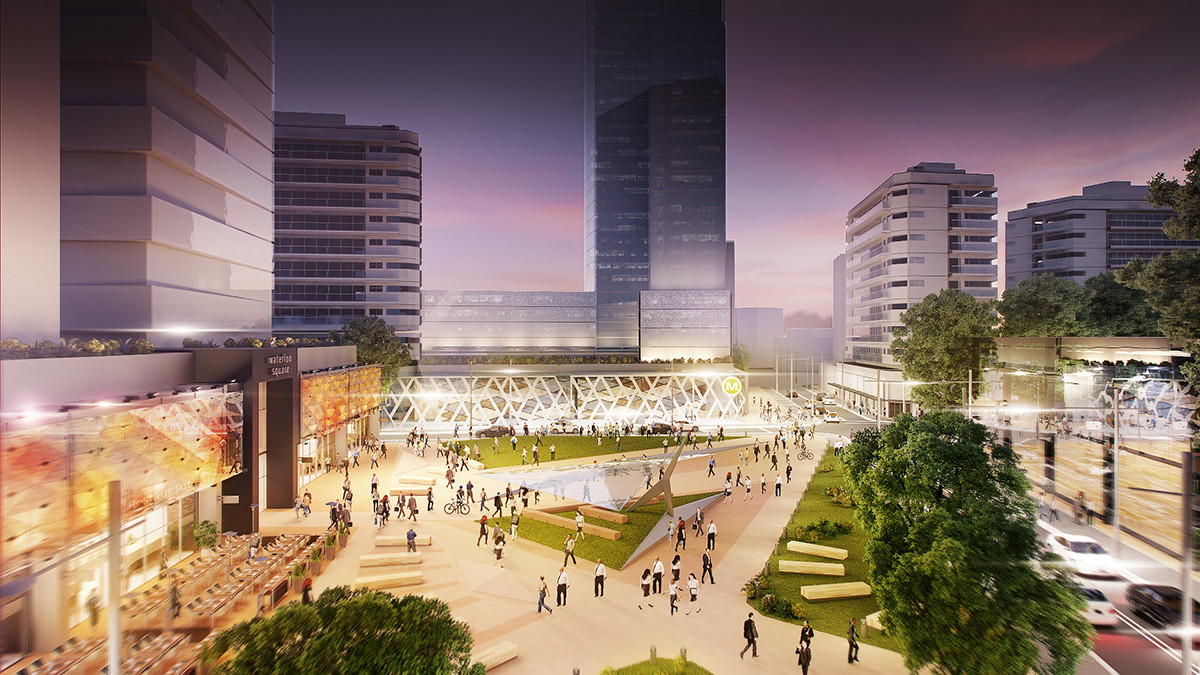
Render by Cox Architecture.
William is determined to make an impact early in his career, and is already mentoring the next generation. As a researcher and adviser at the Center for Sustainable Urban Development at Columbia University’s Earth Institute in New York, William is inspired by the architecture students who are voicing the urgency to act in the interests of sustainability. “The next generation is asking really critical questions. It is inspiring to hear them say they have agency, and I can be someone they see already taking action about it,” William says.
We think you’d like this story about another young designer with a sustainability agenda.
INDESIGN is on instagram
Follow @indesignlive
A searchable and comprehensive guide for specifying leading products and their suppliers
Keep up to date with the latest and greatest from our industry BFF's!
The internet never sleeps! Here's the stuff you might have missed