The home of architecture and design in the Asia-Pacific
Get the latest design news direct to your inbox!

Get the latest design news direct to your inbox!
How do you encapsulate the pinnacle projects and products of design from the Asia Pacific region? It’s design squared.

June 22nd, 2018
Design is one of those things that gets under your skin. And once it’s there it takes over your life, permeating many parts – in a good way of course. Suddenly the curves and textures of everything from a mug to a façade are writ large with meaning. An appreciation is developed for spaces and objects, which reaches into all facets of life.
So as a lover and creator of design, what would one expect when receiving a prestigious design award? A trophy that is a beautiful object in and of itself, naturally.
As design lovers ourselves, this was the brief when developing the INDE.Award trophy. And who better to have on board for the task than a veritable Australian design duo – Dinosaur Designs.
Founded by Stephan Ormandy and Louise Olsen over 30 years ago, Dinosaur Designs has continually created desirable design objects for a hungry Australian market. The pair brings organic and adventurous artefacts of design to life. An approach that has been translated into the 2018 INDE.Award trophy.
More than a glorified statue, the INDE.Award trophy features Dinosaur Designs’ signature resin and is formed into a beautiful, and subtly multi-purpose object. This is one piece of authentic design that will sit proudly in the ‘pool room’.
Those lucky enough to take one home receive an artefact of Australian design along with the recognition of having created a piece of stand-out design from the Asia Pacific. It really is a design object for designers. Design squared.
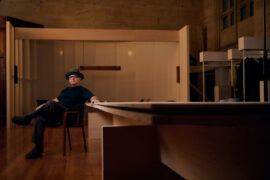
Pictured top: Our 2017 Luminary and winner of The Building category – William Smart of Smart Design Studio. William is also on our 2018 INDE.Awards jury.
INDESIGN is on instagram
Follow @indesignlive
A searchable and comprehensive guide for specifying leading products and their suppliers
Keep up to date with the latest and greatest from our industry BFF's!
The internet never sleeps! Here's the stuff you might have missed