The home of architecture and design in the Asia-Pacific
Get the latest design news direct to your inbox!

Get the latest design news direct to your inbox!
Bulky pockets and locksmiths are things of the past thanks to Häfele’s range of convenient digital door locks, including the EL 9500 Digital Lock.

July 1st, 2019
As more aspects of our lives move to our smartphones, our wallets are becoming smaller and smaller. We don’t need to carry around cash anymore, and the next logical step in the streamlining of our day-to-day routine is to do away with keys as well.
Häfele, one of the world’s leading hardware specialists, is ready for this eventuality with a range of digital locks that offer security and flexibility in equal measure.
Häfele’s digital door locks offer much more than the convenience of key-free living. They allow you to fine-tune your security in a way that suits your lifestyle and needs.
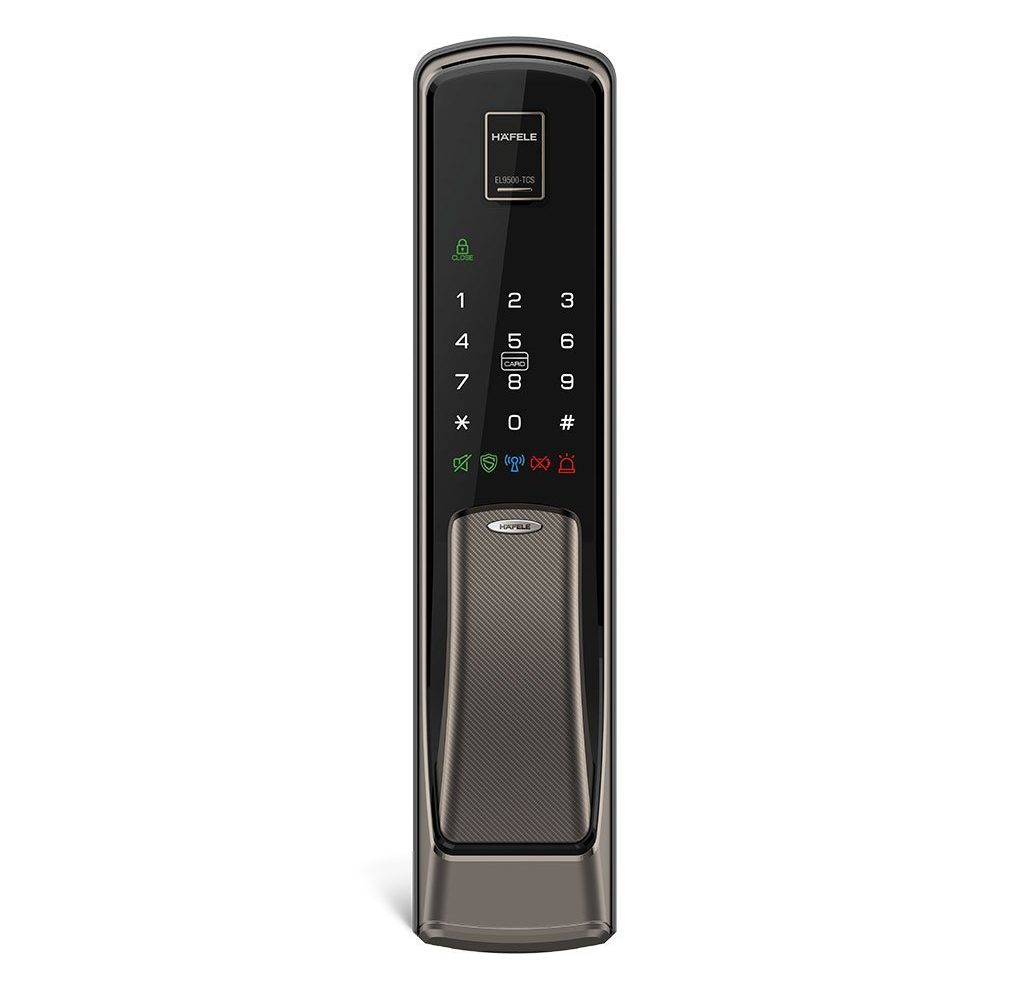
The Häfele EL 9500 Digital Lock allows four types of access: card, thumbprint, access code and emergency key (your ultimate back up).
For thumbprint access, the EL 9500 Digital Lock uses an ‘area-type fingerprint sensor’ as opposed to the ‘sweep-type fingerprint sensor’ commonly used by competitors. The area-type solution delivers a higher and more accurate identification rate, says Häfele. So you’ll enjoy smoother entry and exit from your home.
Up to 200 fingerprints can be saved in the system. 50 smart cards are issued with each lock, and ten passwords can be installed.
An intrusion warning function and a mischief and hacking prevention system offer great peace of mind. The Häfele EL 9500 Digital Lock works without internet access, increasing reliability against WiFi hacking.
The product uses eight easily procured AA batteries and lets you know when battery levels are getting low with a warning function. Volume can be controlled – a good way to keep peace with your neighbours!
The Häfele EL 9500 Digital Lock was designed for push-pull doors with a thickness of 40 to 90 millimetres. Door closers are a must for this system.
For more information, contact Häfele.
INDESIGN is on instagram
Follow @indesignlive
A searchable and comprehensive guide for specifying leading products and their suppliers
Keep up to date with the latest and greatest from our industry BFF's!
The internet never sleeps! Here's the stuff you might have missed