“Setting up my own business wasn’t part of my plan initially, but circumstances led me down that path,” recalls Celia Chu who cut her teeth in hospitality design in New York City, United States, before returning to Taiwan, her birth country in 2007 due to personal reasons. Back home, she sought creative autonomy and a greater involvement in global projects and hence, set up her eponymous studio rather than work for another firm.
Fast forward to today, Celia Chu Design & Associates (CCDA) has become known for its portfolio of high-end hospitality and residential projects around the world, including Ambassador Hotel in Taipei, Rosewood Hotel in Bangkok and several Hyatt brand hotels throughout the Asia-Pacific region.

Interestingly, Chu says that wearing two hats as a designer and business owner has proven to be beneficial. She is conscious that design should not be for design’s sake. “As designers, it is important to consider and calculate potential market returns for our clients during the design process. We frequently assist in assessing revenue possibilities while creating our designs,” she shares.
No matter where the project is situated, CCDA believes that the starting point of every hospitality project is to immerse in the local community and learn their way of life to tell unique stories that resonate with people. “We seek art, craft, and cultural elements from residential areas, markets, museums, and draw inspiration from architecture, music, dance, and family values to weave stories into our designs,” says Chu.
A case in point, CCDA’s contemporary architecture and spatial design for Hyatt Centric Lakeside Ningbo invites travellers to experience the rich culture and history of Ningbo, China. It drew inspiration from the port city’s scenic views, traditional craftsmanship and intriguing mahjong culture.
Related: 6 Asian design firms you need to know

The firm’s empathetic and design-centric approach for hospitality projects also translates to their residential work, which is often about putting themselves in the shoes of homeowners to learn deeply about them as people. “For example, if the owner appreciates tea ceremonies, we immerse ourselves in the experience. Designing through firsthand experiences help us to bring stories and personalised services to life,” she says.
CCDA designed a ‘modern man cave’ located in Taipei that conveys the owner’s love for wine and whisky. Within the ‘man cave’, a tailor-made dining-bar doubles as a dining table and casual bar; a custom-made wine cabinet showcases his personal collection and a secret whisky bar is hidden behind a fine leather panel. Timeless Taipei, a luxury apartment that the team worked on, boasts a flexible layout with bespoke full-height room divider doors that can be closed for privacy or opened to transform the space into an open plan for social gatherings.

“For me, the essence of design lies in creating something truly unique and conveying a meaningful narrative,” she says. She seeks to create a sense of individuality that is unique and authentic to each space rather than adhere to a single style of work. “This approach ensures that every project I undertake stands out as a distinct and remarkable piece of work,” she adds.
Despite having reached a certain stage in her career, Chu is still passionate about her work, sharing that she still has unfulfilled dreams. “One of my dreams is to work on a low carbon, self-sustainable project that utilises renewable energy technologies but make it look beautiful and not just ‘techy’,” she shares.
Related: Atal Akshaya Urja Bhavan is India’s first net-positive building
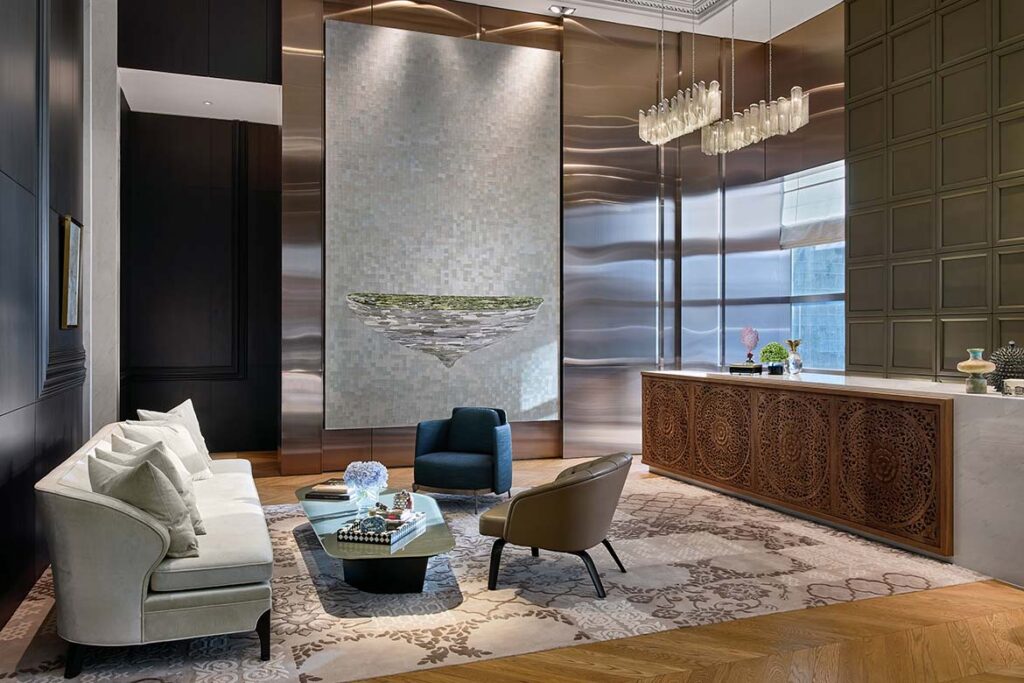
When asked if she has faced any moments of self-doubt in her career, Chu humbly replies, “When I first started my own firm, clients approached me with trust in my passion and design abilities. However, this placed pressure on me, as I feared that I wouldn’t meet their expectations. To overcome this, I worked diligently every single day.” Over time, her mindset shifted from meeting expectations to constantly challenging herself to do better.
“I aspire for people to feel the same passion that I do, experiencing it when they stay in the spaces I design,” she concludes.