The home of architecture and design in the Asia-Pacific
Get the latest design news direct to your inbox!

Get the latest design news direct to your inbox!
Urbanist Adib Jalal explores our evolving relationships with the built environment and places connection at the heart of meaningful design.

Adib Jalal is the creator of Urban Ideas, a platform to explore and share ideas about the city.
April 5th, 2022
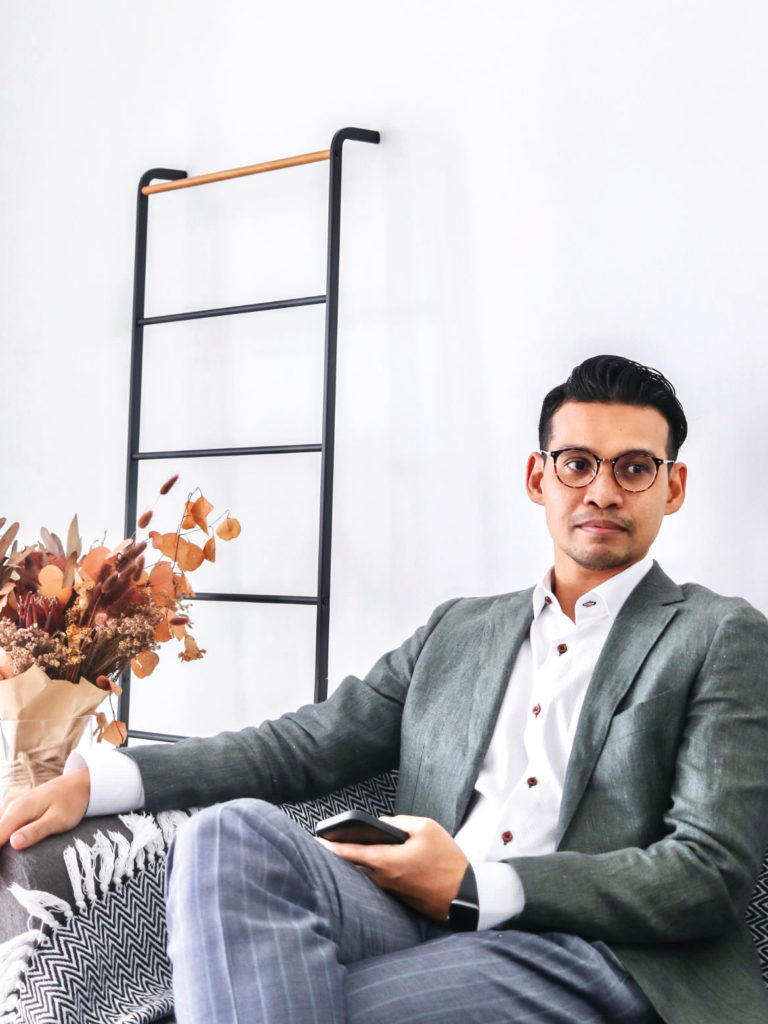
It is well-known that a sense of place – the way we perceive our surrounds, our attachment to places and place meanings – can have an effect on well-being and emotions. And perhaps no other person knows more about the power of a ‘place’ than Adib Jalal, an urbanist and educator based in Singapore. He has spent close to 15 years exploring the built environment through his works that involve building connections between people and place.

Jalal, who co-founded and ran a placemaking practice Shophouse & Co for eight years and recently started the Urban Ideas initiative aimed to share and enable ideas for better cities, discloses that the big shift in his career occurred when he was appointed as the festival director of Archifest back in 2012. “The role enabled me to explore the ideas of programming,” shares Jalal. “It was not just about studying buildings but also spaces between buildings that led to examining cities in a more complex manner. I was intrigued by how our built environment functions in totality, as a system.”
The interest in looking at urban issues at different scales became instrumental to Jalal. It has had a resounding influence in shaping his career and current explorations of how our built environment can meaningfully respond to our world’s current unique state of affairs affected by the COVID-19 pandemic. For Jalal, a sense of place is now more critical in a ‘place-less’ world where everything is online and our movement is limited within smaller radii. In the context of Singapore, this placeless-ness is even more pronounced as physical points of engagement with the built environment have become more limited, but more deliberate as well.
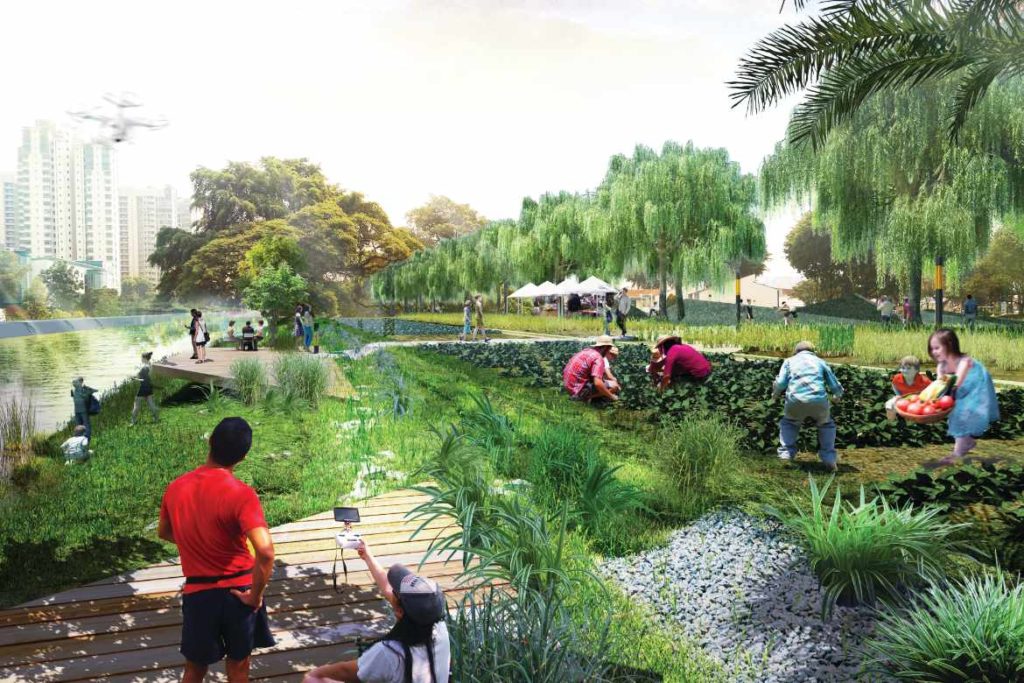
This shift exacerbated by the pandemic has accentuated the importance of some places within the urban context and how these places, intentionally or unintentionally, have shown responsiveness to the current state of affairs. For Jalal, it is not a matter of a handful of purpose-built projects or places, but rather of an ability of a place that may not have been designed as a response to this context to show its value to its users.
“What keeps coming back to me is the importance of our green public or park spaces as places of mental and physical wellness in a time where everything seems difficult,” observes Jalal. He brings up examples such as the Gallop Extension of Singapore Botanic Gardens and the Central segment of the Rail Corridor that opened last year where the community is turning to for wellness and family bonding time. These are the spaces that balance an offering of unique experiences, and layer heritage, distance and natural vegetation to give an ability to each visitor to craft his or her own planned or impromptu experiences.
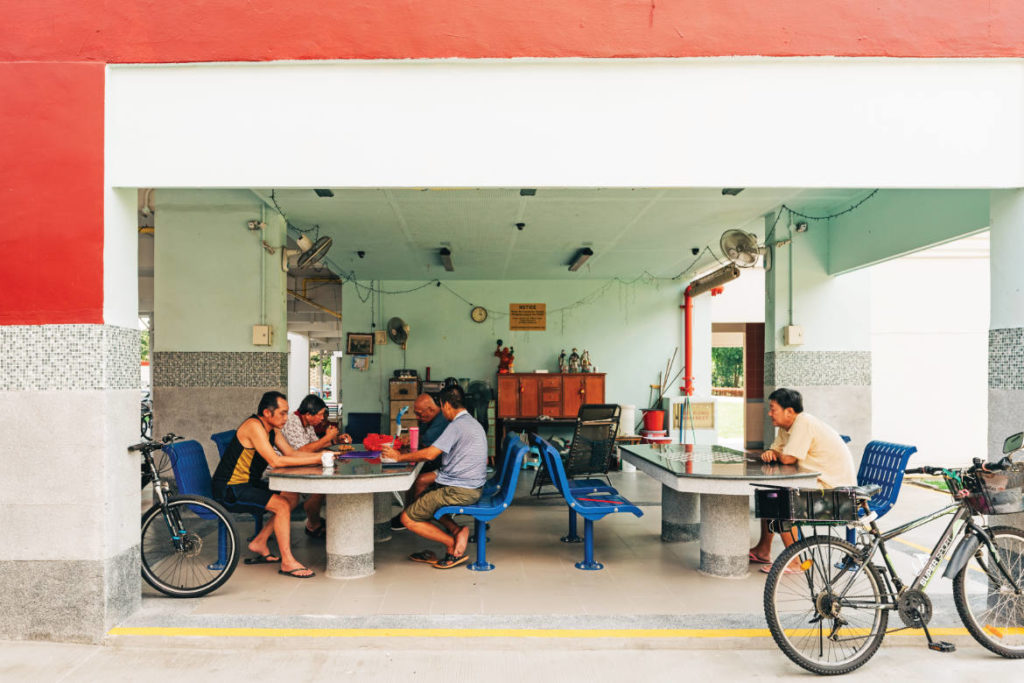
With the re-defining of the boundaries and perceptions of urban spaces, Jalal also notes the rising importance of the neighbourhood and hawker centres within the urban and social fabric. With architecture serving as a backdrop and enabler of human relationships, the idea of gathering emerges at the forefront.
“As simple activities, like going out for a family meal, became challenged, we are realising what the places enabling these activities have meant for us. It is the human stories that revolve around these places that surface first.”
To Jalal, the need to gather can be expressed in many unique forms of public space, spanning different scales and spatial typologies. In many ways, it is the idea of the architecture of relationships which was also explored through projects featured at the Singapore Pavilion at the 17th International Architecture Exhibition, La Biennale di Venezia 2021, which highlighted the interplay between human spaces and human connections. The curated collection of responses, large and small, includes residential projects like Kampung Admiralty by WOHA, community hubs like Our Tampines Hub by DP Architects and rejuvenation projects like Common Ground by Red Bean Architects.
In the Pavilion’s timely address of how our physical built environment can shape our experiences and interactions, the ideologies parallel Jalal’s current research interests that converge in his most recent endeavour – the Urban Ideas project. Its Manifesto For A Better City turns a question of ‘what can a city do for you’ into a call of action: what can we do to make our lives and our planet better?
This ambitious feat is propelling Jalal into the next chapter of his career as an educator at the Singapore University of Technology and Design (SUTD) where he is well placed to share his urban explorations in placemaking, amplified by a call for active citizenry.
“The solutions to today’s issues may not come from us, but from the next generation,” says Jalal. “With my efforts I hope to seed some interest and start young designers on a journey of being active citizens. We may not find all the solutions to all the challenges, but if we can get some things right, there is value in exploring them.”
INDESIGN is on instagram
Follow @indesignlive
A searchable and comprehensive guide for specifying leading products and their suppliers
Keep up to date with the latest and greatest from our industry BFF's!
The internet never sleeps! Here's the stuff you might have missed