The home of architecture and design in the Asia-Pacific
Get the latest design news direct to your inbox!

Get the latest design news direct to your inbox!
ONG&ONG updates a beloved neighbourhood mosque with an innovative design that places focus on its community. Olha Romaniuk has the story.

June 23rd, 2015
Photos: Jiwen
A distinct staple in the neighbourhood of Bedok that became a recognised landmark during its forty-year existence, the Al-Ansar Mosque recently reopened its doors after almost three years of renovation and upgrading works. The renovation saw the religious space acquire a welcoming front to worshipers, while opening its doors to the broader public with new multi-purpose areas and creating a more welcoming interface with the multi-cultural community at large.

Before the renovation, the aging mosque faced the challenge of meeting the needs of the growing and increasingly elderly Muslim community that needed a larger, easy-to-access worship space that was not a complete departure from the original design of the mosque.
A national competition organised by the Islamic Religious Council of Singapore took place to find an architect capable of sensibly renovating the original mosque, while updating it to meet the needs of the present day community. The team at KD Architects (now part of the ONG&ONG Group) came up with a winning design that tastefully blended the traditional features of the mosque with innovative solutions to integrate various functions within its spaces.
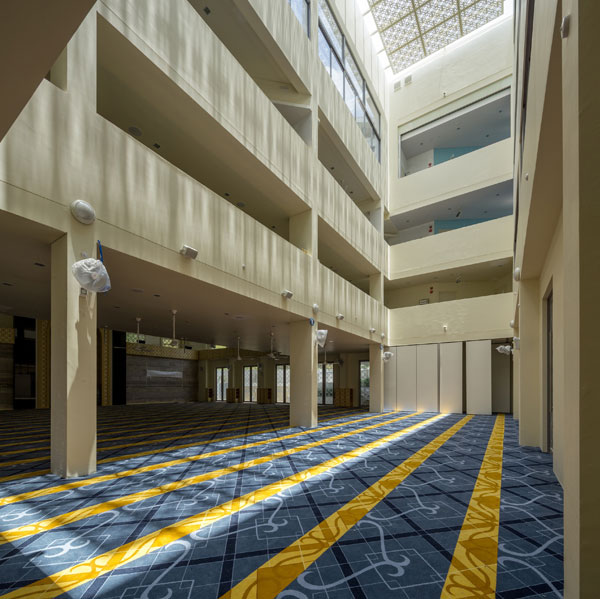
“We designed the mosque to be more open by lifting up the podium and creating an urban plaza, because the idea was to let the public understand Islamic values. I believe the bold vision behind our design made it stand out,” explains lead architect, Kurjanto Slamet, on the design approach that helped his team win the competition.
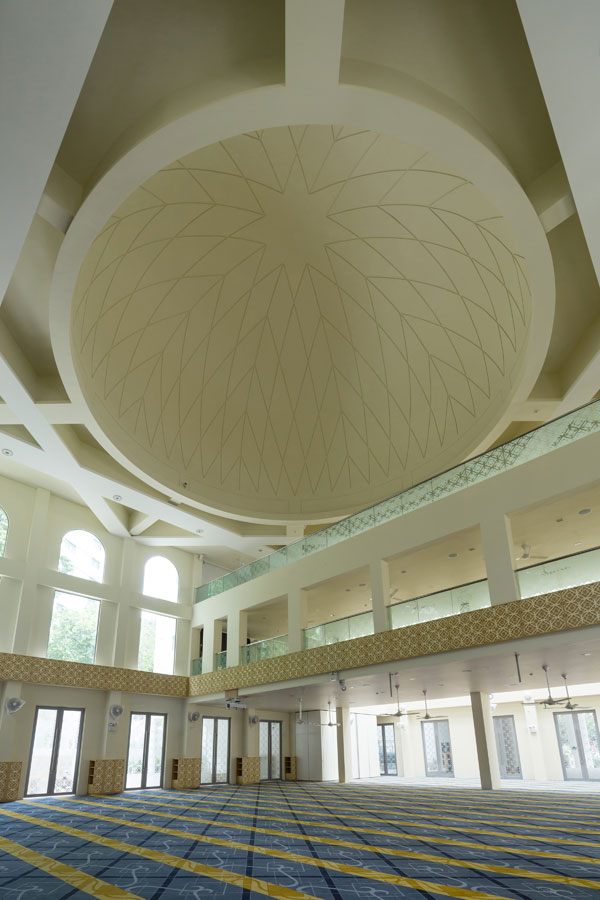
As part of the design intent, the team at ONG&ONG conceived the large covered community plaza to serve as a social gathering space for the Muslim community, while designing the main prayer hall to be column-free, allowing unobstructed views of the surrounding area and the plaza. According to Slamet, the intent was to “make the place inviting to the public, instead of being exclusive to Muslims. The ‘Urban Plaza’ could also be used for informal teachings, as well as a space for events at the mosque.”
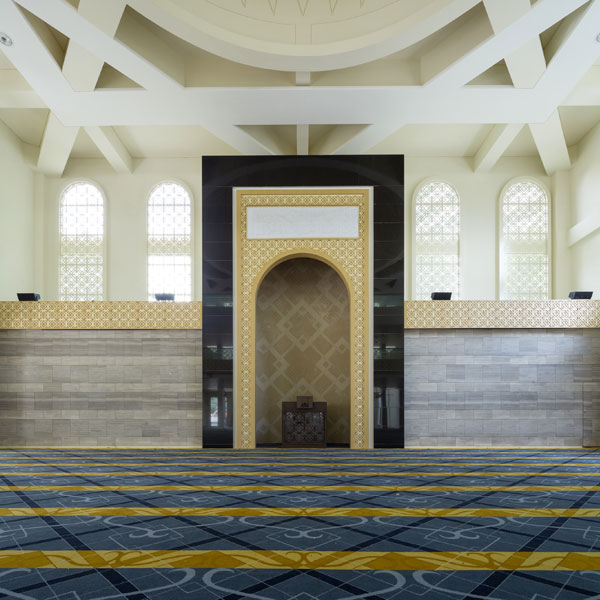
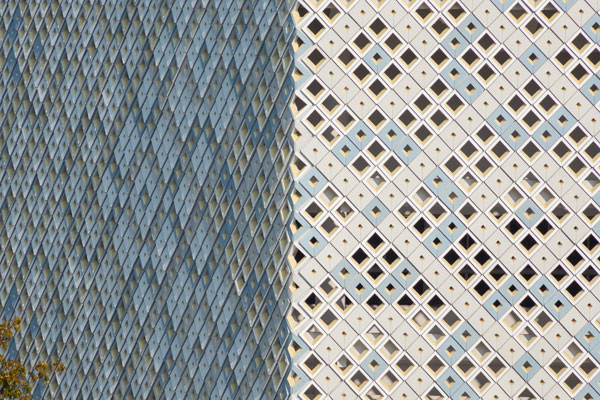
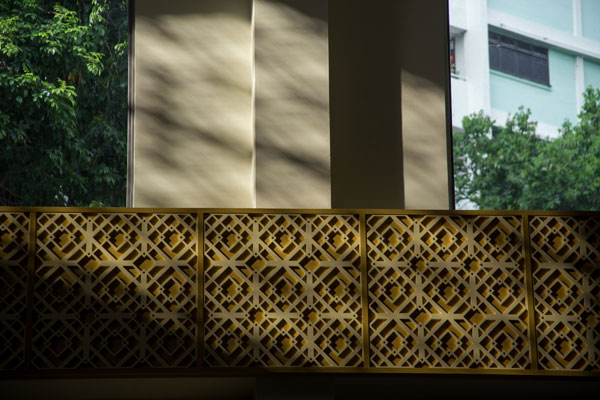
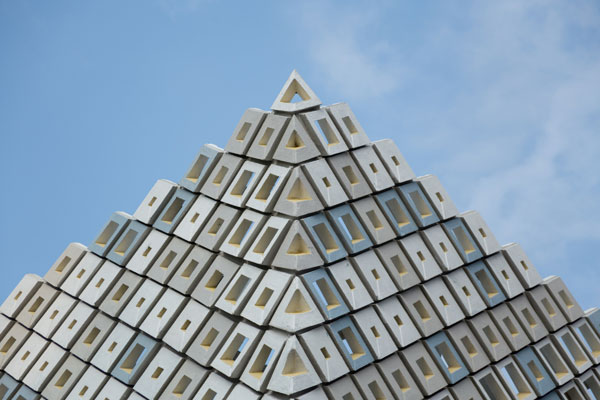
Aside from the communal plaza, the new mosque building’s exterior showcases a welcoming façade with an arabesque inspired pattern, created by layers of secondary structures and screening. The pattern was created in collaboration with cross disciplinary design practice, FARM. Besides creating a unique identity, specific to the Al-Ansar Mosque, the fenestration enables natural ventilation through the building and filters in daylight into the inner spaces.
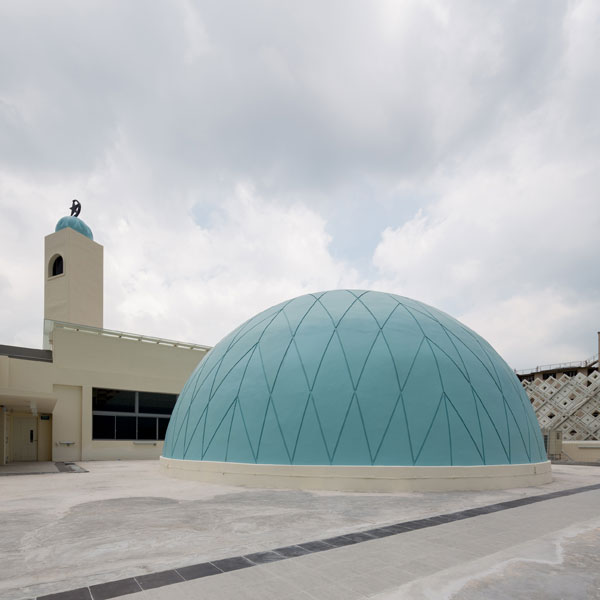
While the new structure updates the mosque to meet the contemporary needs of the Muslim community, it is the preservation of the well-recognised, traditional elements that maintains the building’s original integrity and its status as a recognised neighbourhood landmark. The existing minaret was retained and readapted to become a lift core, while the external ‘Blue Dome’ has been recreated in the interior of the main prayer hall to become its new centre piece, providing an intricate interplay between the old and the new within the building.
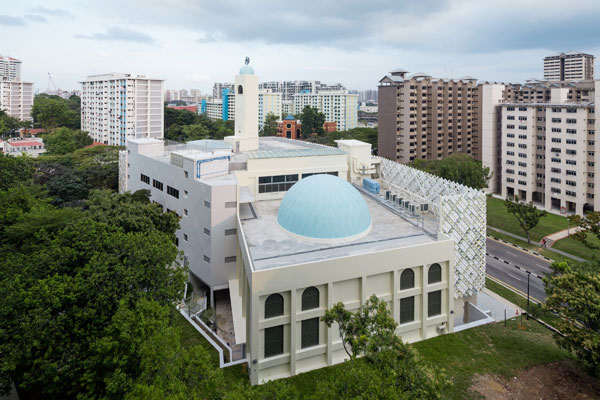
“In this project, preserving the memory of the old mosque for the residents was one of our main objectives. It is not simply about retaining an existing structure. By choosing to put in place subtle design interventions, we achieved our objective,” says Slamet.
With ONG&ONG’s restrained and sensible integration of traditional and contemporary elements and spaces, the Al-Ansar Mosque successfully responds to its larger, multi-cultural context and the spiritual needs of the building’s main users – the Muslim community, while maintaining its chief function as a sacred space.
As Slamet concludes, “In religious projects, it is fundamental to understand the belief, way of life, as well as historical references behind the users and the architecture. It is more than just fulfilling the programme, which is tangible and utilitarian. Solace, which is intangible, is always a common thread in the sacred spaces of every religion.”
ONG&ONG
ong-ong.com
INDESIGN is on instagram
Follow @indesignlive
A searchable and comprehensive guide for specifying leading products and their suppliers
Keep up to date with the latest and greatest from our industry BFF's!
The internet never sleeps! Here's the stuff you might have missed