The home of architecture and design in the Asia-Pacific
Get the latest design news direct to your inbox!

Get the latest design news direct to your inbox!
Rocked by two crises – Covid19 and the sustainability crisis, it is a time for change in the commercial real estate sector. A time to reset and redefine the best practices on how we design, build, operate or refurb buildings.
October 8th, 2020
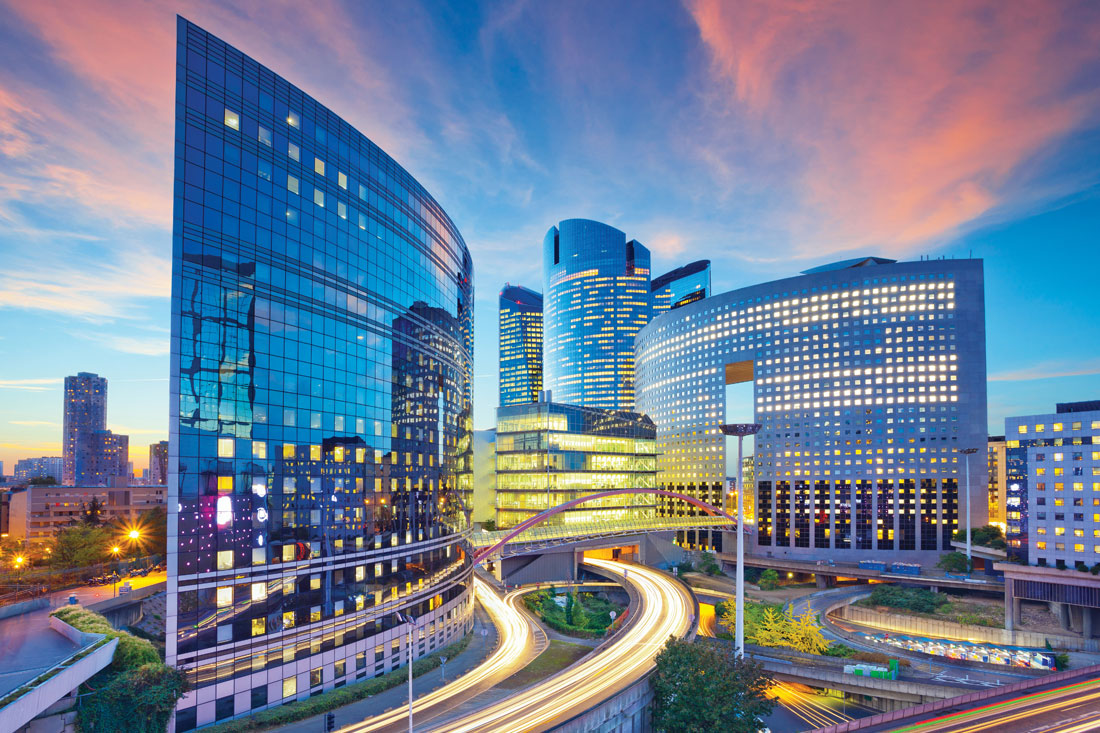
Currently, the commercial real estate sector is being rocked by two crises – Covid 19, and the sustainability crisis. For a decade, the conversation surrounding buildings has focused on the future, with sustainable buildings being a key factor. However, the current pandemic has created an unprecedented opportunity to reset and redefine the best practices on how we design, build, operate or refurb buildings.
According to the World Economic Forum, the real estate sector uses more energy than any other sector and is a growing contributor to CO2 emissions. Most estimates suggest that the real estate sector is the single most significant sector in terms of CO2e1 contributions. The sector consumes 40% of global energy annually. 20% of total global greenhouse gas emissions originate from buildings, and in pre-covid times there was a projected 56% increase in building CO2 emissions by 2030.
The pandemic has shifted opinions on the “guaranteed” demand for commercial space as a simple function of employment. In Europe and the rest of the globe, we saw the rapid adoption of remote working and e-commerce and a new focus on safety, which has resulted in a change in requirements for the buildings we live and work in. It is likely we are entering into a phase where the worlds buildings will need to be more efficient and safer to appeal to their customers, and consequently, investors. With this demand, the commercial real estate providers will have to create safe and healthy office spaces with high sustainability standards, air and service quality.
For companies in the commercial real estate industry, these developments and an accelerated shift in mentality present both challenges and opportunities. In pre-Covid times, the industry had already made net-zero carbon reduction goals in buildings by 2050. Companies, including Schneider Electric, are taking measures against climate change by reaching net-zero emissions by 2050.
So, as the construction industry looks to a post Covid-19 future, the focus on sustainability performance of buildings will become a priority including not only individual buildings, but also communities and infrastructure projects. This will spur a revolution in the construction industry, which needs to rethink buildings for optimal performance while embracing zero-embodied emissions materials.
The green recovery will be vital to help countries like the UK to come back from a dramatic economic downturn caused by the COVID-19 pandemic. With large businesses, Government and public opinion now appearing to be firmly behind a green revolution, perhaps now really is the time for the entire construction industry to start working on a defined strategy towards sustainable buildings.
To paraphrase Kim Tremblay’s blog, when we return to our commercial buildings, the new normal will make our needs more basic. Contactless is a huge priority, given all the things you touch in workplace throughout the day. We will prioritise one badge for everything. Clean air with air handling will take centre stage in the next few months. Sanitation with clean and disinfected spaces is now more important than ever. Workspaces will need to be adapted with comfortable distance and the possibility of working from home.
Moreover, optimising the performance of zero-carbon buildings will be based on several critical patterns: First, buildings must become ultra-efficient. Second, buildings must become fully electric. Heating electrification has proven to be much more efficient and ultimately economically competitive in most regions of the world, particularly when associated with air-conditioning. Third, systems will have to be ready to rely on local (renewable) generation and work with flexible residential-owned energy sources, connected to modern and digitalized grids, to increase overall system resiliency
With the green revolution/recovery here to stay, Schneider Electric will play a vital role in making our buildings more sustainable, connected, and ultimately, smart. We have the ability to make these changes quickly. Covid-19 will change our daily lives, forcing us to rethink the ways we travel, shop and work – we must make the decisions that aid sustainability, taking the digital lead to reduce carbon.
To learn more about making your buildings smarter, visit SchneiderElectricSG’s Smart Buildings Solutions web page.
INDESIGN is on instagram
Follow @indesignlive
A searchable and comprehensive guide for specifying leading products and their suppliers
Keep up to date with the latest and greatest from our industry BFF's!
The internet never sleeps! Here's the stuff you might have missed