The home of architecture and design in the Asia-Pacific
Get the latest design news direct to your inbox!

Get the latest design news direct to your inbox!
From within Caesarstone’s inspired culinary collaboration with Tom Dixon, we catch up with CEO Yos Shiran.

April 18th, 2016
Top image: (left) Tom Dixon (right) Caesarstone CEO Yos Shiran
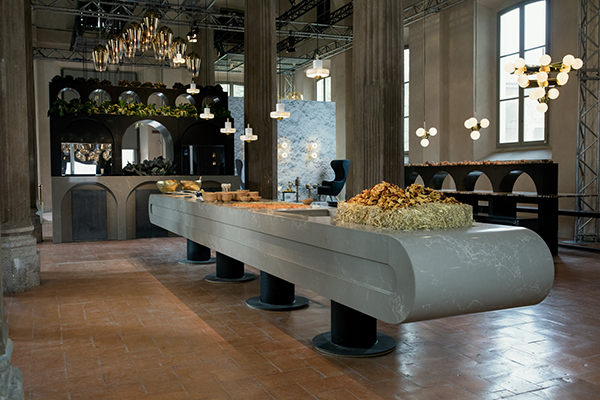
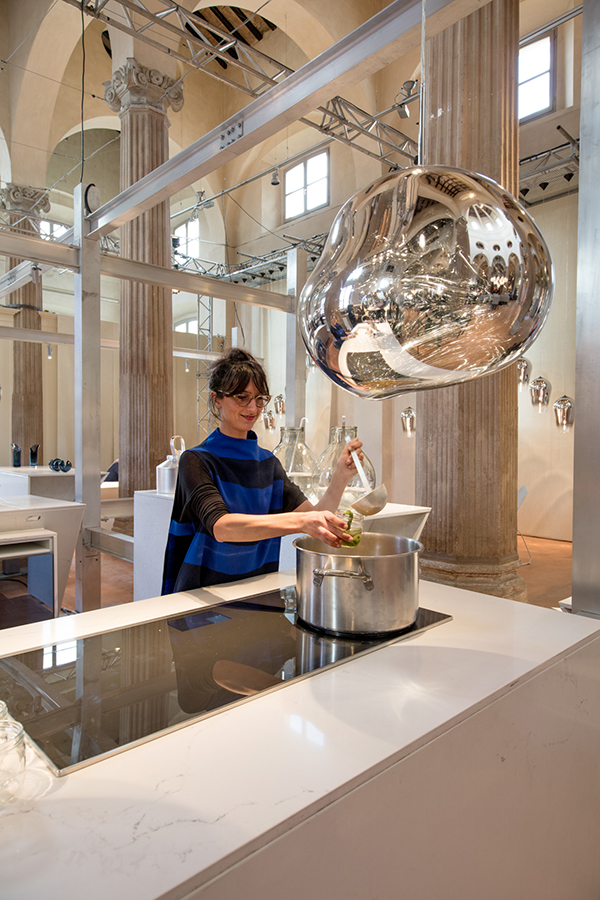
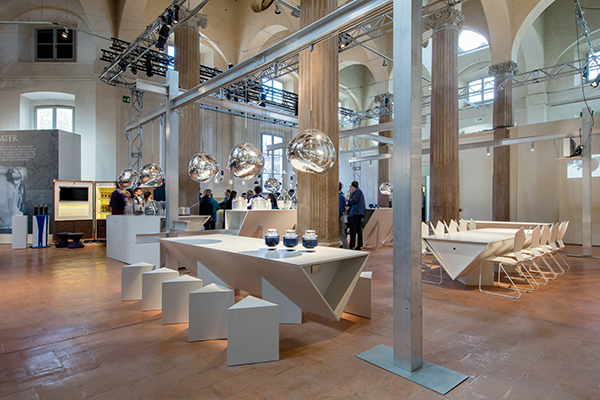
British lighting and furniture designer Tom Dixon returned to Milan this year to present an exciting, culinary collaboration with Caesarstone. The multi-sensory installation was made up of four conceptual kitchens inspired by the elements – earth, fire, water and air – and was set within a 17th century Closter encircling a public garden and a disused church.
Accompanying the living exhibition of Caesarstone surfaces was an impressive menu for each kitchen space. Conceptualised by Italian food and design studio Arabeschi, the food explored the power of nature’s elements, combining traditional ingredients with modern techniques (for example, the ‘water’ kitchen featured a floating garden, where steaming aromatic broth transformed frozen leaves into moving green).
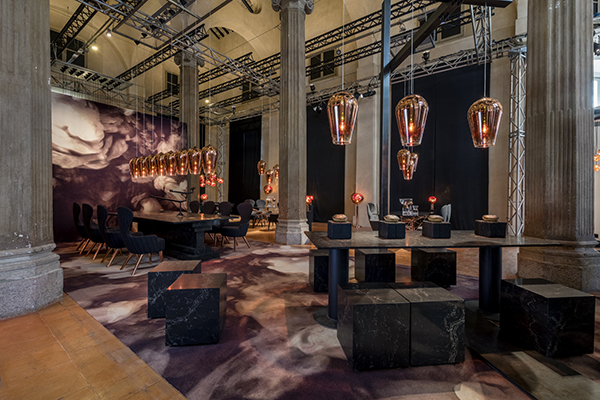
From within the inspired installation, Indesign Melbourne Editor Alice Blackwood caught up Caesarstone CEO, Yos Shiran to discuss the collaboration with Dixon, and the history of the counter top company that has become a household name.
INDESIGN MELBOURNE EDITOR ALICE BLACKWOOD: Tell me about this year’s collaborative presentation.
CAESARSTONE CEO, YOS SHIRAN: This year we wanted to do something more down to earth, in the sense of presenting real living kitchens, with all of the appliances and from all angles – but still keep the inspiration and uniqueness that you see here. We’ve followed Tom for many years now, we’re also in connection with many other leading designers and rising stars. We live and breathe the design scene, and this year we felt that the time was right to collaborate with Tom.
BLACKWOOD: How did Caesarstone get started, and how has it evolved today?
SHIRAN: Caesarstone was started in a [commune] in Israel, with the idea of helping each other to overcome obstacles. They started to produce tiles, but wanted to invest in stronger materials. So they developed tiles from quartz, and quickly moved to bigger slabs meant for kitchens. Step by step, it became popular in Israel, and then was launched throughout the rest of the world. The core idea today is still the same, although the vision is maybe a bit more ambitious – to be the number one counter top in the world.
BLACKWOOD: As you have expanded internationally, how do you view the Asia Pacific market for Caesarstone?
SHIRAN: This was really the first strong market for us outside of Israel – and we believe this has to do with the openness of people in, for example, Australia, to newness. I think they are really actively looking for innovation. And when they identify the qualities of Caesarstone they embrace it almost immediately, and it has become a household name.
BLACKWOOD: So what would you say it is that’s really special about the Caesarstone DNA?
SHIRAN: Our brand pillars are design, quality, innovation and service, and these are our company values, too. We would like to be the best in whatever we do. Our aim is to bring the Caesarstone surface to the heart and homes of people all over the world. The kitchen has become the centre of the house in the last 100 years, and the most important tool in the kitchen is not a tool at all, it’s the kitchen counter. This is something we interact with every day, we use it, we make it dirty, we clean it – so in a way we’re hoping to improve the quality of life for people, but also to materialise the designer’s vision. We see ourselves as part of this life experience of everybody.
Caesarstone
caesarstone.sg
INDESIGN is on instagram
Follow @indesignlive
A searchable and comprehensive guide for specifying leading products and their suppliers
Keep up to date with the latest and greatest from our industry BFF's!
The internet never sleeps! Here's the stuff you might have missed