The home of architecture and design in the Asia-Pacific
Get the latest design news direct to your inbox!

Get the latest design news direct to your inbox!
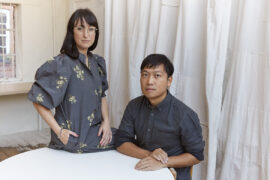
Stephanie Er of Cream Pie discusses human-centric design and the purposeful engagement of materials and space.

Stephanie Er, Founder and Creative Director of Cream Pie
February 21st, 2022
Enlightening spaces need not be high-tech or made of expensive materials, as exemplified by Frank Gehry’s first Santa Monica home that he built in 1978. The dwelling employed frugal materials such as metal, plywood, chain link fencing and wood framing in a way that appeared nonchalantly thrown together, altering the existing house’s facade. While controversial, it resulted in idiosyncratic spaces and garnered the architect larger commissions.

This project is one of Stephanie Er’s inspirations, reminding the Founder and Creative Director of multidisciplinary design studio Cream Pie to look beyond tried-and-tested tropes. Er founded the company in 2016 as a freelance gig but in May 2021, turned it into a full-on creative studio engaged in branding, digital marketing solutions, graphic and interior design. While Er did not obtain formal design education, her tactile, people-centric projects reflect someone who has spent years soaking in the world around her.
“I’ve always been curious and observant to design details,” says the 37-year-old. Her aesthetic-driven Instagram account is testament to this quirky and original sensibility. A serial entrepreneur, Er is able to empathise on issues from the client’s vantage. Her past ventures include salad bar Sprout at Duxton Road, online cold-pressed juice business A Juicery and Sugarfin cafe where Er designed all components; from the branding to the interior that melds corrugated metal with terrazzo and cotton candy pink tiles.

“I like to promote fair trade. This means developing end products that speak both our language and the client’s identity,” attests Er. “Cream Pie is a tiny team of gung-ho individuals all in the game for the reason of creating purposefully. We are willing to push the envelope and think outside of the box. Every project is given a brand new headspace for ideas of development and execution. And because we are a boutique firm, every client is a VIP.”
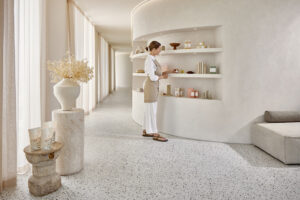
A common thread linking her interior designs is the use of raw materials such as metal, wood and stone, executed in considered ways. For instance, Lab Studio’s venues in Joo Chiat and Holland Village are serene, encased in warm timber walls. Curved accents lend an amiable, accessible character so users feel welcomed. “Barre, yoga and pilates are more meditative than other high-energy sports so the palette is muted and neutral. It has to be a space that quietens your mind once you enter,” explains Er.


In contrast, the designs for Cru and Crubox are dynamic, using a monochromatic, industrial palette of metal mesh, mirrors, cement screed and light boxes peppered with tongue-in-cheek quips. In bar bistro Binary, she created a warm space with an earthy mix of copper mirrors, wood and brick. Its rectilinear shell is broken with an overarching arch running the restaurant’s length. In order not to truncate the overall sense of space while fulfilling the requirement of 50 per cent visibility to the street, she employed metal mesh curtains rather than a solid wall to outline a private room. At the request of the client, she followed up with a logo design.

Though Cream Pie started with commercial work, the firm now has on-going residential projects under its belt. It began with Er’s commercial clients engaging her to design their homes, being fans of her abode and enjoying their working relationship. Er finds the personal aspect of designing homes intriguing. “To inject some of yourself into someone’s home is very interesting. When you leave, a part of you is still there compared to commercial work. Hence, the trust is vital,” she shares.
The firm is still young but Er is clear on her direction – to create a company of like-minded individuals. “I don’t want to hire robots. I want creatives who want to create, who will put in the hard work to expand because the sky is the limit; I won’t mind expanding into furniture making, for example,” she states, adding a quote by Tom Sachs that she lives by: “The reward of good work is more work.”

INDESIGN is on instagram
Follow @indesignlive
A searchable and comprehensive guide for specifying leading products and their suppliers
Keep up to date with the latest and greatest from our industry BFF's!
The internet never sleeps! Here's the stuff you might have missed