The home of architecture and design in the Asia-Pacific
Get the latest design news direct to your inbox!

Get the latest design news direct to your inbox!
Benjamin Hubert of experience design agency Layer has utilised 3D printing to develop a human-centric wheelchair prototype that is customised to the individual’s body shape and disability.

May 9th, 2016
All images courtesy of Layer
Acclaimed British designer Benjamin Hubert of experience design agency Layer has created a 3D-printed, customisable, consumer wheelchair. The design was born out of an intensive six-month long research with multiple wheelchair users and medical professionals.
This is the inaugural project under Layer’s new research division, LayerLAB, created in partnership with Materialise, a provider of 3D-printed software and solutions across multiple industries, including automotive and healthcare.
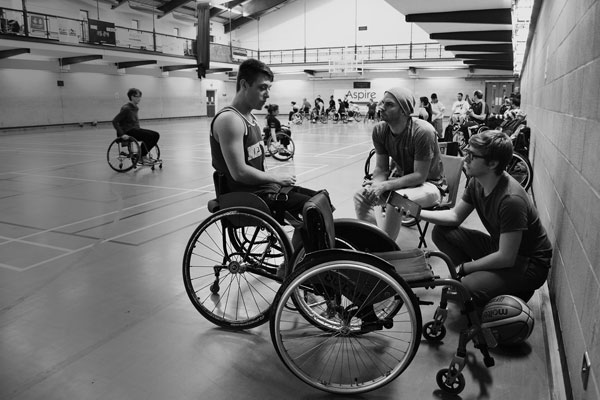
“Your body is not designed to push yourself around. Every wheelchair user gets arthritis,” says Everett who has been using a wheelchair for 12 years. She also adds, “One of the ways you can spot a true paraplegic is their feet on the footplate – they tend to pigeon-toe inwards. For most of us, that is really frustrating because you don’t want to go around looking like that.”
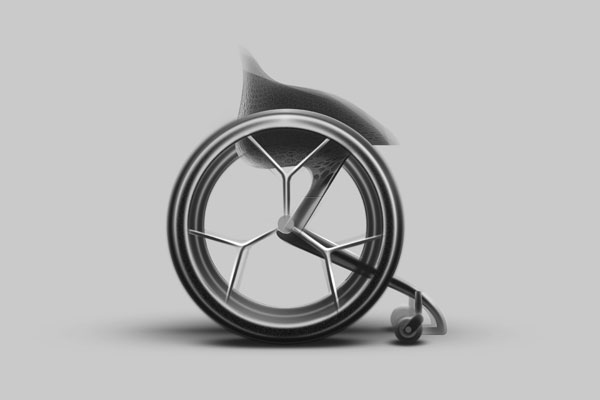
Layer’s aim was to transform the archetypal wheelchair by removing the stigma associated with conventional models as medical devices. Hubert wanted to create a more human-centric product that would enhance the quality of life of users. The approach was to create a wheelchair that could be tailored to every user’s unique body and condition. Wheelchair users remain seated for almost 18 hours a day and consequential injuries are common. A bespoke design that understands each user’s form can help to reduce injury and increase comfort and support.
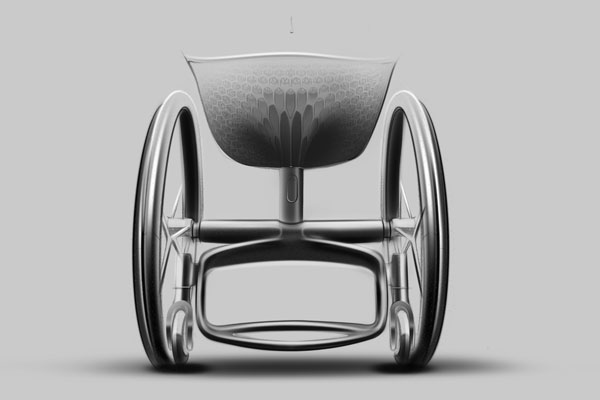
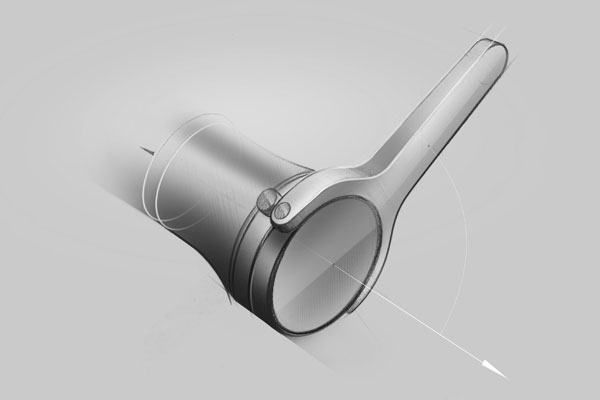
The GO wheelchair comprises of two made-to-measure elements, the seat and foot-bay. Each user’s biometric details are obtained and translated into 3D data to inform the made-to-measure components materialised by 3D-printing. Through body mapping, the ideal sitting position for the user is determined, while the idiosyncrasies of each user’s foot will be recorded in the titanium foot-bay that will be incorporated with an anti-slip surface texture. A glove system is added on to deliver greater power-to-push ratio to decrease the risk of injury that results from self-propelling.
Layer also designed an app to accompany the wheelchair, which allows users to take part in the design process. Users may specify optional elements such as transfer bars, push bars, wheel guards or colour combinations. Once finalised, the wheelchair may be ordered directly from the app. According to Layer, GO can be fabricated and delivered in less than two weeks. A typical customised wheelchair in the market takes six to eight weeks to manufacture.
“At Layer, we’re interested in understanding how people use and misuse the most important tools in their lives. With the GO wheelchair, we saw an opportunity to really progress the manual mobility category for users with disabilities, and to use 3D printing technology to solve significant and meaningful problems,” says Hubert.
The GO wheelchair will be launched during Clerkenwell Design Week in London, as part of an exhibition of Layer’s recent work.
Layer
layerdesign.com
Materialise
materialise.com
INDESIGN is on instagram
Follow @indesignlive
A searchable and comprehensive guide for specifying leading products and their suppliers
Keep up to date with the latest and greatest from our industry BFF's!
The internet never sleeps! Here's the stuff you might have missed