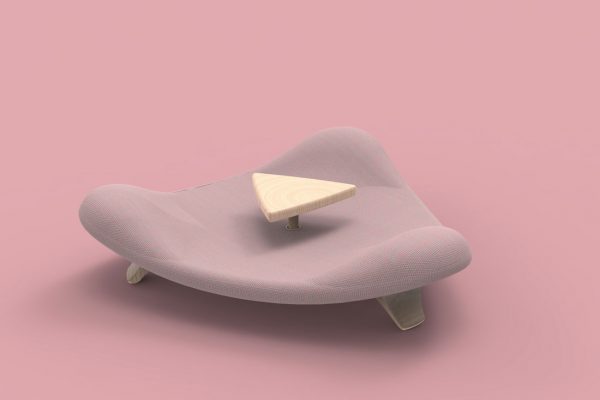
A transformable, multifunctional acoustic room divider concept has won Italian furniture brand Sitia’s design competition held during the Singapore Design Week 2019.
June 7th, 2019
Italian furniture brand Sitia and its Singapore retailer d’Doubles launched a design competition in March during the Singapore Design Week 2019. Supported by the Italian Embassy in Singapore, the Italian Chamber of Commerce and the DesignSingapore Council, the competition called for an office furniture design that promotes a relaxed, domestic experience in a commercial setting, while looking completely at home in it.
The competition attracted over 30 submissions by young design professionals, as well as students. On 23 May, Sitia and D’doubles, with industry judges Executive Director of ONG & ONG Ong Tze Boon and DP Design Director Mike Lim, chose the five finalists, of which one design emerged as the winner.
The finalists were:


Una features a circular acoustic panel that can be transformed into a work surface. The jury praised the concept for providing an elegant work surface that “offers both visual and acoustic privacy, whilst promoting openness and collaboration.”
As the prize for winning the competition, Chang will participate in a workshop in Italy at Sitia’s production factory, where she will have the opportunity to work with the brand’s artisans to develop and prototype her product.
The prototype will also have a chance to be presented at Salone del Mobile 2020, and be included into Sitia’s catalogue and global distribution network.
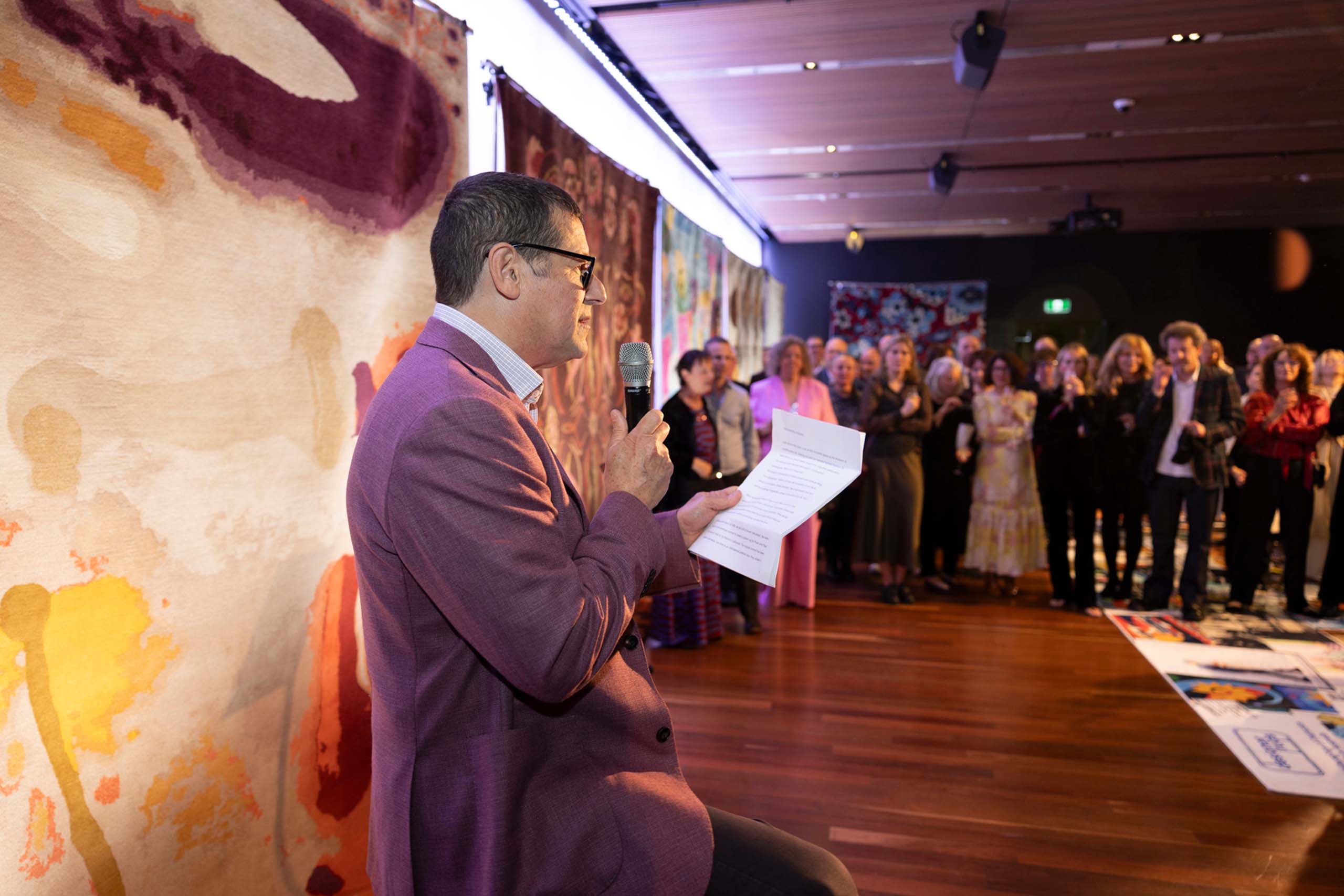
View photos from the awarding ceremony in the gallery below.

Sitia Managing Director Emanuel Battocchio (left) and Abigail Chang (right).


INDESIGN is on instagram
Follow @indesignlive
A searchable and comprehensive guide for specifying leading products and their suppliers
Keep up to date with the latest and greatest from our industry BFF's!
Stepping into Intuit’s Sydney workplace certainly doesn’t feel like walking into an office. Why? In this film, we discover that, when joy takes precedence as a design driver, even a high-performing commercial CBD headquarters can feel like an intuitive wonderland that invites employees to choose their own adventure.
In the last instalment of our three-part performance seating series, Alex Bain from Architectus explains why sitting well shouldn’t feel like sitting at all and explores an unexpected success metric of the hybrid workplace: the grounding power of emotional support.
Natural stone shapes the interiors of Billyard Avenue, a luxury apartment development in Sydney’s Elizabeth Bay designed by architecture and design practice SJB. Here, a curated selection of stone from Anterior XL sets the backdrop for the project’s material language.
In the first instalment of our three-part series exploring what it means to sit your best, we pose the question to Gray Puksand’s Dale O’Brien, who discusses the importance of ease and majority rule when it comes to sitting and reveals why specifying a task chair is not unlike choosing a Volvo.
Twenty years after its founding, Muuto used 3daysofdesign to look beyond the idea of novelty and towards a more reflective future for Scandinavian design.
Founded by Richard Munao in 2017, NAU’s presentation at 3daysofdesign builds on decades of groundwork by Cult and marks a confident moment for Australian design overseas.
Joanne Odisho has been named the 2026 Australian Furniture Design Award winner for Mod-u, a modular lighting system made from eggshell composites and bio-filament.
In the last instalment of our three-part performance seating series, Alex Bain from Architectus explains why sitting well shouldn’t feel like sitting at all and explores an unexpected success metric of the hybrid workplace: the grounding power of emotional support.
The internet never sleeps! Here's the stuff you might have missed
In this interview, Michael Leeton reflects on his philosophy of placemaking, connection to landscape and the importance of designing homes that balance intimacy with scale, using his award-winning project House on a Hill as a central reference point.
Drawing at a young age gave Angelene Chan an appreciation for architecture and provided the impetus to propel her to the top of her profession.