The home of architecture and design in the Asia-Pacific
Get the latest design news direct to your inbox!

Get the latest design news direct to your inbox!
The motoring and lifestyle brand collaborated with the London architecture firm to present MINI Living — Built by All, an installation dedicated to micro-living.

May 2nd, 2018
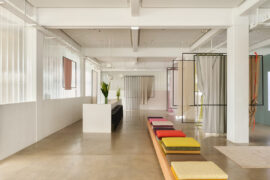
Over the years, micro-living has ascended from functional space-saving solution to having a seat at the table of the greater design world. At this year’s Milan Design Week, a former factory in the fashionable Zona Tortona district was transformed into four compact, modular living spaces courtesy of the installation MINI Living — Built by All, the product of a collaboration between the home and living arm of motoring and lifestyle brand MINI and London-based architecture firm Studiomama.
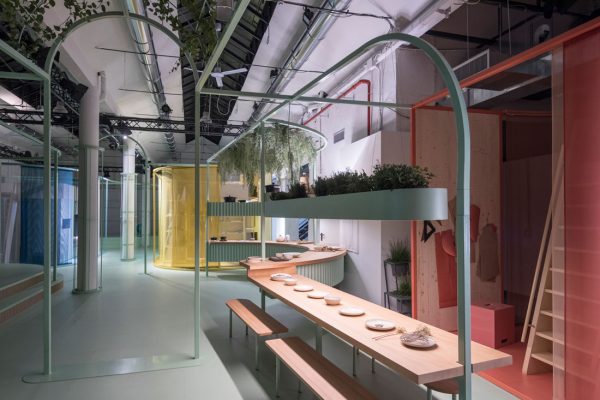
The concept behind the installation was that of a micro-neighbourhood in a factory setting, with the idea that the setup might appear in large, unused buildings — such as abandoned shopping malls and warehouses — as a solution to housing shortages in cities across the globe.
The installation featured four customizable, capsule living spaces geared towards a range of lifestyle needs, showcasing the individualistic, flexible and creative potential of micro-homes. The project considers how homeowners increasingly become designers of their own homes, as they interpret these smaller living spaces to suit their needs.
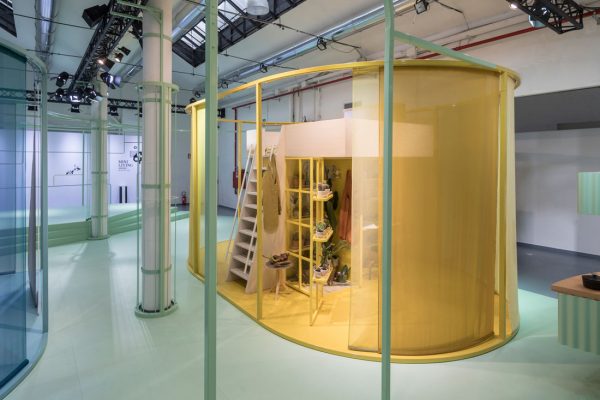
The installation also addressed the up-and-coming co-living trend with increased communal spaces. The four homes were interconnected by a communal kitchen, a fitness centre and an atrium. The four capsules — or ‘totems’ — of only 15 to 20 square metres were colour-coded in four neon and pastel-bright hues.

Each home evoked a radically different type of resident: a lemon yellow home was filled with shelves of curios and plants; a powder pink home featured a studio complete with storage and a workstation; a blue home catered to a musician, with record shelves and a sound-proof recording room; and a green home displayed a ceramics collection.

This exhibition marked MINI Living’s third year participating in Milan Design Week, and followed a slew of other design collaborations the brand participated in, including projects created together with the likes of architects Asif Khan and Sam Jacob.
This installation coincided with MINI Living’s construction of its first residential project in Shanghai — a unique living and working space located in a converted industrial building spanning 8,000 square meters and set to open in 2019.
INDESIGN is on instagram
Follow @indesignlive
A searchable and comprehensive guide for specifying leading products and their suppliers
Keep up to date with the latest and greatest from our industry BFF's!
The internet never sleeps! Here's the stuff you might have missed