With over 48 product categories to enter, the Red Dot Award: Product Design is now open for designers and manufacturers across the world.

The 2017 Red Dot Product Design Award special exhibition
October 19th, 2018
Easily one of the world’s largest design award programs, the Red Dot Award is a symbol of good design for those that win. For over 60 years, illustrious juries have judged the best and most innovative products.
From the every day to the unusual, entrants can choose between 48 product categories, covering the broadest spectrums of design. The categories include everything from consumer electronics to aircraft, medical devices, jewellery, robotics and furniture.
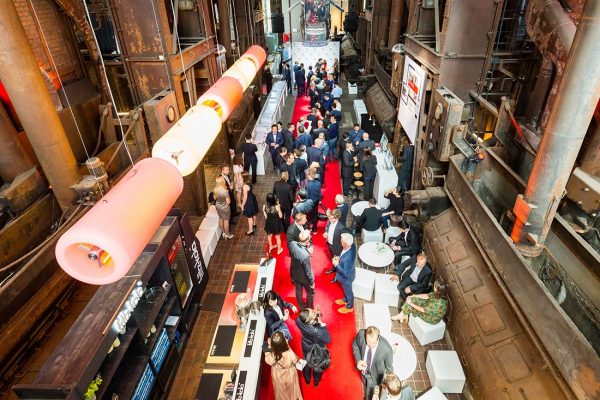
Award ceremony reception for Best of the Best winners
Red Dot jury member and design strategist Michael Thomson says, “The first thing I notice is the huge variety of categories and the growing quality of products.”
Another jury member, Raj Nandan, Indesign Media Asia Pacific’s founder and CEO, has been on the jury for the awards for several years and has seen the changing trends across the product spheres, sharing, “Good design deserves to be awarded. And in spite of the sheer volume of products that come through the program, good design always stands out.”
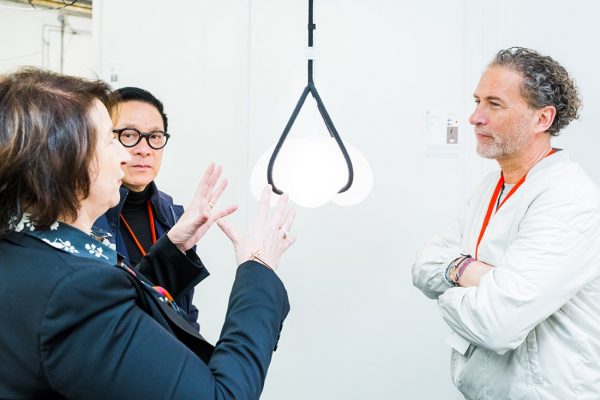
The jury in conversation
When considering what design is lacking or opportunities for designers to explore in further detail, a 2018 jury member Steve Leung, founder of Steve Leung Designers, explains, “I would like to see more designers who are ecosensitive in their work.” However, he also points out the potential he foresees in the realm of artificial intelligence.
This initial entry phase is the first of the three. Entries close 1 February 2019.
Find out more at red-dot.org/pd/participate
INDESIGN is on instagram
Follow @indesignlive
A searchable and comprehensive guide for specifying leading products and their suppliers
Keep up to date with the latest and greatest from our industry BFF's!
In a tightly held heritage pocket of Woollahra, a reworked Neo-Georgian house reveals the power of restraint. Designed by Tobias Partners, this compact home demonstrates how a reduced material palette, thoughtful appliance selection and enduring craftsmanship can create a space designed for generations to come.
At the Munarra Centre for Regional Excellence on Yorta Yorta Country in Victoria, ARM Architecture and Milliken use PrintWorks™ technology to translate First Nations narratives into a layered, community-led floorscape.
In an industry where design intent is often diluted by value management and procurement pressures, Klaro Industrial Design positions manufacturing as a creative ally – allowing commercial interior designers to deliver unique pieces aligned to the project’s original vision.
Stylecraft’s Hélice Collection by Keith Melbourne offers unprecedented versatility in modular seating systems for contemporary commercial environments whilst celebrating local Australian design and manufacturing
Designing for movement is not just about mechanics and aesthetics, it is about creating spaces that move with us, support wellbeing, and integrate responsible material choices.
From furniture and homewares to lighting, Dirk du Toit’s Melbourne-based studio Dutoit is built on local manufacturing, material restraint and the belief that longevity is central to sustainable design.
The internet never sleeps! Here's the stuff you might have missed
Entries for the 2026 INDE.Awards have officially been extended until 2nd April.
FK’s Nicky Drobis takes us through a recent poll of 1,000 office workers across Sydney, Melbourne and Brisbane that suggests a preference for reuse – despite an ‘awareness gap’.