The home of architecture and design in the Asia-Pacific
Get the latest design news direct to your inbox!

Get the latest design news direct to your inbox!
Fashion brand COS presents an architectural installation by architect Arthur Mamou-Mani that’s made from renewable resources using 3D printing methods.

April 15th, 2019
Since 2012, fashion brand COS has made its presence felt at Milan’s Salone del Mobile with Instagram-worthy installations done in collaboration with design’s biggest names (nendo, Snarkitecture and Sou Fujimoto, to name a few).
This year, COS returns to the Salone with Conifera, a large-scale architectural installation that’s made from renewable resources using 3D printing technology.
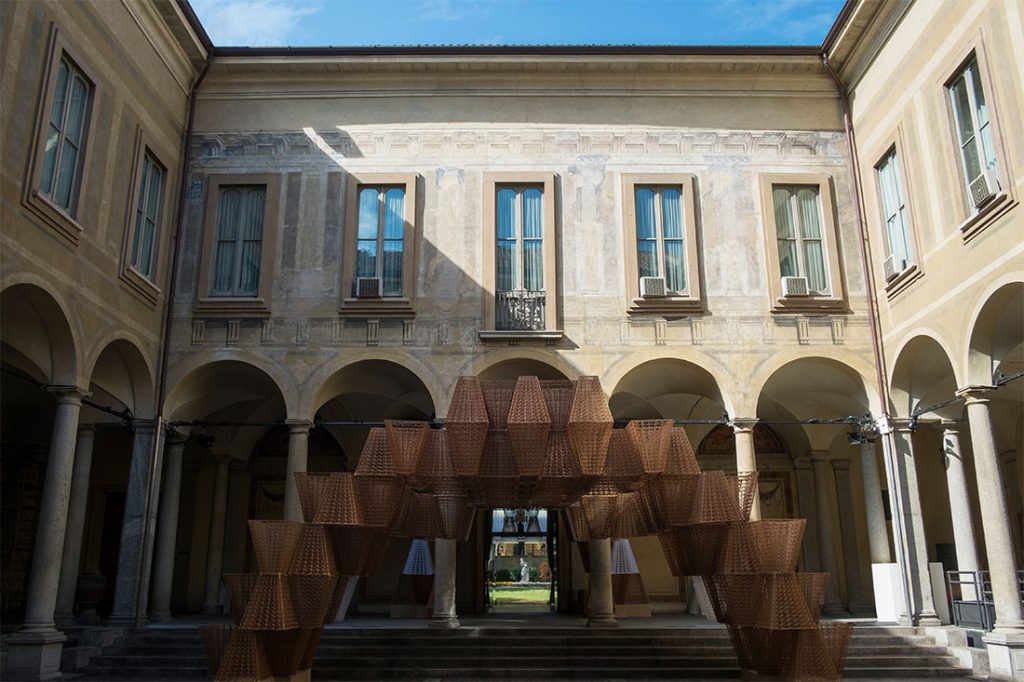
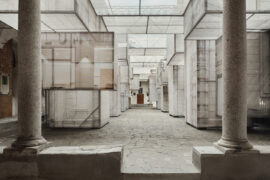
Located at Palazzo Isimbardi, and designed by London-based French architect Arthur Mamou-Mani and his eponymous studio, Conifera was digitally designed and fabricated using innovative 3D printing methods. It’s made of seven hundred interlocking modular bio-bricks. Wood and bioplastic composite lattices created a sculptural pathway leading from Palazzo Isimbardi’s central courtyard to its garden.
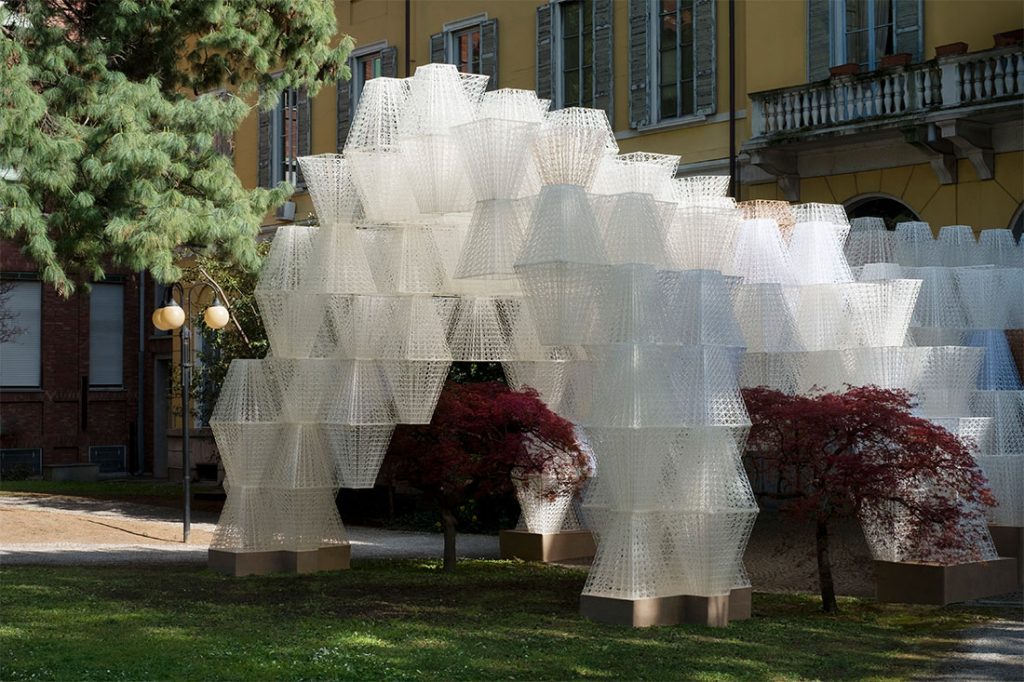
Mamou-Mani explains: “Conifera blends the digital with the physical world while addressing sustainability through the use of compostable bio-plastic, produced and 3D printed locally. It is a dialogue between technology and craft, between manmade and the natural, and between monumentality and lightness.” The architect describes the installation as “futuristic high-tech” but also “deeply poetic and human”.
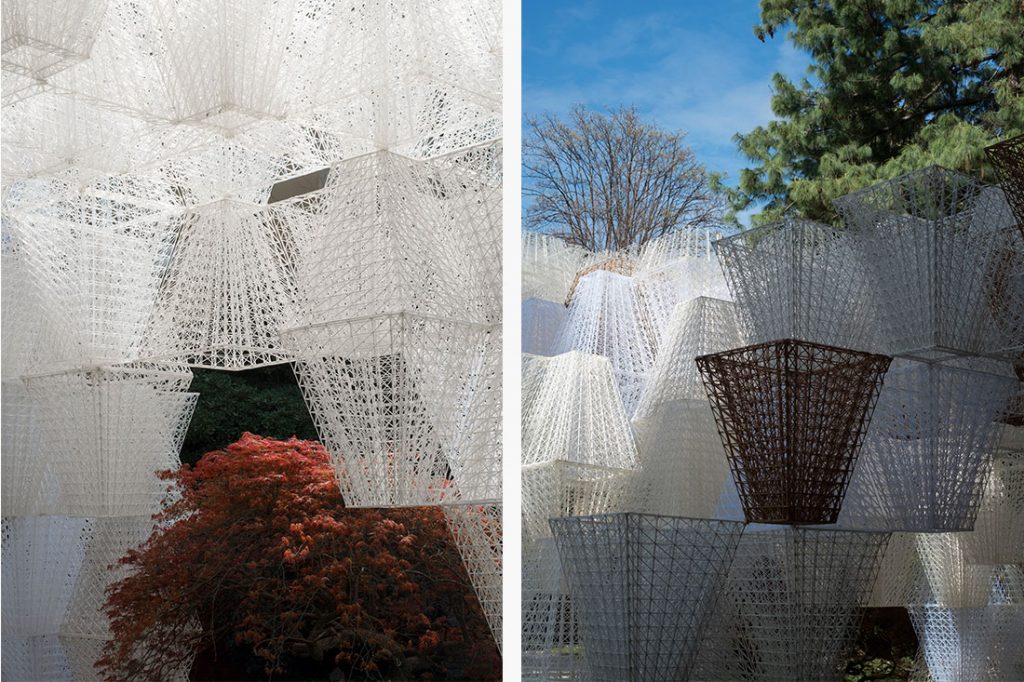
As visitors journeyed through the installation, the scene shifted as the architecture of wood and bioplastic composite in the courtyard changed into a translucent and white bioplastic one in the palazzo’s garden, communicating a digitally fabricated bridge between the human-made and the natural world.
INDESIGN is on instagram
Follow @indesignlive
A searchable and comprehensive guide for specifying leading products and their suppliers
Keep up to date with the latest and greatest from our industry BFF's!
The internet never sleeps! Here's the stuff you might have missed