The home of architecture and design in the Asia-Pacific
Get the latest design news direct to your inbox!

Get the latest design news direct to your inbox!
Vitra updates the Panton chair with a new height and new colours to complement contemporary settings.

May 28th, 2021
The consumerist culture over the course of the 20th century and now in its 21st century have had people spending on goods they don’t need and fashionable items that become undesirable in just one season. Few are still in style after a couple of years, let alone 60 years. Against all odds, the Panton chair designed and named after its designer – Verner Panton – remains an icon till this day and can be found in numerous museums and exhibitions.
The Danish designer’s modernist quest for the perfect machine-made plastic chair – cantilevered, no less – led him all over Europe in search of a manufacturer that would take a chance on his daring concept. Many found it interesting but nothing more, and the prototype was not even able to be sat on. Of the many rejections he encountered, one shared his passion for innovation and enthusiasm for novelty: Vitra.
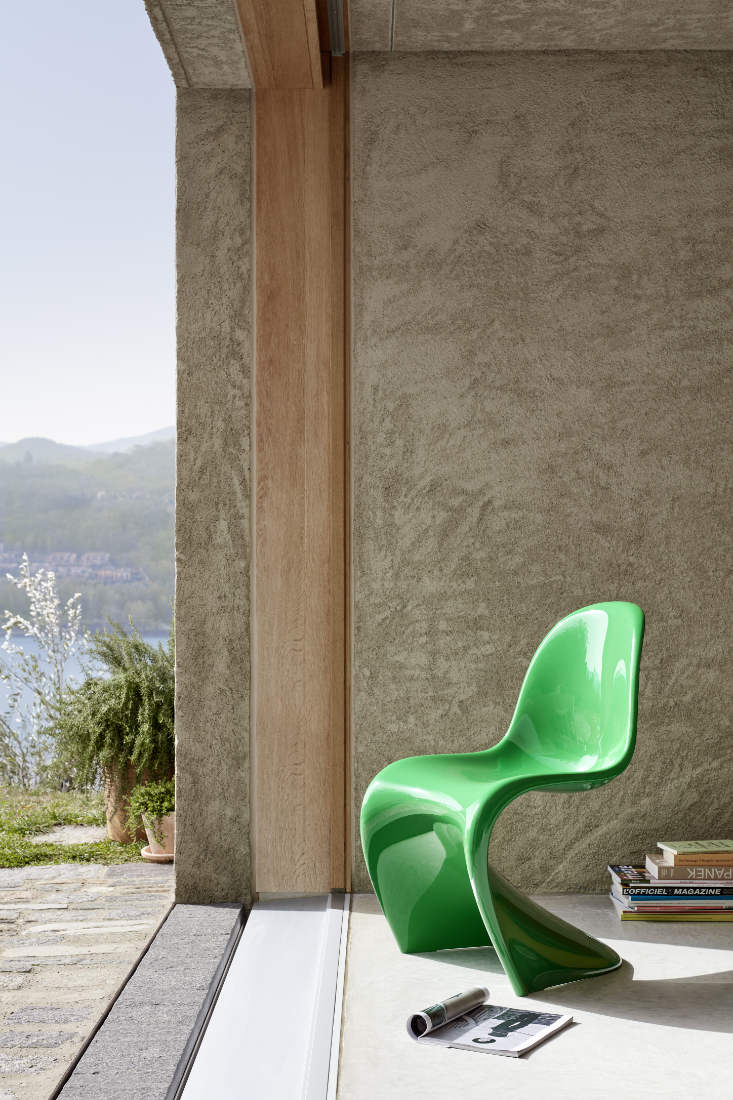
Seven years since the Panton chair was conceived, it finally hit the market in 1967 after countless research, testing, discarded designs and prototype development. Not only was it Vitra’s first independent product, but it was also the world’s first cantilevered plastic seat moulded in one piece. The final shape of the chair was the culmination of ten prototypes made of manually laminated, glass-fibre reinforced polyester finished in Panton’s trademark vibrant colours. It shook the design world at the time, asserting Vitra and Panton’s reputation for pushing boundaries.
Further improvements were made to the Panton chair at the end of the ‘90s owing to the advancements in plastics technology and new injection moulding options. The result was a polypropylene version that made the chair an affordable industrial product; one that matches Panton’s original concept: manufactured from durable, dyed-through plastic with a lustrous matt finish. Several iterations were born after that with new colours and sizes.
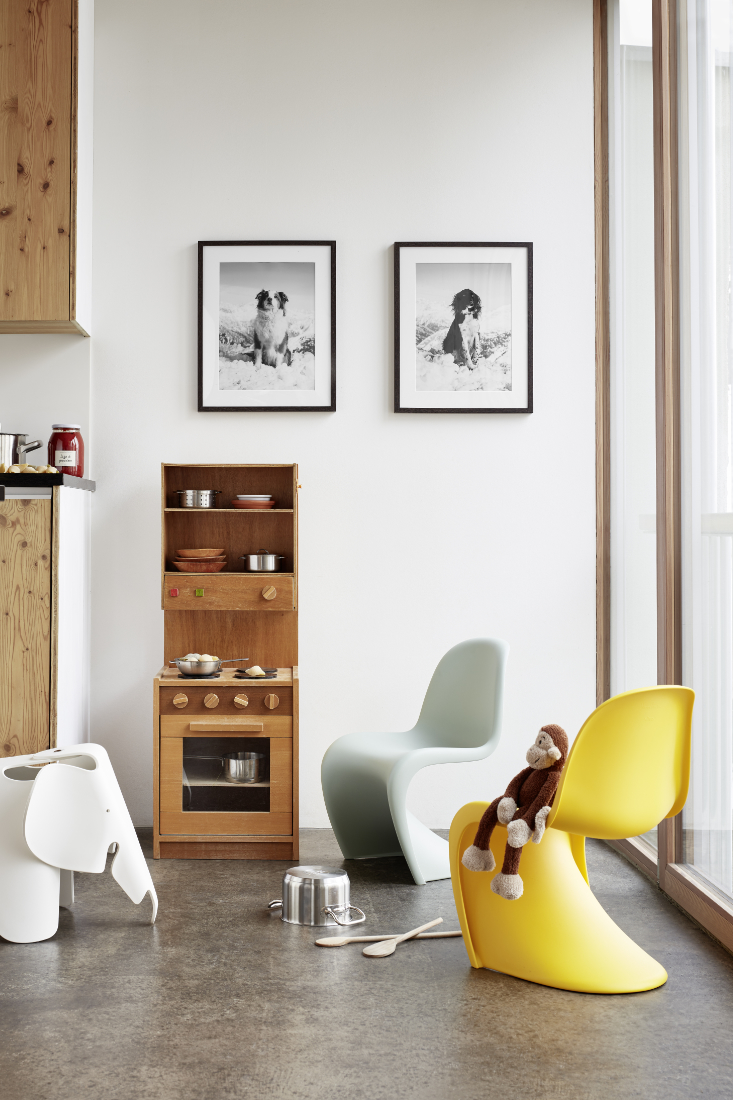
More than half a century later, the Panton chair is still up-to-date, relevant and valuable. It’s true that the design has achieved ‘classic’ status. But what makes its status everlasting lies in Vitra’s continuous effort in updating the Panton chair to adapt it to the needs of today’s users.
Taking into account that the average human height has increased by several centimetres over the past five decades, Vitra has adapted the seat geometry of the Panton chair for optimised sitting at contemporary dining tables. Glides have also been integrated into the curved base for the first time to facilitate movement. The silhouette of the chair is more sophisticated than ever.
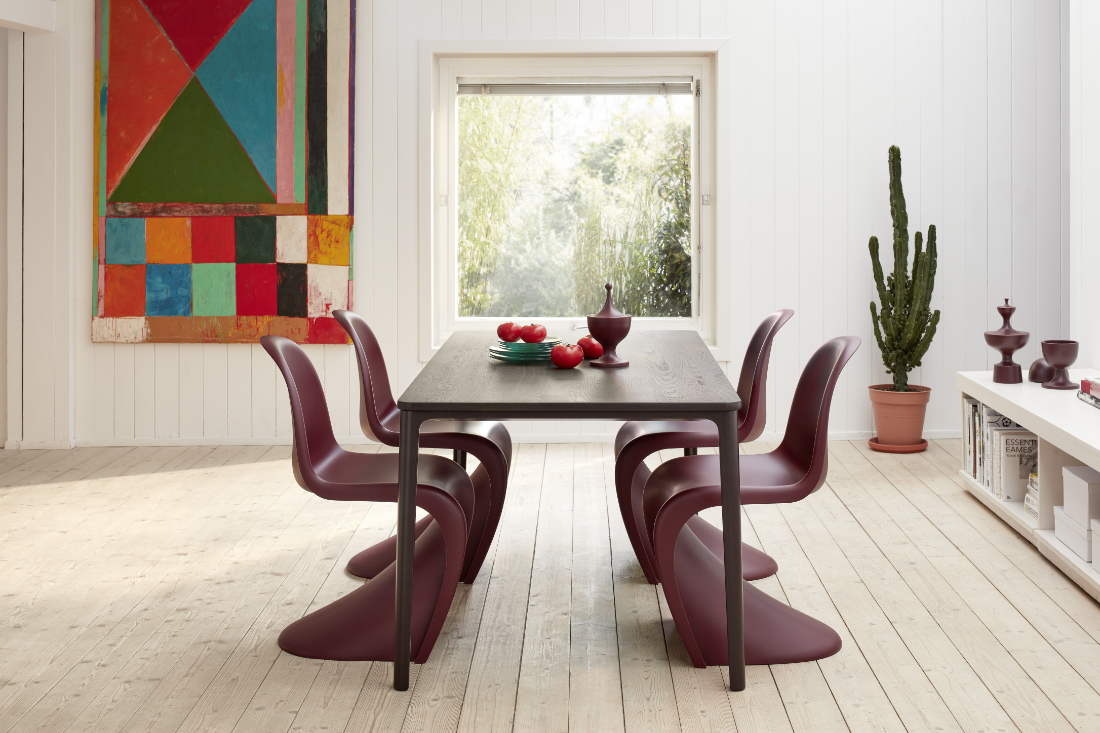
Suitable for both indoor and outdoor settings, the Panton chair is at home in waiting areas, restaurants, gardens and other space. To adapt to the changing tastes of the era, Vitra has expanded the colour range with five new shades: bordeaux, soft mint, glacier blue, pale rose and deep black. This empowers consumers with more flexibility and options in designing their spaces.
Whether it be cherished over a lifetime – as it may well outlive you – or passed on from one generation to the next, the inimitable Panton chair will always retain its worth. Panton’s goal of the chair be made accessible to the masses is even more attainable now with an introductory price of S$299 instead of S$540, available from W. Atelier. The promotion runs from 1st June till the end of 2021.
In Singapore, Vitra is distributed exclusively by W.Atelier. Visit the store or shop safely online on Shopee or Lazada.
INDESIGN is on instagram
Follow @indesignlive
A searchable and comprehensive guide for specifying leading products and their suppliers
Keep up to date with the latest and greatest from our industry BFF's!
The internet never sleeps! Here's the stuff you might have missed