The home of architecture and design in the Asia-Pacific
Get the latest design news direct to your inbox!

Get the latest design news direct to your inbox!
Patricia Urquiola looks to the quiet beauty of rocks sculpted by wind and water in her design of the Gogan sofa for Moroso.

February 10th, 2021
There are few things that provide as pure and beautiful an inspiration as nature. In designing the Gogan sofa for Moroso, Patricia Urquiola was inspired by the rocks (gogan-ishigumi) that grace the rivers and lakes in Japanese landscapes, at once beautifying and protecting their edges from erosion.
The sofa references these rocks shaped by wind and water and is a composition of firm, smooth modules sitting in a fine balance, just like a contemplative rock sculpture. A sense of lightness comes from having the backrest and seat joined by abutments so that it appears to float ever so slightly above the ground. The aesthetic is decidedly understated and bears the pared-back sensibilities often associated with Japanese culture and design.
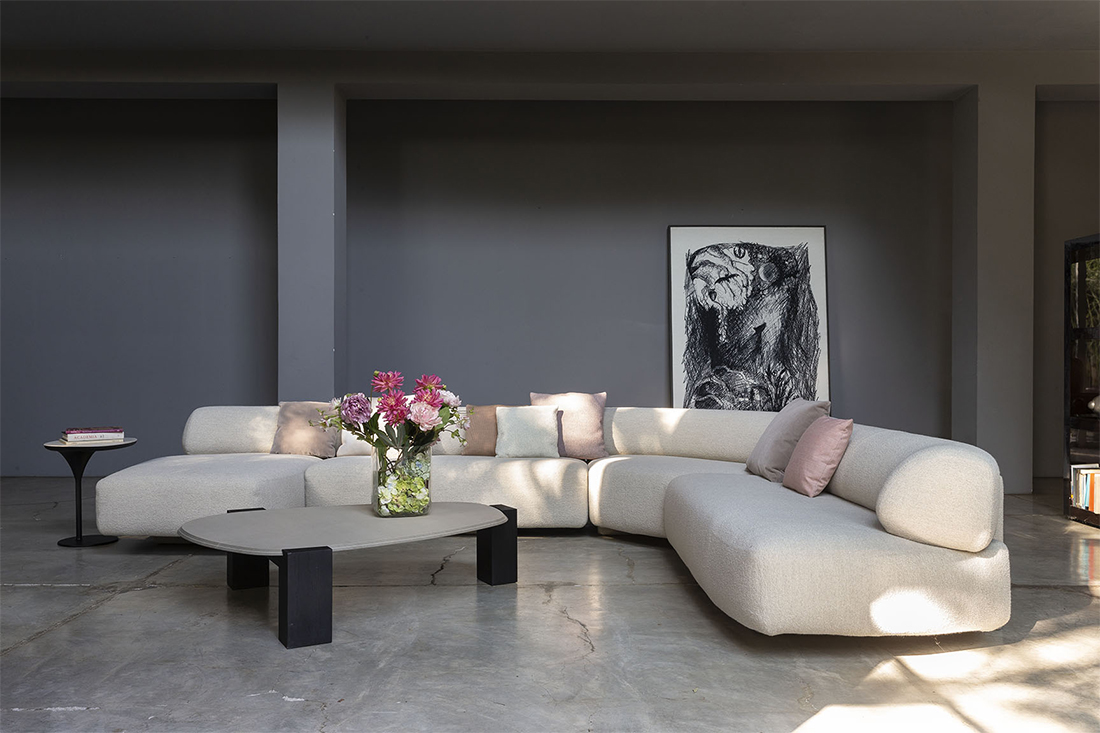
Beyond aesthetics, comfort is key for Moroso and in the case of Gogan, Urquiola marries both with great sensitivity. The seats are soft with the centre of gravity slightly inclined towards the rear. This provides comfort and support while allowing the backrest to be kept lower and less obtrusive in a space.

Wrapping the sofa is a 70’s inspired fabric that was recently discovered in the Moroso textile archive. It echoes the surface of a river stone with its deep, direction-free bouclé texture. Seams are cleverly concealed, which adds to the impression of a smooth, organic surface. Seen through the eyes of Moroso, fabrics are more than mere coverings for furniture. Instead, they are an intrinsic part of the design and play a crucial role in adding to a concept.
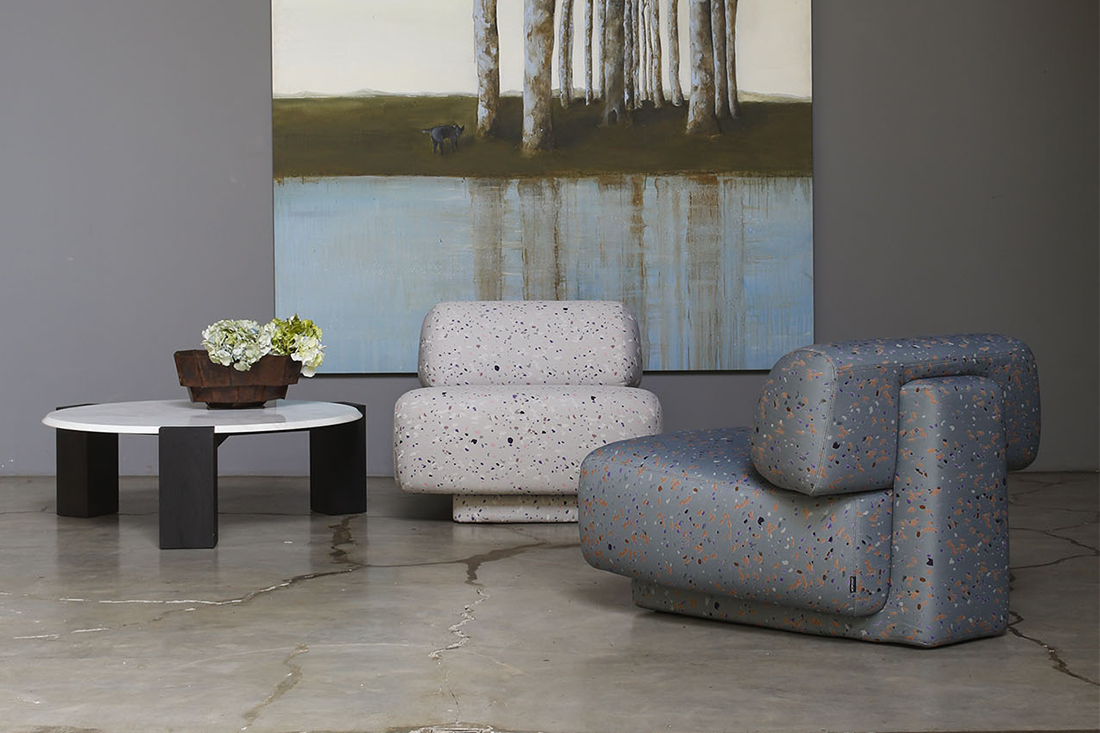
Complementing the sofa is an armchair and table in various sizes, each one continuing the organic quality found in the sofa. The table is made of marble in a Namibian Rose finish and supported by a structure of Abonos fossil wood. These elements will be presented as prototypes.
In Singapore, Moroso is available at XTRA.
XTRA is running a 30+7% promotion for Moroso and Diesel with Moroso until 31 March 2021.
INDESIGN is on instagram
Follow @indesignlive
A searchable and comprehensive guide for specifying leading products and their suppliers
Keep up to date with the latest and greatest from our industry BFF's!
The internet never sleeps! Here's the stuff you might have missed