An unorthodox approach to auto show stand design is turning heads in Paris, Owen Lynch reports
October 3rd, 2012
“The goal was to spark emotion at first sight” explains the architectural team behind this immersive, travelling auto showcase for Renault.
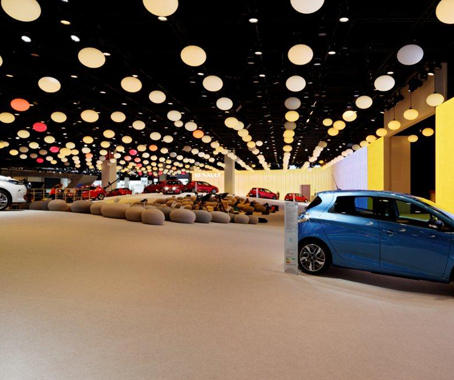
Effectively thumbing their nose at the traditional fair stand design typologies, Dan Dorrell, Lina Ghotmeh and Tsuyoshi Tane (DGT) have addressed the concept of movement in what is intrinsically a very regulated and static environment.
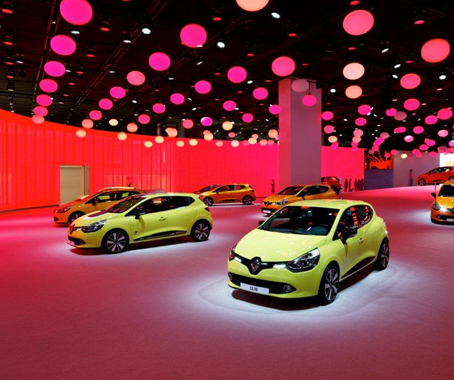
In the design concept phase they uncovered the common value between concept cars, family ’estates’, sports vehicles and eco-electric city cars to be: ’motion’.
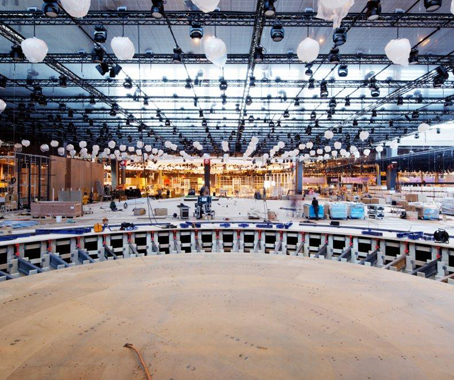
Building this into their design the team set about creating a fully-fledged experience rather than just a display platform. At 4312 m² this is a substantial build, coupled with the fact that the display will travel to 20 cities across the globe over a 3 year period. With this in mind “The Bump” is designed to perform its duties sustainably as well as prove adaptable – adjusting to suit various sites across Europe, South America and Asia.
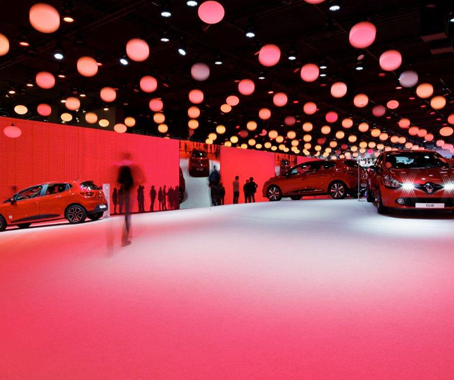
Launched in France last week at the famed Paris Motor Show, “The Bump” is comprised of two rolling “hills” upon which the automobiles are displayed concentrically. With some models rotating, changes in atmospheric lighting overhead and dynamic projections on surrounding walls – the project is at once ambitious and engaging.
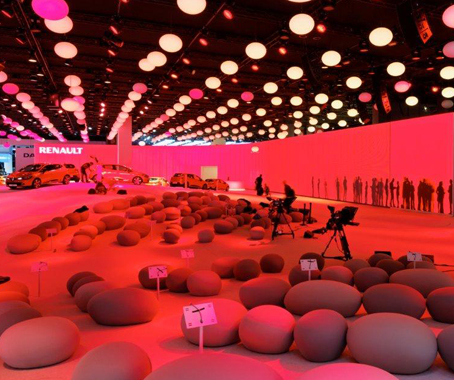
Having transformed their brand’s ethos under the slogan “Drive the Change” Renault are hoping to reap considerable reward from this gargantuan undertaking.
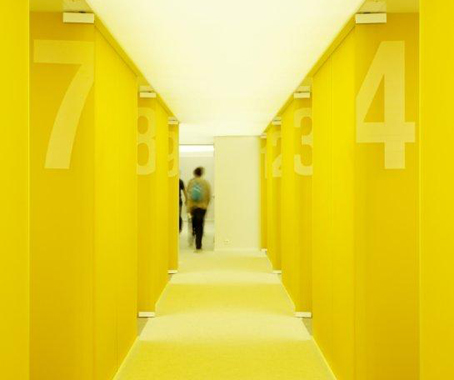
“We want the general public to experience the change during the 2012 Paris Motor Show. We want the experience to be as clear and friendly as possible by welcoming visitors to a new world.” Says Global Marketing and Communications Director for Renault, Stephen Norman.
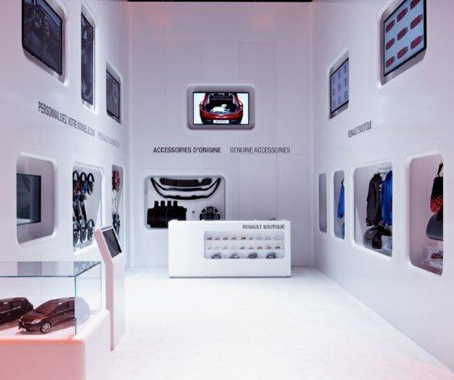
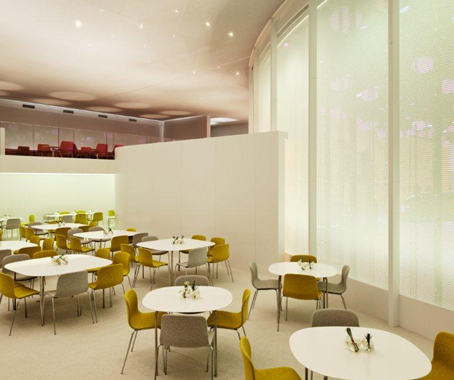
Incorporating extensive back-of-house facilities, as well as showcasing vehicles “The Bump” can accommodate guests in meeting rooms, pop-up cafes, merchandise boutiques and breakout areas that are discretely concealed behind the vast projection screens that skirt the main floorspace.
Images © Takuji Shimmura
DGT
INDESIGN is on instagram
Follow @indesignlive
A searchable and comprehensive guide for specifying leading products and their suppliers
Keep up to date with the latest and greatest from our industry BFF's!
In the last instalment of our three-part performance seating series, Alex Bain from Architectus explains why sitting well shouldn’t feel like sitting at all and explores an unexpected success metric of the hybrid workplace: the grounding power of emotional support.
In the first instalment of our three-part series exploring what it means to sit your best, we pose the question to Gray Puksand’s Dale O’Brien, who discusses the importance of ease and majority rule when it comes to sitting and reveals why specifying a task chair is not unlike choosing a Volvo.
Natural stone shapes the interiors of Billyard Avenue, a luxury apartment development in Sydney’s Elizabeth Bay designed by architecture and design practice SJB. Here, a curated selection of stone from Anterior XL sets the backdrop for the project’s material language.
Stepping into Intuit’s Sydney workplace certainly doesn’t feel like walking into an office. Why? In this film, we discover that, when joy takes precedence as a design driver, even a high-performing commercial CBD headquarters can feel like an intuitive wonderland that invites employees to choose their own adventure.
Introducing Ross Didier’s ‘Bombala’ lounge chair, ottoman and stacking diner.
Designers are all across the idea of creating experiences. However, more often than not it’s left for retail and hospitality projects, but what about the workplace? The team at Hot Black has considered experiential design for the workplace fit-out of superfund HESTA.
The internet never sleeps! Here's the stuff you might have missed
Powerhouse Parramatta has commissioned more than 50 leading designers from across Australia to shape the spaces and experiences of the new museum, including public, exhibition, restaurant and retail spaces.
Melbourne-based architect and object maker Adam Markowitz blurs the line between design and craft, bringing a deeply considered, material-led approach to his work. As both a practising architect and furniture designer, Markowitz explores how objects can respond to space, light and human use.