The home of architecture and design in the Asia-Pacific
Get the latest design news direct to your inbox!

Get the latest design news direct to your inbox!
Celebrating its 30th anniversary, TOTO GALLERY·MA presents a pivotal exhibition focused on architecture in Asia to discover a common thread across the daily needs of an ever-changing society. Joanna Kawecki reports.
October 21st, 2015
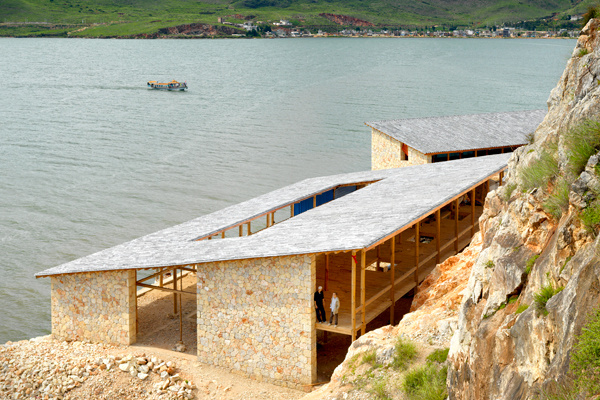
Top Image: Shuangzi Hotel (design: Zhaoyang Architects, Dali, Yunnan, China, 2012). Photo: © Jonathan Leijonhufvud
Curated by architecture critic Erwin Viray, The Asian Everyday: Possibilities in the Shifting World, a recent exhibition presented by Toto collates the investigations and ideas of five key multinational architects.
In consideration of current society and lifestyle needs, Chatpong Chuenrudeemol (Thailand), Ling Hao (Singapore), Vo Trong Nghia (Vietnam), Maki Onishi and Yuki Hyakuda (Japan) and Yang Zhao (China) delved into past and present projects with an investigative aim to “imagine the world of tomorrow.”

Everyday Scene: Dali, China. Photo: © Zhinong Xi
As overcrowded cities in East Asia make dense living conditions a norm, the exhibition looks into current practices while questioning their relevance in a rapidly changing and fast-paced society. With multiple buildings hastily developed and constructed in response to housing crises, key questions remain, if architects are truly answering the contemporary needs of architecture and housing, or simply executing traditional solutions that are now outdated.
By challenging five architects across five Asian regions, the aim is to find a common thread in architecture and daily routines across countries. Curator Erwin Viray explains, “we hope that we will be able to take our next step forward together by confirming, through this project, that the critical perspectives with which we look at the places where we are grounded, and the sincere practices that we engage in our daily lives can yield the power to open up a new ‘everyday’.”
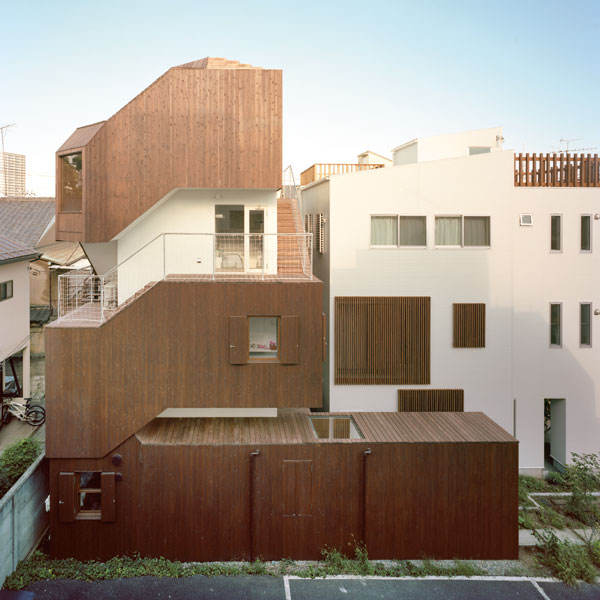
Niju Rasen no Ie (design: onishimaki+hyakudayuki architects, o+h, Tokyo, Japan, 2011). Photo: © Kai Nakamura
Vietnam-based architect Vo Trong Nghia explores a focus on natural materials and organic design, in an attempt to alleviate the destructive effects of rapid urbanisation. Where the green space per capita in East Asia sits at 1% in Vietnam’s capital Ho Chi Minh City, there is only 0.25% of green space. Nghia explains, “We can employ more sustainable building methods and develop urban areas without depriving them of greenery. We use bamboo for construction because we regard it as more environmentally sustainable than anything else.”
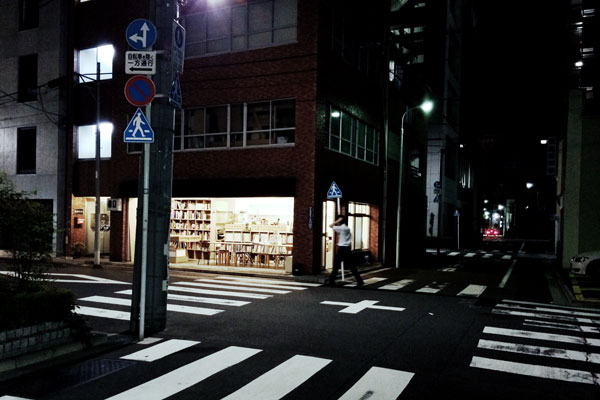
Everyday Scene: Tokyo, Japan
Thailand-based Chatpong Chuenrudeemol of CHAT Architects and Tokyo-based duo Maki Onishi and Yuki Hyakuda looked into innovative architectural elements in daily life. In Thailand, local ‘hawker’ carts act as independent businesses but are also commonly known as housing for its owners, customised to provide adaptability and flexibility through improvisation with personal articles and necessities.
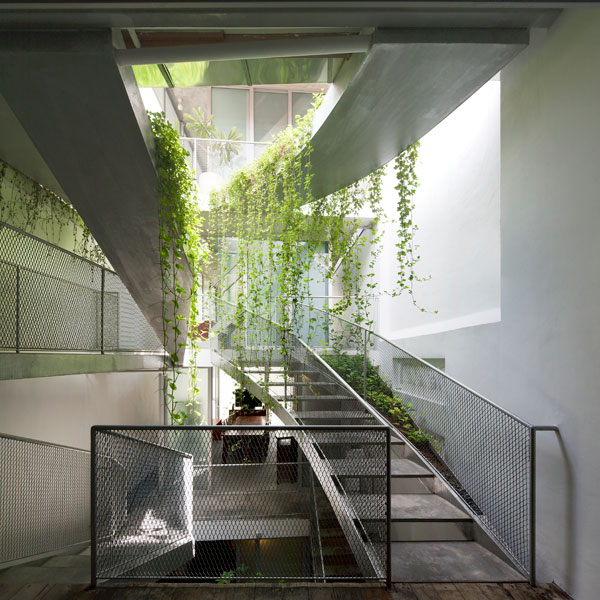
House 11 (design: Linghao Architects, Singapore, 2012). Photo: © Jeremy San
It is evident that no matter the location or culture, the focus on community and connection to nature remains a priority. Singapore-based architect Ling Hao reflects on tradition, exploring an old city landscape that is closely connected to its surroundings, with an aim to integrate into future developments.
“In Singapore, daily functioning is attuned to the flow of global surroundings. It is an experience that is made from the air, plants, physical environment, everyday activities that mix and interact with each other. In certain sceneries, such as a neighbourhood centre with small shops, markets and food places, or old parks or housing estates, there exists an integral life and energy.”
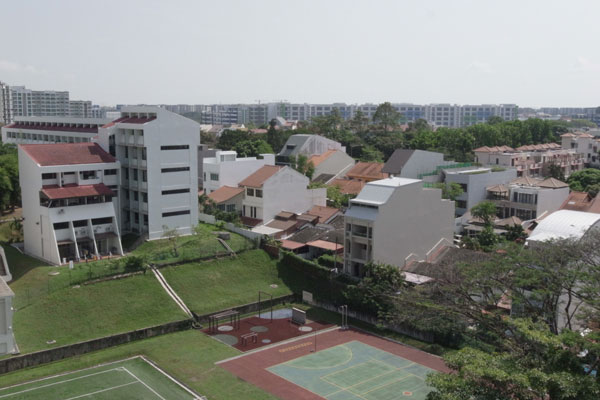
Everyday Scene: Singapore. Photo: © Ling Hao
The Asian Everyday: Possibilities in the Shifting World also includes a series of accompanying commemorative events held across Japan in Tokyo, Sapporo, Sendai, Kyoto, Fukuoka, and Okinawa. Through these investigations, there is an opportunity to highlight and set an example not only for Asian communities, but the world.
Viray concludes, “These architects are pursuing not architecture of material quantity but architecture that can improve our quality of life, with the power to overturn existing landscapes and conventional methods of environmental construction.”
The Asian Everyday: Possibilities in the Shifting World exhibition is held from 17 October – 12 December 2015 at TOTO GALLERY·MA, 3F, 1-24-3 Minami-Aoyama, Minato-ku, Tokyo 107-0062.
INDESIGN is on instagram
Follow @indesignlive
A searchable and comprehensive guide for specifying leading products and their suppliers
Keep up to date with the latest and greatest from our industry BFF's!
The internet never sleeps! Here's the stuff you might have missed