The home of architecture and design in the Asia-Pacific
Get the latest design news direct to your inbox!

Get the latest design news direct to your inbox!
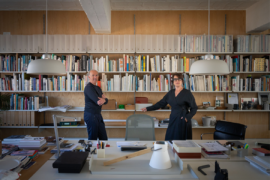
Through their studio MentahMatter, Kuala Lumpur-based designers and restaurateurs Penny Ng and Shin Chang explore work that is driven by context and a live history that pairs deeply with contemporary life.

Penny Ng and Shin Chang, the founders of Kuala Lumpur-based MentahMatter, in a corridor within their studio space. Photography by Vignes Balasingam
May 11th, 2017
Strung with cables and caked with mould, the faded roadside entrance of Petaling Street’s old Mah Lian Hotel looks like it’s seen better days. Its shoddy appearance prompts little more than dismissive glances from passersby whose nervous nighttime jaunts past the aged pre-war property say something about the hotel’s seedy location in the heart of Kuala Lumpur’s red light district.
Upon entry, however, the newly revamped interiors of this once abandoned shoplot tell an entirely different tale. Currently the premises of the Chocha Foodstore, the space is positively aglow with light, warmth and fashionable young things with a taste for home-cooked fusion fare and Instagram. For founders Shin Chang and Penny Ng, it is this combined feeling of contrast and surprise that sets the stage for Chocha’s unique take on dining out or meeting up with friends for a cuppa.
Opened as an alternative food venue in mid 2016, Chocha emerged as the result of an extensive six-month overhaul and transformation, which saw the space being gutted of its rotted beams and collapsed ceiling – but not its existing ramshackle charm. Chocha is a celebration of raw concrete, reclaimed materials and pared-down surfaces bedecked with decorative remnants from the past.
The aesthetic is exemplary of Chang and Ng’s context-driven design approach. The two are designers and professed food lovers who jointly run their emerging practice MentahMatter Design (mentah means ‘raw’ in Malay) from the same venue. They share a love of transience, heritage and bare-bones simplicity, citing an ongoing obsession with wabi-sabi. These influences can be discerned in MentahMatter’s growing list of completed projects, such as a green-thronged residence for a small family designed with an inside-outside feel, or a bakery that takes a cue from the rambling layout of an urban park.
Read the full story in Cubes 85! Photography by Vignes Balasingam.
INDESIGN is on instagram
Follow @indesignlive
A searchable and comprehensive guide for specifying leading products and their suppliers
Keep up to date with the latest and greatest from our industry BFF's!
The internet never sleeps! Here's the stuff you might have missed