The home of architecture and design in the Asia-Pacific
Get the latest design news direct to your inbox!

Get the latest design news direct to your inbox!
Seven locally based designers and architects interpret the iconic 1955 Fritz Hansen Series 7™ chair designed by Arne Jacobsen.

June 4th, 2015
Photos: Republic of Fritz Hansen
In the 50s, legendary Danish architect and designer, Arne Jacobsen, designed the Series 7™ to fulfill the need for an affordable, light and stackable chair that fit seamlessly into small kitchens found in modern housing. Sixty years later, the iconic furniture is the most sold chair in Fritz Hansen’s history, and the most copied worldwide.
In celebration of the chair’s jubilee this year, W. Atelier invited seven locally based designers and architects to reflect upon the Series 7™, its history, design and manufacturing technique. The seven creatives are Brendon Lim, IMAJIN; Colin Seah, Ministry of Design; Robert Greg Shand, Robert Greg Shand Architects; Sam Ang and Sal Chua, Grey Canopy; Peter Tay, Peter Tay Studio; Terence Chan, Studio Terre; Leong Hon Kit and Si Jian Xin, WYNK Collaborative.
Titled 7 Architects x Series 7™, the organisers posed only a single criteria to the participants – to preserve the curvaceous form of the chair. Currently exhibited at the Republic of Fritz Hansen showroom, here is a rundown of the thought process behind the individual designs.
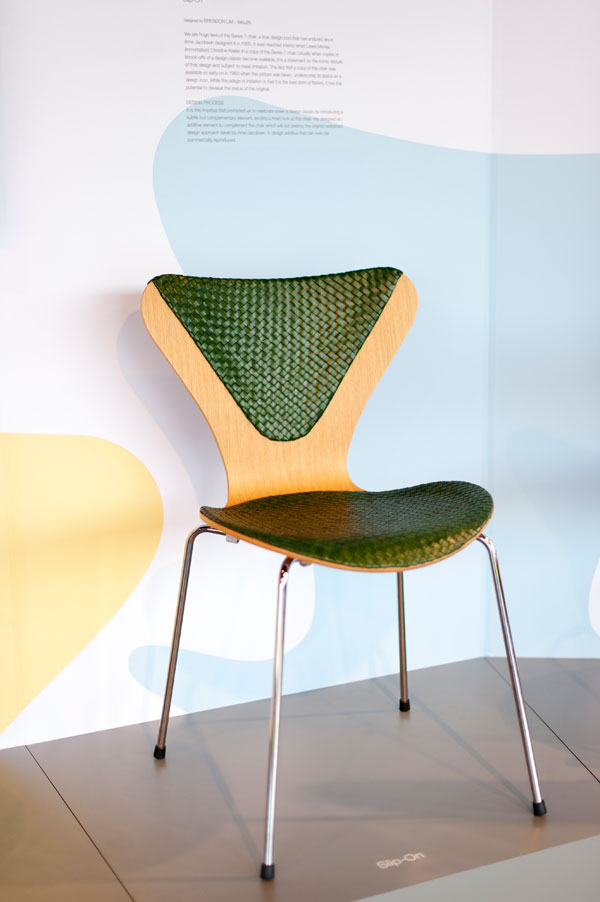
Slip-On by Brendon Lim, IMAJIN
Aptly titled Slip-On, Brendon Lim’s addition to the iconic chair was an intricate green leather weave, which took over 300 man hours to produce, enforcing the Series 7’s curvaceous lines.
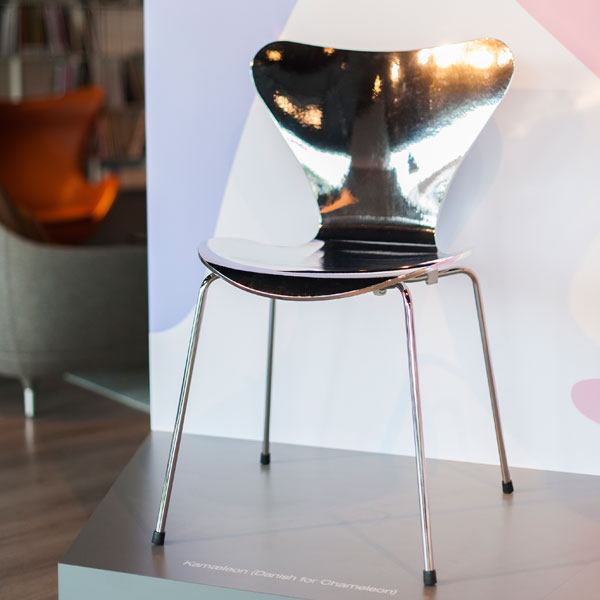
Kamæleon by Colin Seah, Ministry of Design
Colin Seah’s mirrored chrome film highlights the chair’s flexible quality. Kamæleon, which translates to chameleon in Danish, reflects its surroundings, altering its skin when shifted.

Series 8,9,10,11….. (Experiment on Curves vs Light) by Sam Ang and Sal Chua, Grey Canopy
The expressive Series 8,9,10,11….. (Experiment on Curves vs Light), as its name suggests, is a conceptual take on future editions of the Series 7™.
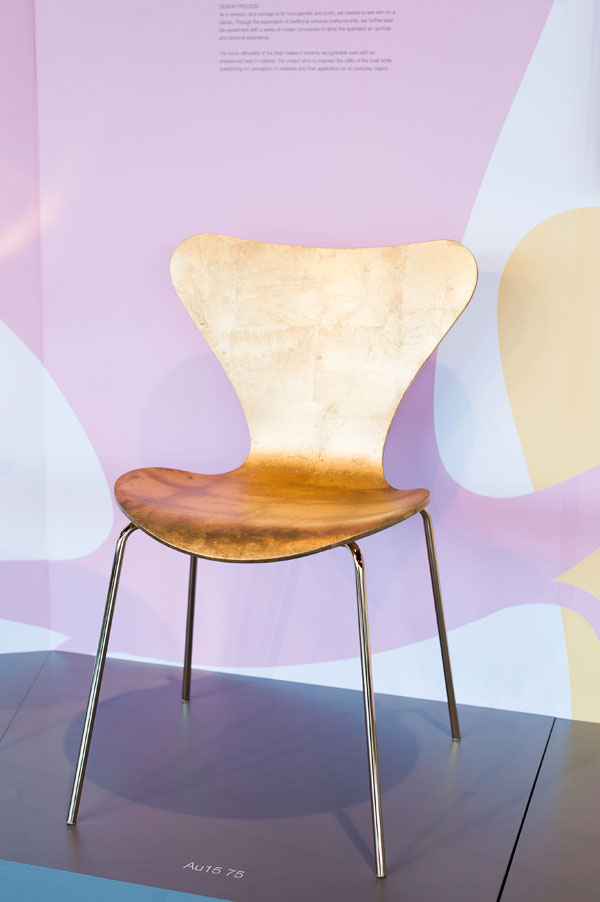
Au15.75 by Terence Chan, Studio Terre
Covered in gold leaf, Au15.75 challenges the perceiver of its function – does one sit on the chair, or simply ponder upon its beauty?
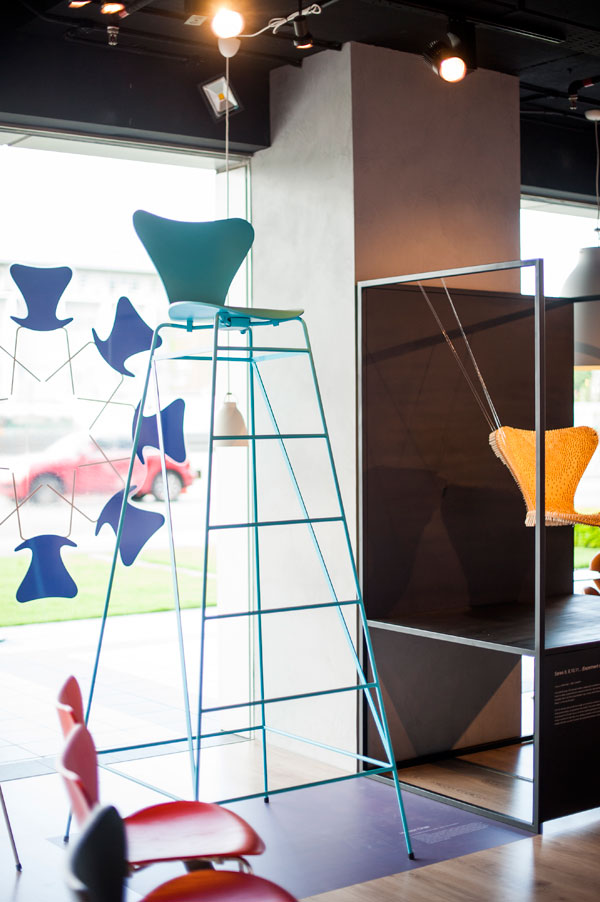
Horizon Chair by Leong Hon Kit and Si Jian Xin, WYNK Collaborative
WYNK collaborative extended the legs of the Series 7™, creating an unusually high chair that allows the user to look beyond common perception.
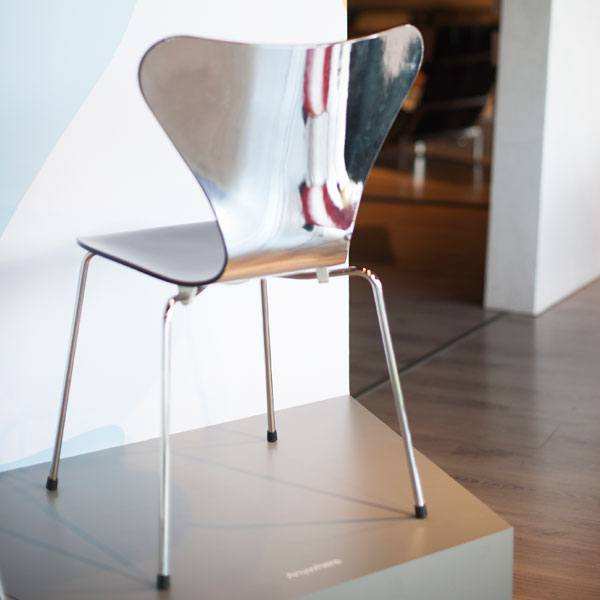
Anywhere by Peter Tay, Peter Tay Studio
Focusing on the back of the chair, Peter Tay’s Series 7™ comes with a mirrored back surface, allowing the masterpiece to merge with its environment.
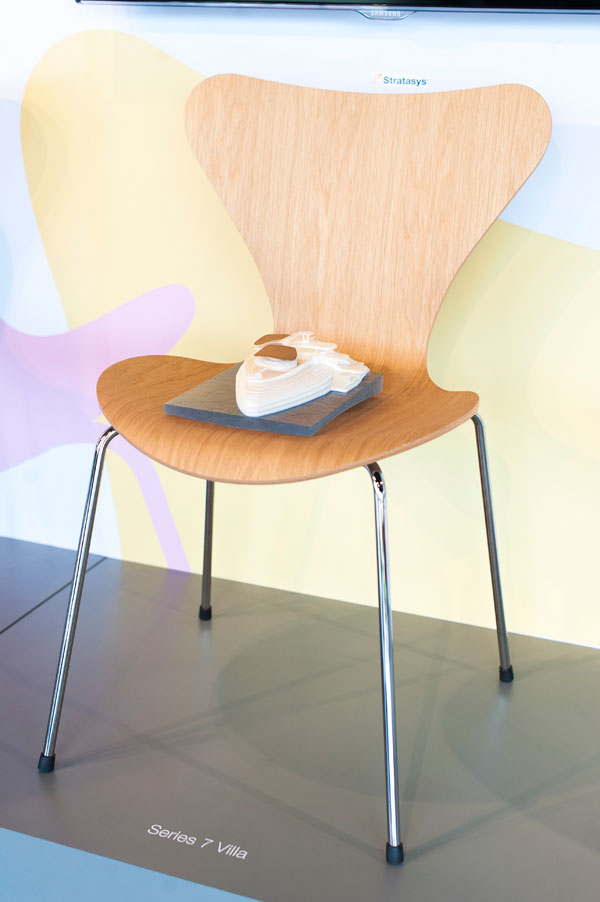
SERIES 7 Villa by Robert Greg Shand, Robert Greg Shand Architects
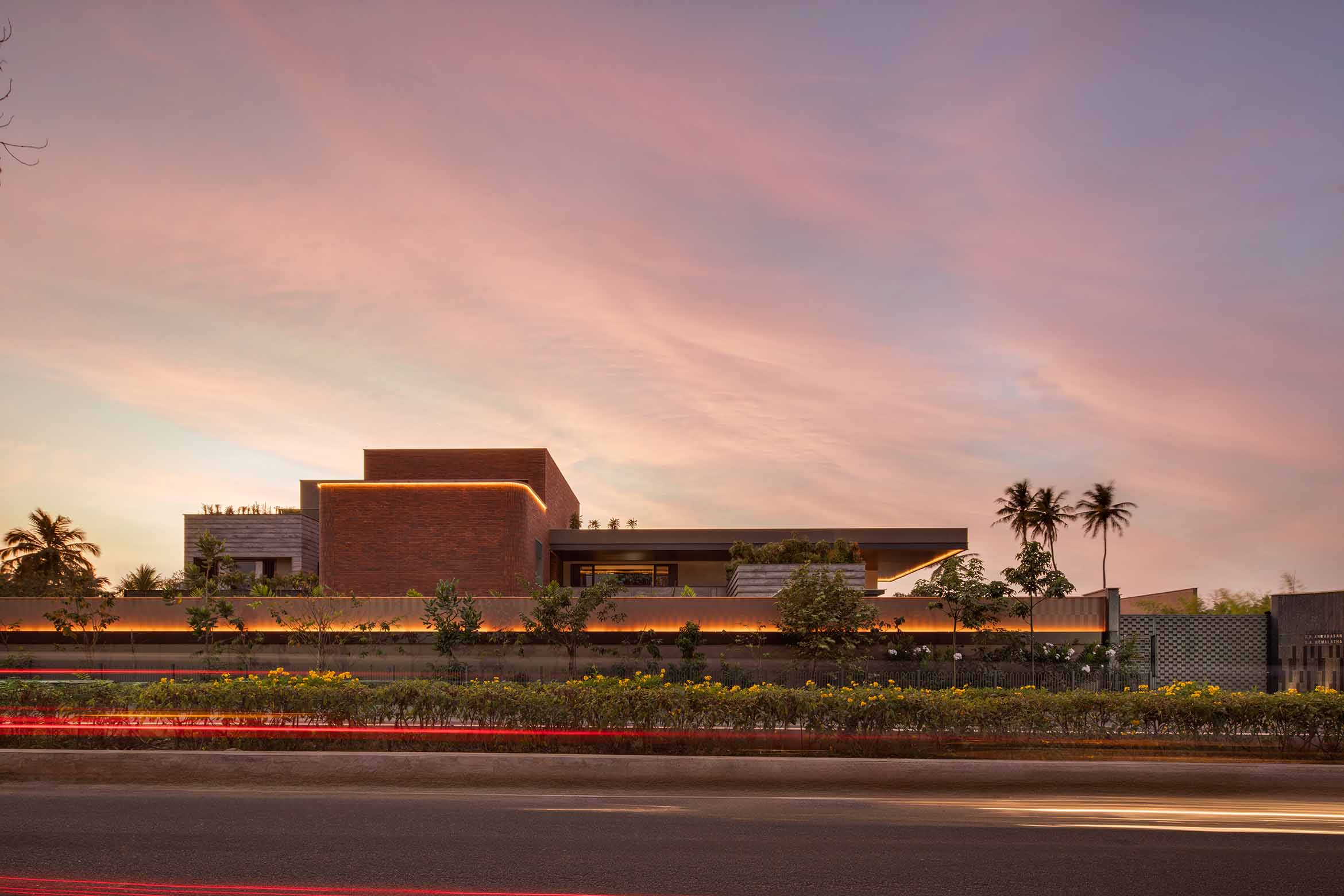
Instead of physically adding elements to his chair, Robert Greg Shand designed a Series 7 Villa inspired by the curvaceous laminated plywood feature of the chair.

“SERIES 7 Villa” by Robert Greg Shand
7 Architects x Series 7™ is exhibited at the Republic of Fritz Hansen showroom at W. Atelier from 28 May to 30 June 2015.
The exhibition will also be exhibited at Singapore Indesign Intimate at National Design Centre from 9 to 10 July 2015.
INDESIGN is on instagram
Follow @indesignlive
A searchable and comprehensive guide for specifying leading products and their suppliers
Keep up to date with the latest and greatest from our industry BFF's!
The internet never sleeps! Here's the stuff you might have missed