The home of architecture and design in the Asia-Pacific
Get the latest design news direct to your inbox!

Get the latest design news direct to your inbox!
Denmark dishes up a living fairytale at Shanghai Expo 2010.
June 29th, 2010
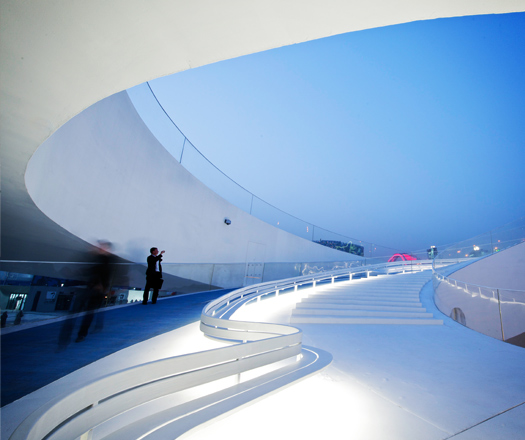
The pavilion treats visitors from around the world to a taste of Denmark, capitalising on a combination of what we know the Danes best for: innovative design, fairytales and bicycles.
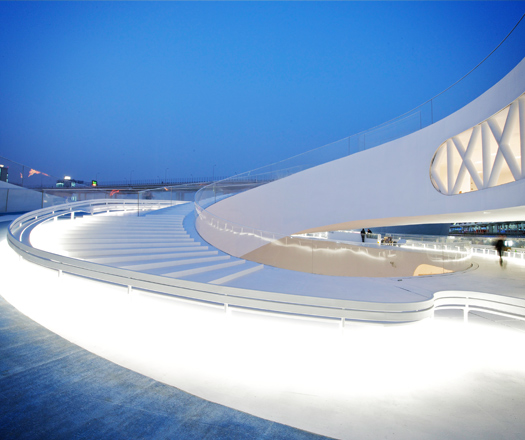
Bjarke Ingels Group (BIG), the Copenhagen-based group of architects, designed this year’s pavilion with a budget of about 20 million euros, creating a singular steel structure in the form of a double spiral with lanes for cyclists and pedestrians.
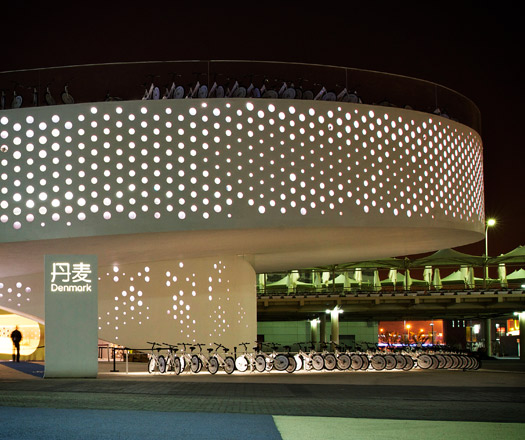
Large holes dominate the otherwise sleek façade, allowing daylight and natural ventilation inside.
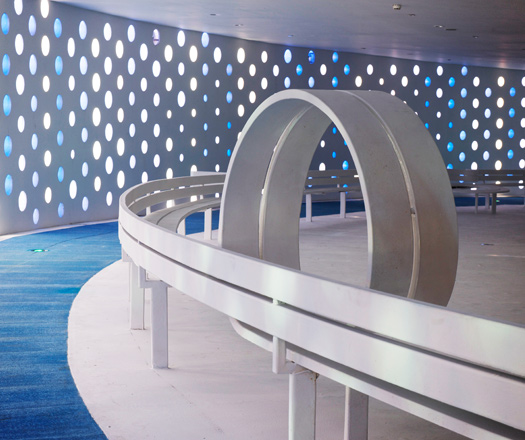
The theme of this year’s Denmark Pavilion is ‘Welfairytales’, showcasing Danish innovation and ability to create sustainable, holistic and coherent urban development and welfare solutions.
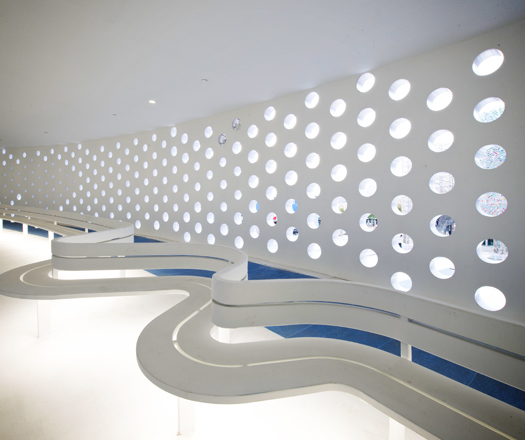
The structure conjures up a dream city, demonstrating the environmentally friendly lifestyle of the Danish population by encouraging visitors to take a spin around the ‘city’ on one of the 100 city bikes on offer.
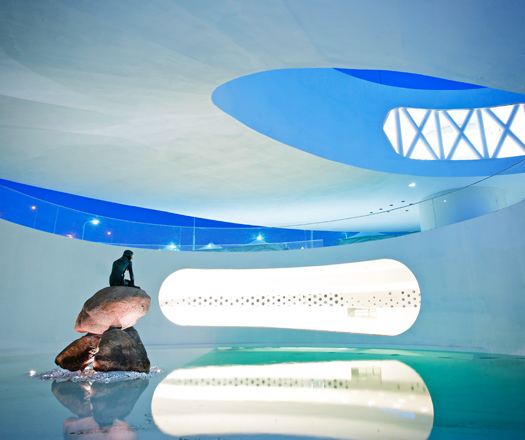
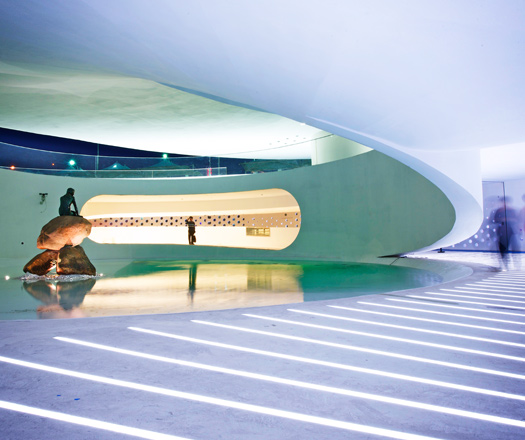
The steel structure surrounds the Harbour Pool, allowing visitors to indulge in a paddle around the Danish harbour.
The centrepiece of the pavilion, perched on a cluster of rocks surrounded by water, is the Little Mermaid – the original statue from Hans Christian Andersen’s fairytale.
This is the first time it has left Copenhagen since its creation in 1913, transforming the pavilion into a living fairytale.
Bjarke Ingels Group
big.dk
INDESIGN is on instagram
Follow @indesignlive
A searchable and comprehensive guide for specifying leading products and their suppliers
Keep up to date with the latest and greatest from our industry BFF's!
The internet never sleeps! Here's the stuff you might have missed