Lucy Bullivant visits the Cooper-Hewitt Museum in NYC, where the National Design Triennial asks designers, Why Design Now?
December 13th, 2010
‘How do buildings not shrink from their responsibility of being part of the city?’
Michael Maltzan, architect of the New Carver Apartments in Los Angeles for homeless elderly and disabled residents, was one of the architectural voices in the Why Design Now? showcase, the latest in New York’s Cooper-Hewitt Museum National Design Triennial series (to 9 January 2011).
New Carver apartments by Michael Maltzan Architecture (foreground). Photo by Matt Flynn
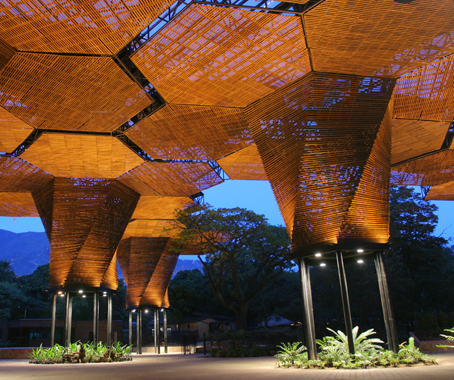
From Foreign Office Architects’ bamboo shuttered Carabanchel social housing in Madrid, to the transformation of Medellin, Columbia (see main image) with 142 new and upgraded schools, 5 library parks, and an expanded train and cable car system – seen through the eyes of children on video, the selection answered the question that palatable solutions are holistic.
Maltzan’s building overlooks the Santa Monica freeway, has medical facilities, dining spaces and gardens, and sweeping views of the skyline and the street.
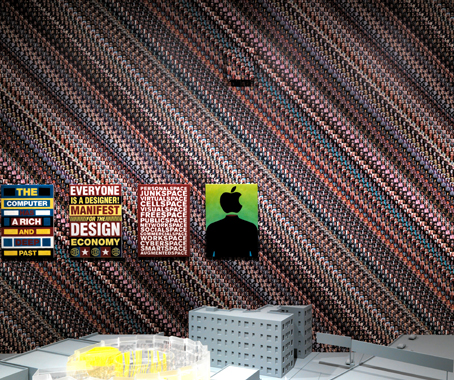
Enobling public space, Iwamoto Scott’s HydroNet is as yet a proposal for self-sufficient urban transport infrastructure, while tools like the Green Map systems let people chart local and global resources such as green spaces, biking paths, endangered habitats and more through a common vocabulary.
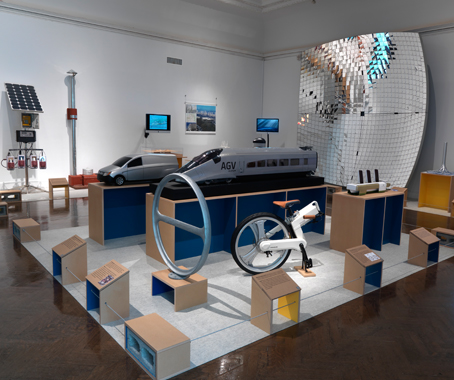
Iwamoto Scott’s HydroNet (background). Photo by Matt Flynn
Experiential virtuality helps us navigate reality, as the New York Times’ interaction projects by its graphics department, including Tom Bissell’s harrowing climb to the top of Mount Kilimanjaro, show, while eco-messages are easy to avoid for many so Michael Beirut’s Green Patriot posters have been put on mass transit buses.
The best designers translate complex data about the world and its safety, environment and equality using a more responsive approach to real needs.
Why Design Now? at the Cooper-Hewitt National Design Museum in New York City runs until 9 January 2011.
Cooper-Hewitt National Design Museum
cooperhewitt.org
INDESIGN is on instagram
Follow @indesignlive
A searchable and comprehensive guide for specifying leading products and their suppliers
Keep up to date with the latest and greatest from our industry BFF's!
Stepping into Intuit’s Sydney workplace certainly doesn’t feel like walking into an office. Why? In this film, we discover that, when joy takes precedence as a design driver, even a high-performing commercial CBD headquarters can feel like an intuitive wonderland that invites employees to choose their own adventure.
Natural stone shapes the interiors of Billyard Avenue, a luxury apartment development in Sydney’s Elizabeth Bay designed by architecture and design practice SJB. Here, a curated selection of stone from Anterior XL sets the backdrop for the project’s material language.
The difference between music and noise is partly how we feel when we hear it. Similarly, the way people respond to an indoor space is based on sensory qualities such as colour, texture, shapes, scents and sound.
In the second instalment of our performance seating three-parter, we turn to DKO’s Michael Drescher and Jacob Olsen to peek behind Sayl’s confident architectural form and explore the ideas of inclusivity, adaptability and freedom to move as hallmarks of what sitting your best actually means.
The new Sculptform showroom by Woods Bagot is an artful celebration of craft and immersive, tactile spaces. Located in central Melbourne, this showroom is a journey into the heart and soul of the Sculptform brand.
On Thu 3 Dec, the design community gathered at InterfaceFLOR’s Sydney showroom for an enjoyable Christmas celebration. Last year’s DJ was replaced with a delightful string quartet.
The internet never sleeps! Here's the stuff you might have missed
AFK Studios’ Earle Arney joined STORIESINDESIGN podcast last year to speak about SyLon. Here, we reproduce a summary on a recent report with NLA that builds on research into housing as infrastructure amidst a landscape of housing crisis.
From Muuto’s softly lived-in Brera apartment to Artemest’s palazzo-scale grandeur and Studiopepe’s introspective project apartment, these Milan Design Week interiors use the home as a stage for design, feeling and identity.